
A security team wants to set up a custom threat intelligence feed of Azure OpenAI endpoint abuse indicators (malicious IP addresses that have been observed submitting jailbreak prompts at scale) and use it in Sentinel analytics rules. Which Sentinel feature is the most direct mechanism for ingesting this custom threat intelligence?
Select an answer to reveal the explanation.
Short Explanation
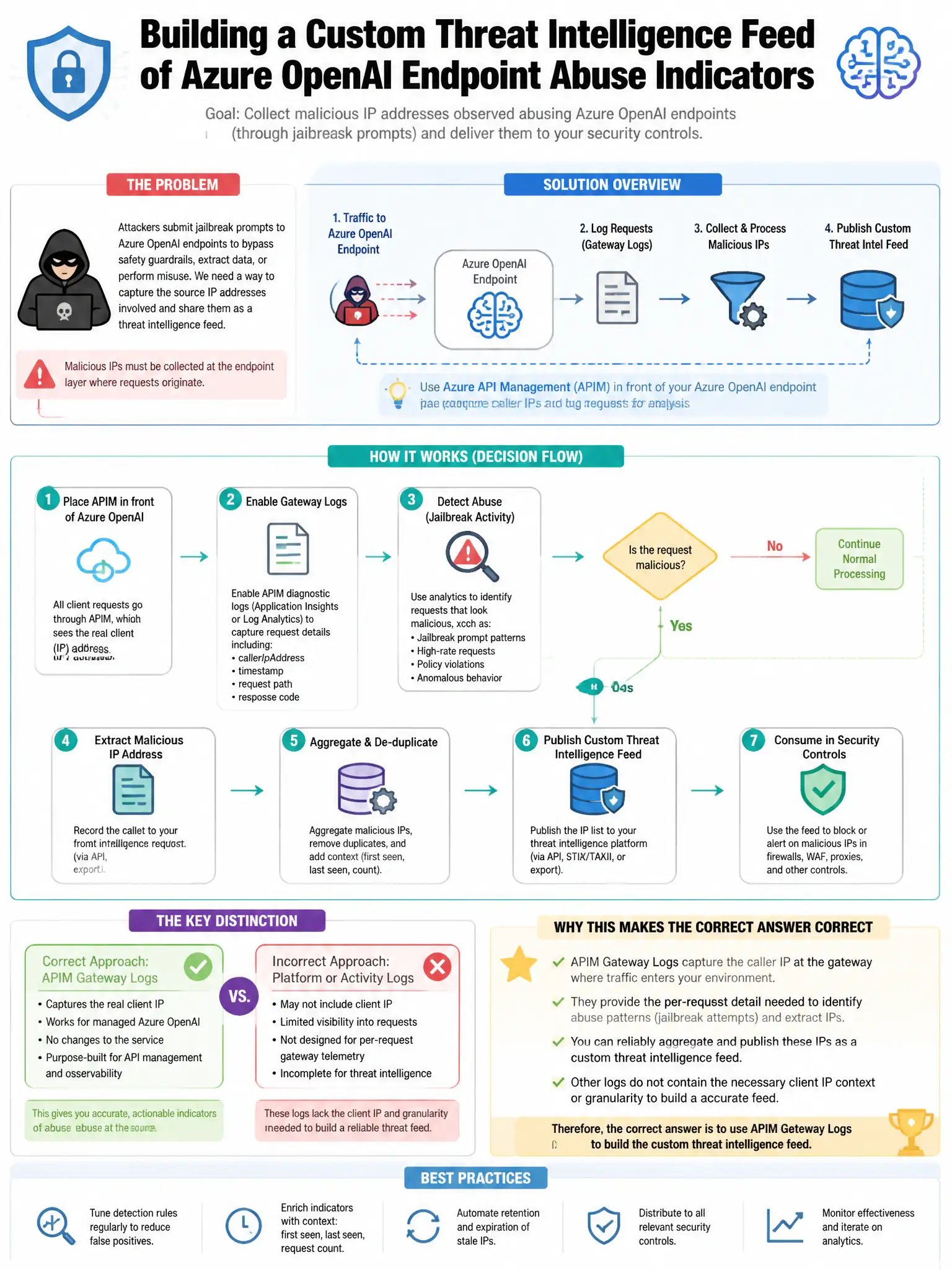
Here's the deal — you want the Threat Intelligence TAXII connector or upload API because it puts the malicious IPs into the ThreatIntelligenceIndicator table, where Sentinel analytics rules can use them. That's the purpose-built way to ingest custom threat intel feeds.
Full Explanation
The correct mechanism is ingesting indicators via the Microsoft Sentinel Threat Intelligence TAXII connector or the upload API to populate the ThreatIntelligenceIndicator table. Microsoft Sentinel's Threat Intelligence platform supports ingesting custom indicators via TAXII server connectors or the Microsoft Security Graph Tiindicators upload API. Once ingested, these indicators are available in Sentinel analytics rules through the ThreatIntelligenceIndicator table, enabling automatic correlation with activity logs. Sentinel also has built-in analytics rules that automatically correlate new TI indicators against ingested logs. The watchlist containing the malicious IP addresses is wrong because watchlists are a valid alternative for smaller, manually managed lists, but the Threat Intelligence platform with TAXII or API ingestion is the purpose-built mechanism for operational threat intelligence feeds with automatic expiration and indicator management. Adding the IP addresses to a Conditional Access named location and referencing it in Sentinel is wrong because Conditional Access named locations are for enforcing access policies based on network location, not for populating Sentinel analytics correlation. Creating a custom analytics rule that hard-codes the IP addresses in a KQL query is wrong because hard-coding IP addresses in KQL makes the rule static and difficult to maintain; it does not scale as the threat intelligence feed updates.