
A security engineer wants to use Microsoft Security Copilot to identify attack paths targeting Azure OpenAI resources in the organization's environment. The engineer uses the Security Exposure Management integration within Security Copilot. What does this integration provide?
Select an answer to reveal the explanation.
Short Explanation
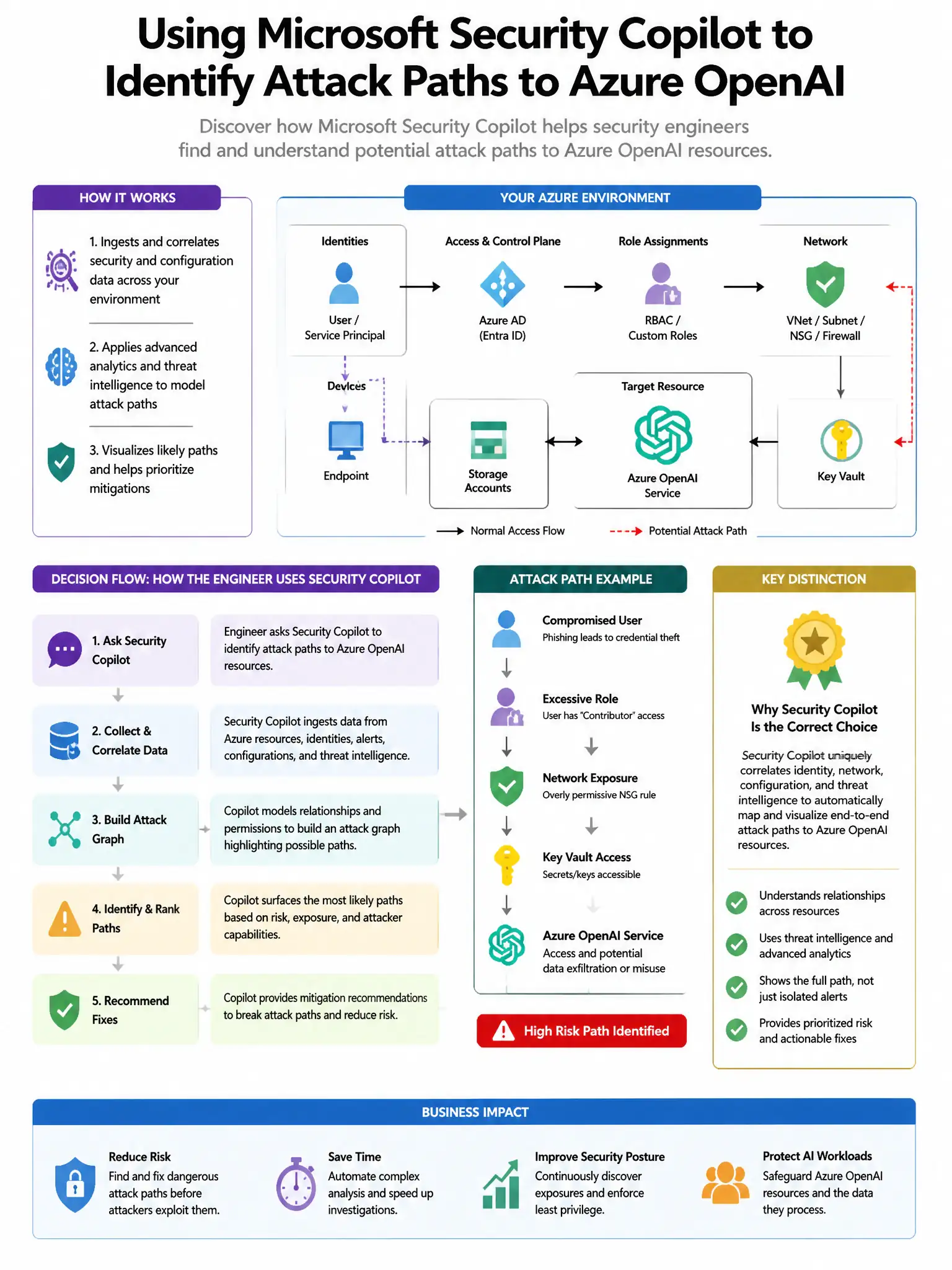
Here's the deal — you get the graph-based attack path view because the Security Exposure Management integration in Security Copilot shows how attackers could chain weaknesses to reach critical AI assets and where choke points can break the path.
Full Explanation
The graph-based view of attack paths that adversaries could exploit to reach critical AI assets, including identity, device, and network choke points, is correct because the Microsoft Security Exposure Management plugin in Security Copilot provides an AI-assisted, graph-based attack path analysis. It identifies how attackers could chain vulnerabilities, misconfigurations, and identity weaknesses to reach critical assets—including Azure AI resources—and highlights choke points where controls can be applied to break attack paths. Real-time network traffic analysis for Azure OpenAI endpoints is wrong because that is performed by tools like Azure Network Watcher or Microsoft Sentinel, not Security Exposure Management. Automated penetration testing of Azure AI services is wrong because Security Exposure Management does not perform active penetration testing; it performs posture-based attack path analysis from telemetry. The report of all Azure Policy compliance violations for AI resources is wrong because Azure Policy compliance reporting is surfaced in Defender for Cloud's regulatory compliance dashboard, not through the Exposure Management integration in Security Copilot.