
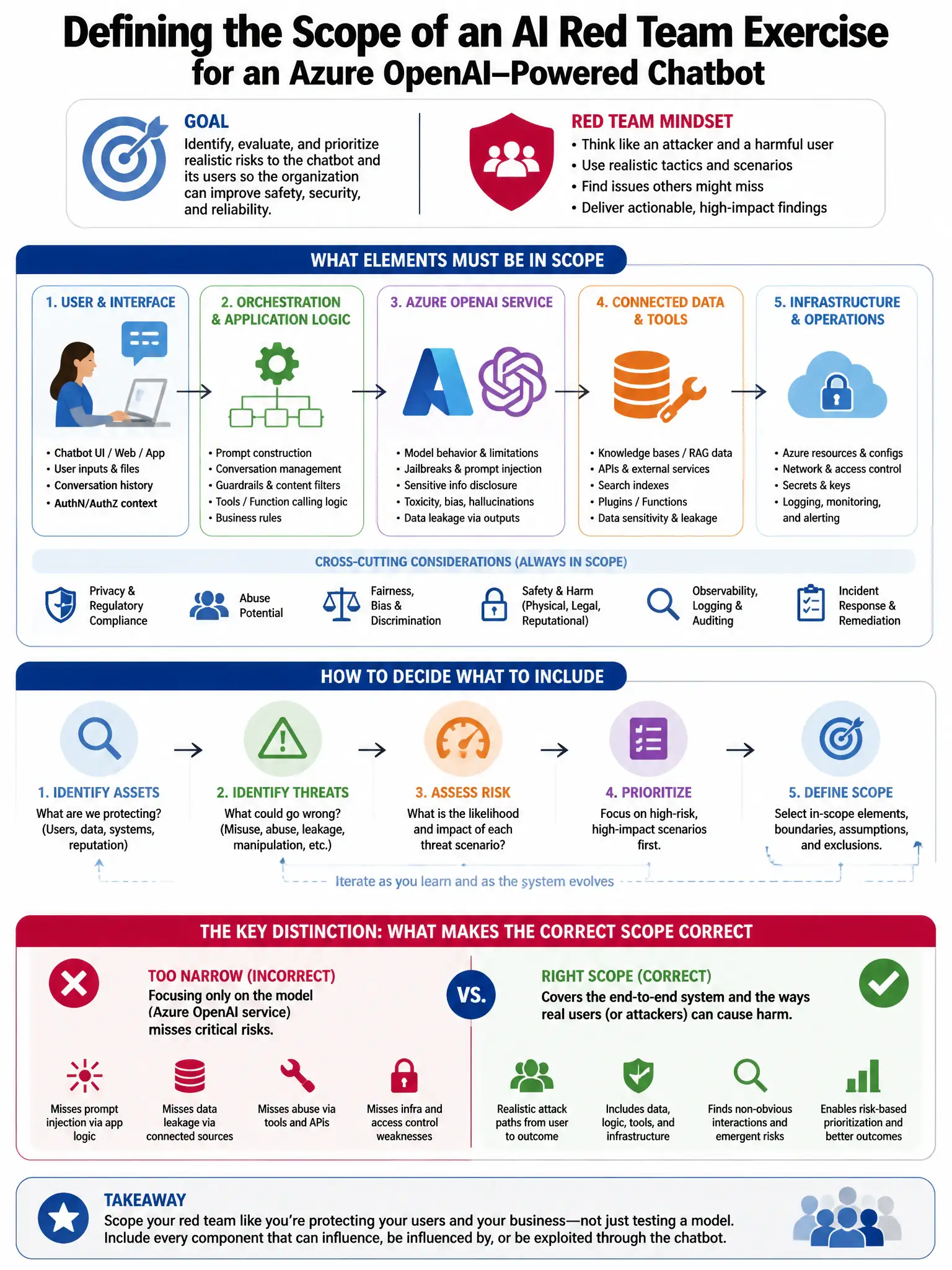
A company is establishing an AI red team program and needs to define the scope of a red team exercise against their customer-facing Azure OpenAI-powered chatbot. Which elements must the scope document include to ensure a safe and legally authorized test?
Select an answer to reveal the explanation.
Short Explanation
You need scope documentation that names exact Azure OpenAI endpoint, sets time windows, lists allowed attacks like prompt injection and jailbreaks while banning DoS, spells out out-of-scope limits, and gets written owner authorization. That keeps test legal, targeted, and safe.
Full Explanation
The correct scope document must include: the specific target system (the Azure OpenAI deployment endpoint URL and deployment name) to prevent testing the wrong resource; test duration and time windows to coordinate with operations and avoid disrupting production; authorized attack types (prompt injection, jailbreak testing, data extraction probing) with explicit exclusions (no denial of service, no accessing production customer data); out-of-scope restrictions (other systems not part of the test); and written authorization from system owner (the 'get out of jail free letter') to ensure test is legally authorized. These elements prevent unauthorized testing and ensure accountability. The option requiring model architecture and weight files is wrong because model architecture and weight files are not typically required for behavioral red team exercise (which is black-box or gray-box test) and sharing model internals may violate IP policies. The option limiting scope to red team's penetration testing certifications only is wrong because certifications demonstrate competency but do not define legal scope or authorization for specific test. The option listing all company employees who use chatbot is wrong because list of chatbot users is irrelevant to defining technical and legal scope of red team exercise.