
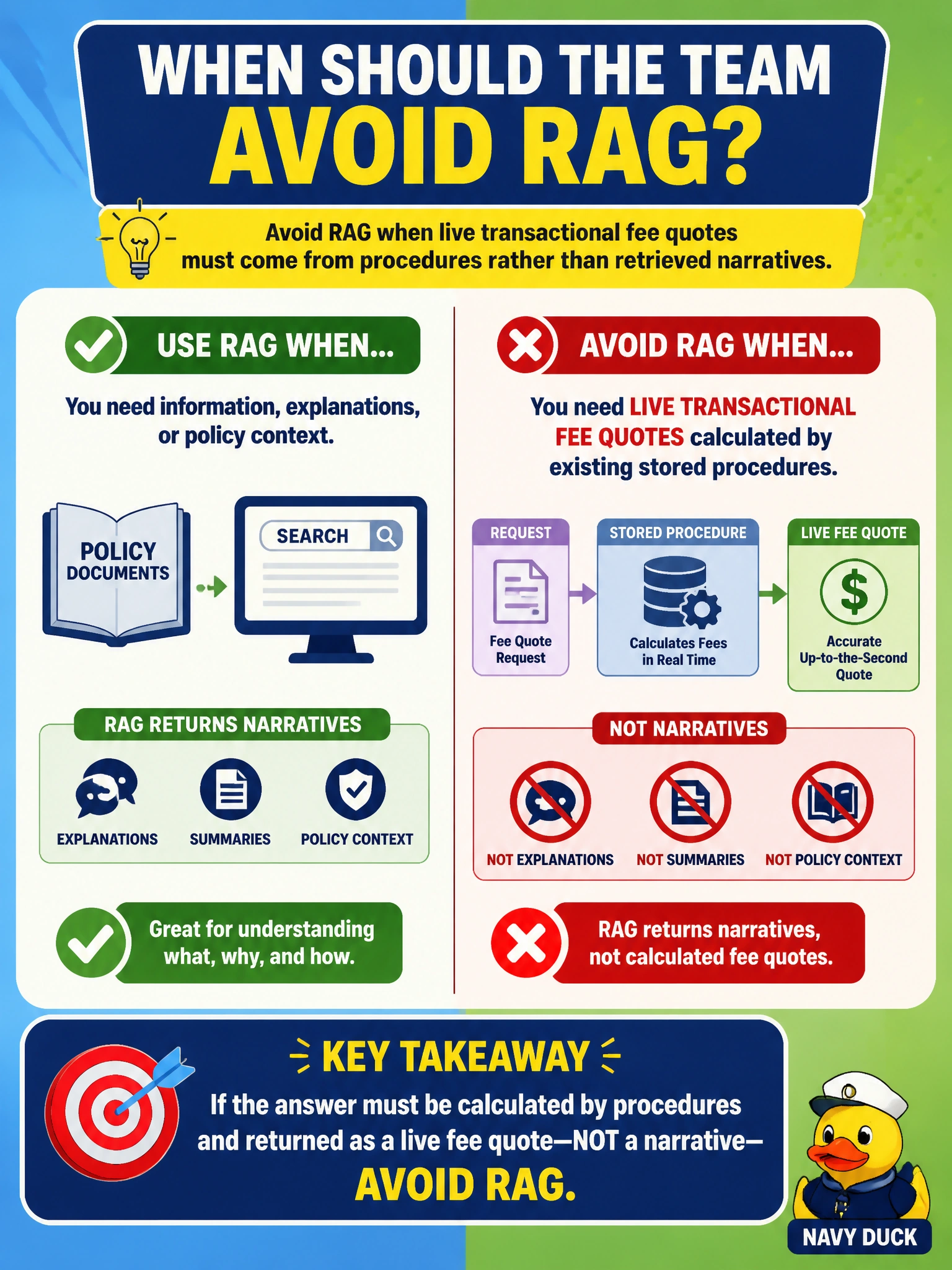
Housing residents need live transactional fee quotes calculated by existing stored procedures, not narrative policy summaries. When should the team avoid RAG?
Select an answer to reveal the explanation.
Short Explanation
Live fee quotes belong to the calculator (the procedure), not the storyteller (RAG)—know when not to ask the binder for a balance due.
Full Explanation
Housing should avoid RAG when residents need live transactional fee quotes calculated by existing stored procedures rather than narrative policy summaries. RAG retrieves and verbalizes text; fee quotes require exact, current computations from procedural logic against live transactional state, and the wrong tool produces fluent but incorrect dollar amounts. Always using RAG even for live fee calculations that procedures already compute exactly fails by concept because retrieval of fee-schedule prose cannot replace deterministic procedure output for balances due. Replacing fee procedures with a language model that invents dollar amounts fails by substituting generative estimates for authoritative financial calculation and breaking auditability of municipal charges. Refusing all fee questions and providing no transactional or RAG path fails by denying service instead of routing fee-quote intents to the correct procedural API. Exam caveat: hybrid apps may still use RAG for “what does this fee cover?” explanations while calling procedures for “how much do I owe now?”—the boundary is transactional exactness versus narrative grounding. Operationally, detect fee-quote intents, invoke the existing stored procedures for amounts, return numeric results with audit metadata, and reserve RAG for policy explanation paths that cite retrieved schedule text without overriding calculated totals.