
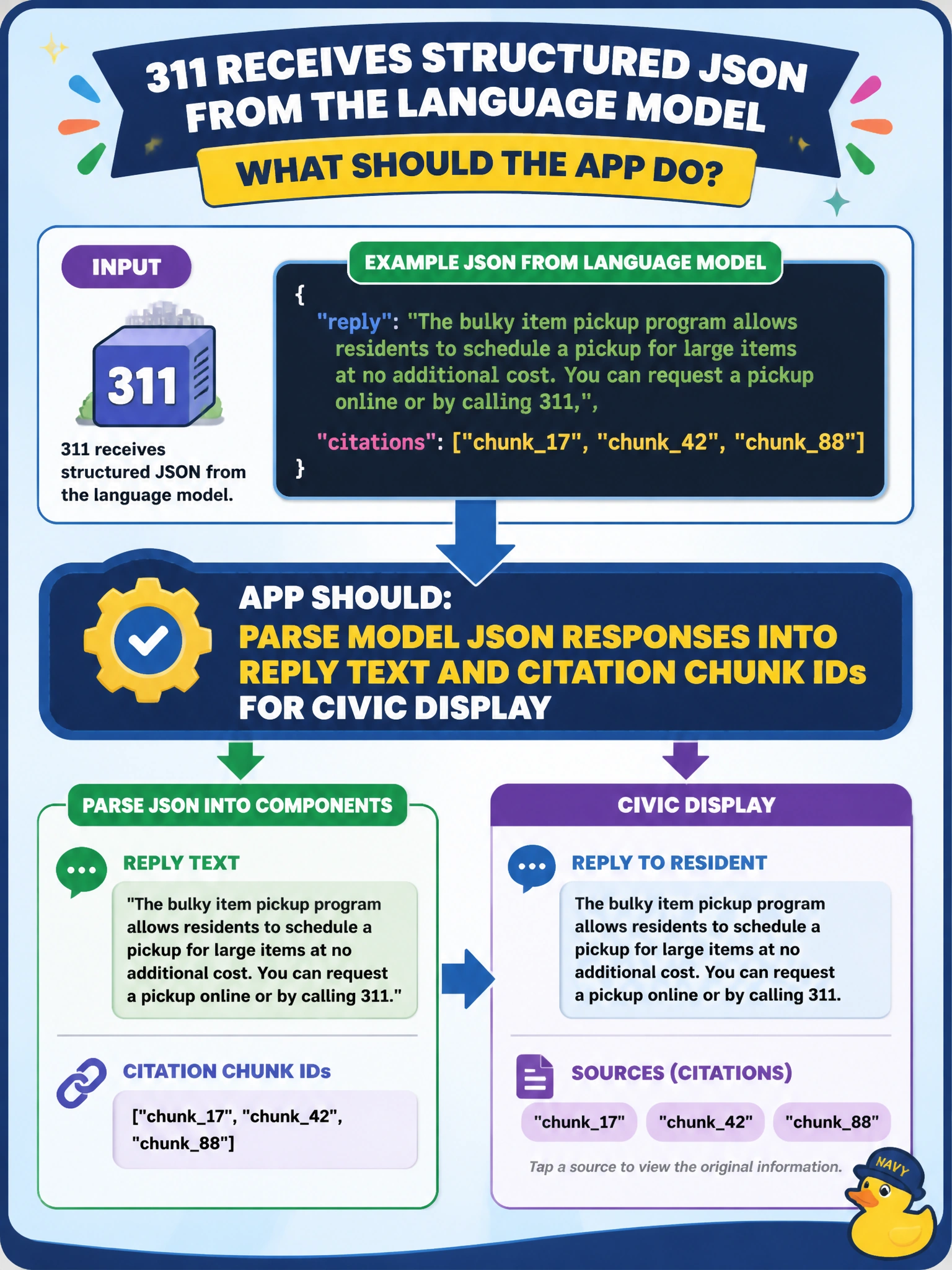
311 receives structured JSON from the language model that includes reply text and citation chunk IDs. What should the app do?
Select an answer to reveal the explanation.
Short Explanation
When the model returns tidy JSON, 311 still has to unpack it—pull the reply text and the citation chunk IDs onto the screen.
Full Explanation
When 311 receives structured JSON from the language model that includes reply text and citation chunk IDs, the app should parse that JSON into those display fields for civic UI. Structured extraction turns the model response into a resident-visible answer plus grounding references back to knowledge chunks that supported the reply. Ignoring JSON structure and showing only a generic “error” banner every time fails by concept because it discards successful structured payloads and destroys useful answers residents could have used. Throwing away citation chunk IDs so residents never see grounding references fails because citations are how municipal assistants prove which knowledge articles underpinned the reply. Storing the raw payload without extracting reply text for the 311 UI fails by keeping the answer opaque to residents even though the model returned usable structured content. Exam caveat: parsers must tolerate schema evolution such as optional fields or alternate content keys, and should validate that citation IDs exist in the retrieved set before rendering trust badges. Operationally, deserialize the model JSON, map reply text and citation chunk IDs into the 311 response view, link citations to source articles, and alert when required fields are missing rather than silently dropping grounding metadata.