
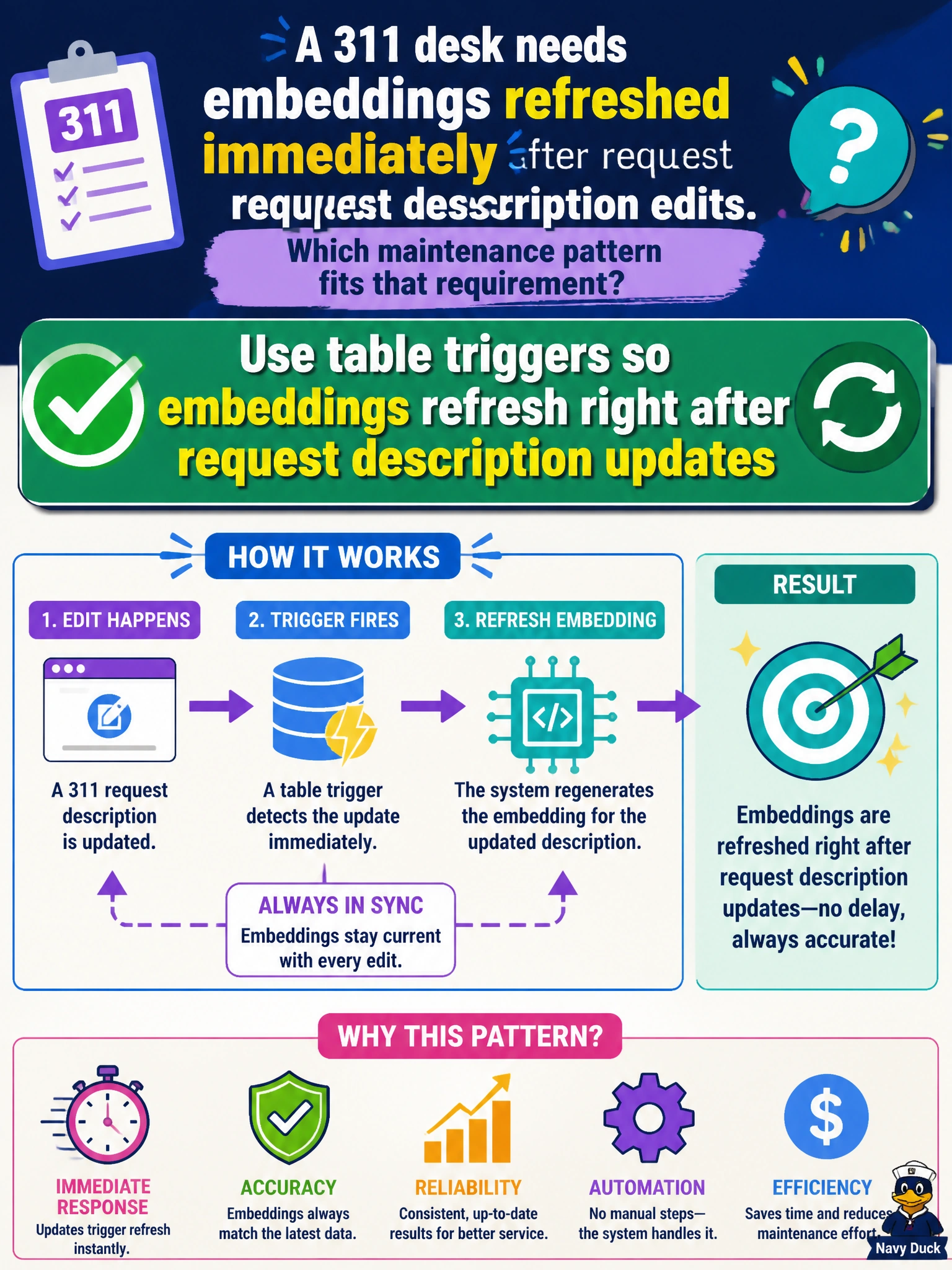
A 311 desk needs embeddings refreshed immediately after request description edits. Which maintenance pattern fits that requirement?
Select an answer to reveal the explanation.
Short Explanation
When you edit a 311 request description, a table trigger refreshes its embedding right away, so search can reflect the change without waiting for an annual rebuild. You get freshness tied to the update itself.
Full Explanation
When a 311 desk needs embeddings refreshed immediately after request description edits, table triggers can recompute or enqueue embedding work on the same write that changes the description. This ties description updates to embedding freshness, so semantic search does not keep serving yesterday’s vector after today’s correction. Waiting for annual archive jobs to rebuild every embedding from scratch fails the immediacy requirement by design: freshness would wait for the annual job. Ignoring description edits and keeping the original vectors forever creates permanent drift between searchable meaning and the live request text. Exporting descriptions to paper forms before any vector refresh adds a manual, offline step that cannot keep pace with a live desk and is not a SQL maintenance pattern. Exam caveat: synchronous embedding inside a trigger can increase OLTP latency during bursty 311 write loads, so a trigger may hand work off asynchronously; the trigger remains the immediate change signal the question calls for. Practical check: edit a request description in a test queue, confirm the trigger fires, verify the related embedding updates before the next semantic search, and monitor write latency to ensure freshness does not cause unacceptable delays.