
Transit DevSecOps reviews Copilot suggestions in a municipal repo. Which risk should they specifically watch for?
Select an answer to reveal the explanation.
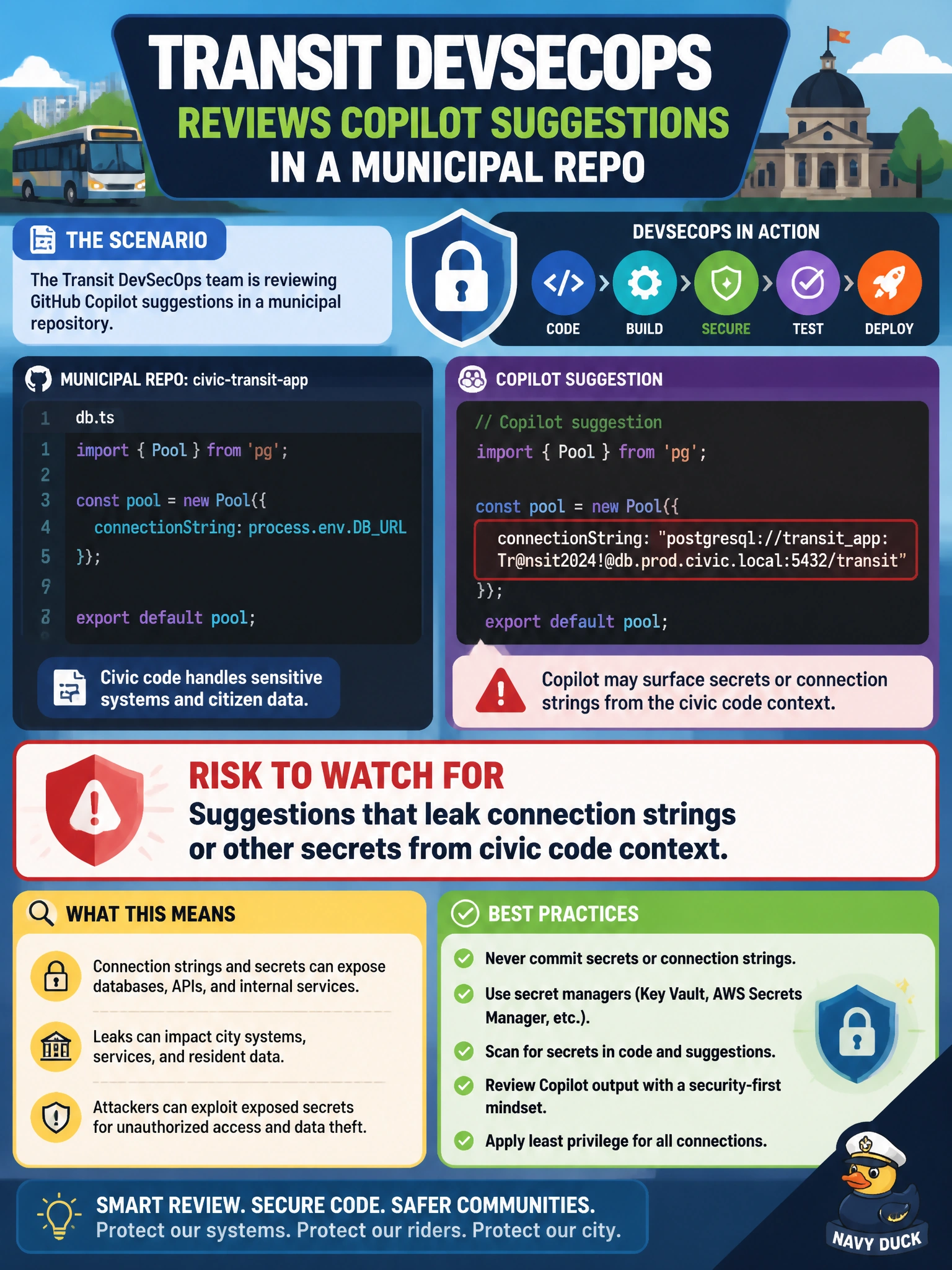
Short Explanation
Copilot sometimes regurgitates what it saw in the repo—like leaving the garage door code on a sticky note—so watch suggestions for connection strings and secrets.
Full Explanation
Transit DevSecOps reviewing Copilot suggestions in a municipal repo should specifically watch for suggestions that leak connection strings or other secrets from civic code context. AI assistants may regurgitate sensitive material present in the repository or session context, so secret leakage in suggested code or comments is a primary review risk.
Automatic creation of Row-Level Security that cannot be disabled fails by concept because Copilot does not forcibly impose irreversible RLS as an inherent behavior of suggestions. Copilot permanently deleting Query Store data each night fails because Query Store lifecycle is not controlled by Copilot suggestion review in that way. Mandatory conversion of all tables to temporal ledger graph hybrids fails because that exotic, mandatory remodel is not a Copilot suggestion risk the stem is targeting.
Exam caveat: Realistic Copilot risks on DP-800 center on sensitive context leakage and insecure patterns—not fictional forced security features, nightly Query Store wipes, or mandatory hybrid table conversions.
Operational check: Scan Copilot-influenced PRs for connection strings, keys, and tokens; use secret scanning in the municipal CI pipeline; rotate any credential that appeared in suggestions or diffs; and train reviewers to treat AI output as untrusted until inspected.