
Open-data engineers need Copilot helpers against lakehouse SQL for civic extracts. Which MCP endpoint type should they connect?
Select an answer to reveal the explanation.
Short Explanation
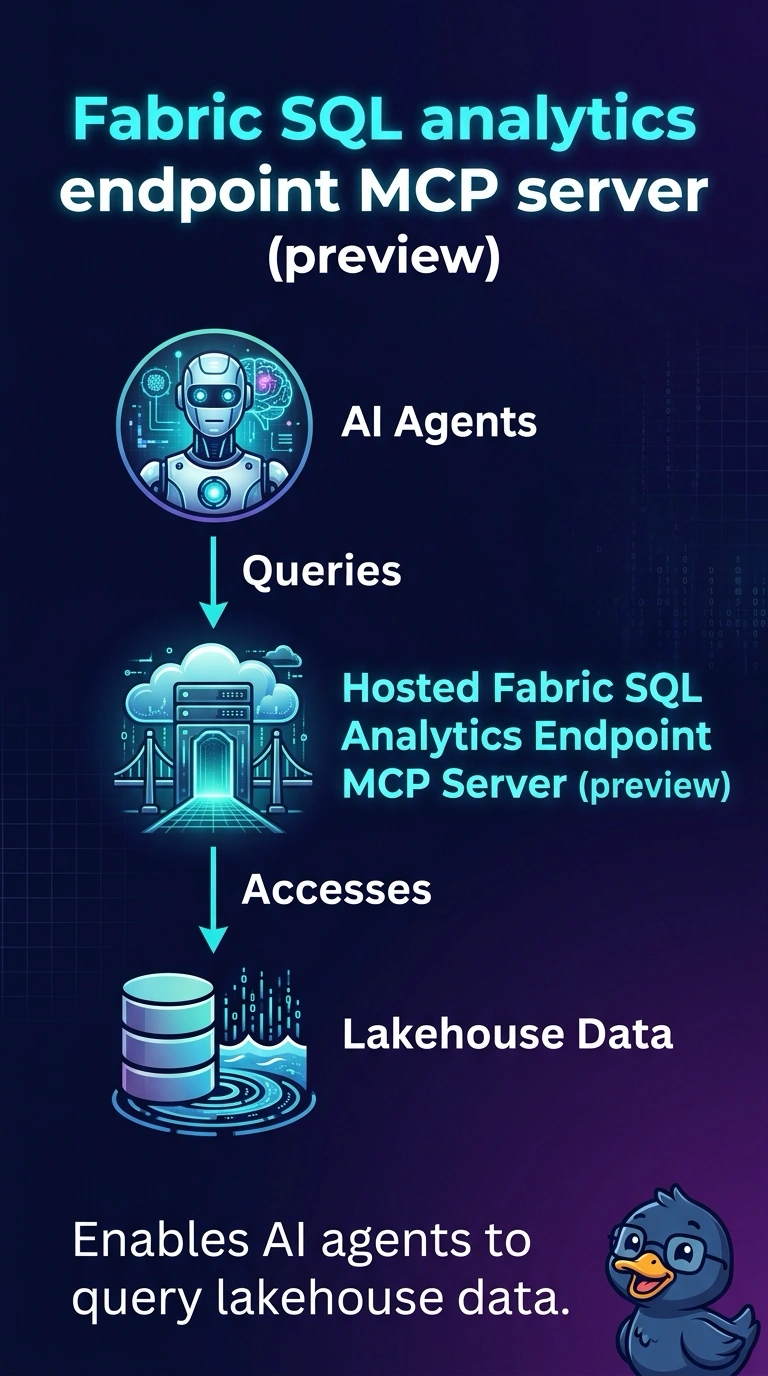
When the SQL helper should talk to a Fabric lakehouse, connect the Fabric MCP endpoint for its SQL analytics endpoint, which runs T-SQL under your signed-in identity and Fabric permissions.
Full Explanation
The Fabric MCP endpoint for the lakehouse SQL analytics endpoint (the hosted Fabric SQL endpoint MCP server, currently in preview) is the correct MCP endpoint type when open-data engineers need Copilot helpers against lakehouse SQL for civic extracts. Connecting it aligns the assistant with the Fabric lakehouse where municipal open-data SQL runs.
Using a production Always Encrypted column master key as an MCP tool fails by concept because encryption keys are secrets to protect—not MCP tools to expose. An unauthenticated public MCP server on the internet fails because it removes authentication and broadcasts a civic attack surface. A Databricks Unity Catalog metastore as the DP-800 SQL identity fails because that is the wrong platform identity for this exam’s Fabric/SQL-focused AI-assisted tooling skill.
Exam caveat: Match MCP endpoint type to the data plane in play (Fabric lakehouse MCP for lakehouse SQL). Reject answers that expose keys as tools, remove auth, or import unrelated catalog products as if they were the DP-800 SQL identity.
Operational check: Register the Fabric lakehouse MCP endpoint under authenticated municipal controls, validate Copilot can discover approved open-data objects for extract development, deny public anonymous access, and ensure encryption keys remain in the key store—not in the MCP tool list.