
Courts developers want Copilot MCP assistance against docket schemas without touching production. How should they connect MCP?
Select an answer to reveal the explanation.
Short Explanation
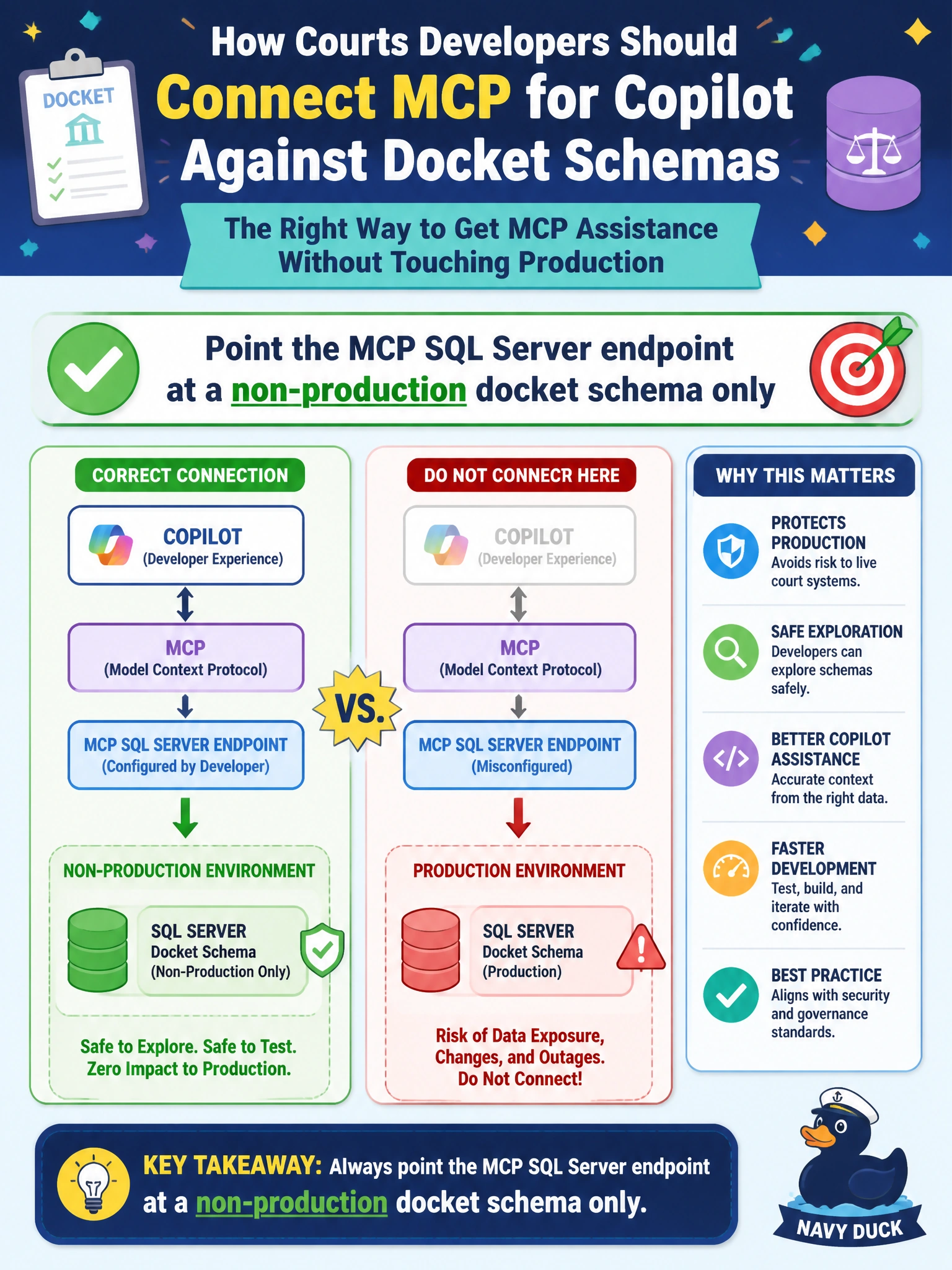
Keep Copilot’s SQL Server MCP hose hooked to the practice hydrant—non-prod docket schemas—not the courthouse production main.
Full Explanation
Pointing the MCP SQL Server endpoint at a non-production docket schema only is the correct way for courts developers to get Copilot MCP assistance against docket schemas without touching production. Non-prod targets preserve usefulness for schema discovery and query drafting while reducing exposure of live court data and limiting accidental mutation risk.
Binding MCP directly to the live production courts database with write tools fails by concept because it maximizes confidentiality and integrity risk. Disabling authentication on the MCP endpoint for faster demos fails because unauthenticated access violates municipal control requirements. Mirroring production SSNs into Copilot chat history nightly fails because it deliberately moves highly sensitive PII into AI chat context and retained history.
Exam caveat: Least-privilege MCP design on DP-800 means non-production targets, authenticated endpoints, and no production PII in chat. Production write-enabled MCP and auth bypasses are exam distractors that signal insecure enablement.
Operational check: Configure MCP to the courts non-prod docket schema, verify authentication is required, confirm write tools are absent or tightly gated, test Copilot assistance there, and periodically audit that no production connection string was reintroduced.