
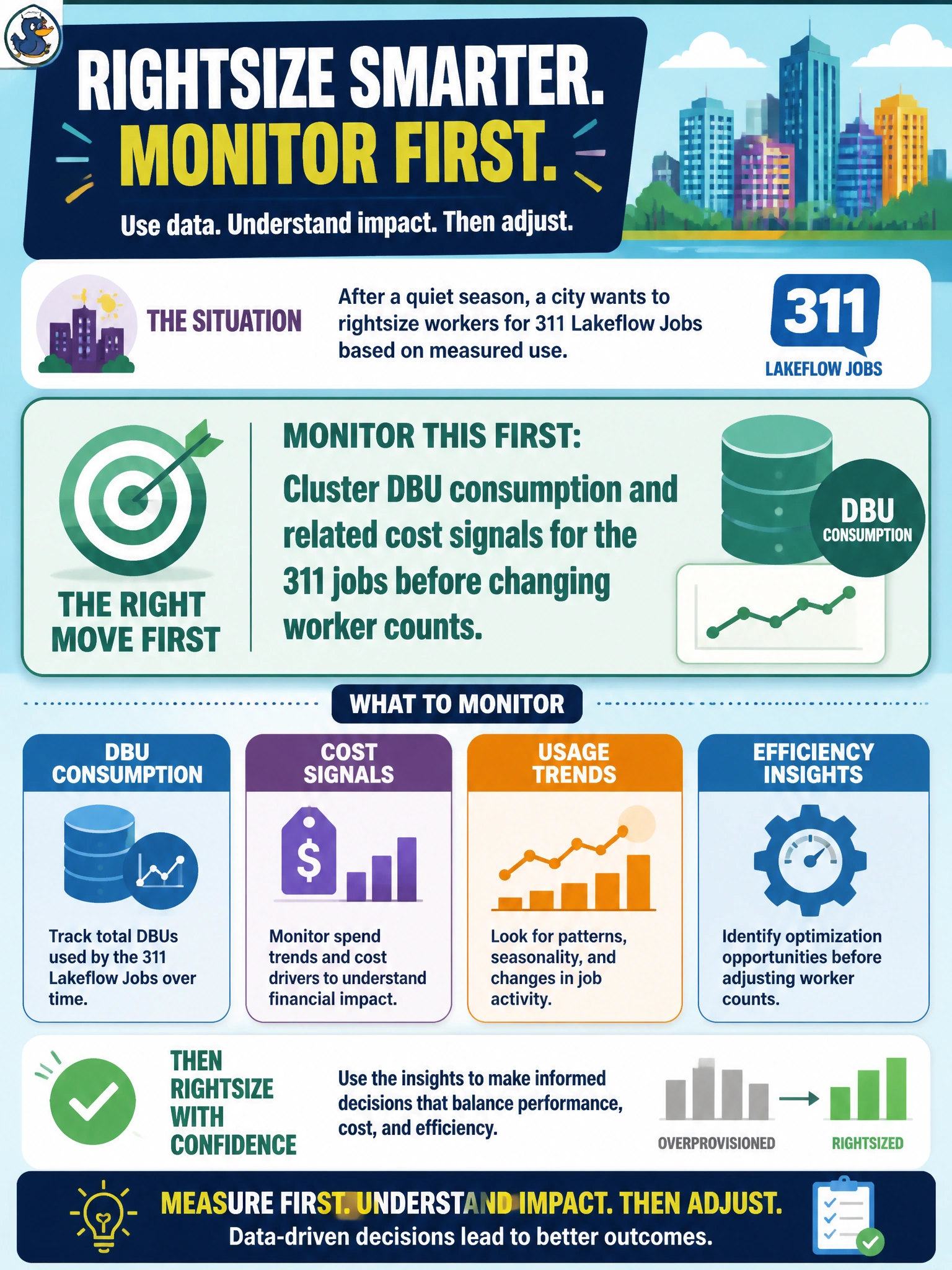
After a quiet season, a city wants to rightsize workers for 311 Lakeflow Jobs based on measured use. What should they monitor first?
Select an answer to reveal the explanation.
Short Explanation
Before you buy a bigger (or smaller) 311 truck, check the fuel gauge—DBU consumption tells you what those jobs actually burned.
Full Explanation
After a quiet season, rightsizing workers for 311 Lakeflow Jobs should begin by monitoring cluster DBU consumption and related cost signals for those jobs before changing worker counts. Measured use—not guesswork—tells civic platform teams whether jobs are over-provisioned, under-provisioned, or merely idle-heavy, so DBU and cost telemetry are the first evidence to collect before any resize. Monitoring only SQL warehouse DBU consumption and related cost signals for the 311 reports fails because warehouse consumption reflects reporting load, not the cluster DBU burn or worker demand of the 311 jobs themselves. Relying on All-purpose DBU consumption and related cost signals for the 311 jobs fails because all-purpose consumption reflects interactive workloads, not the Lakeflow Jobs cluster DBU usage that determines worker sizing. Using Pipeline DBU consumption and related cost signals for the 311 jobs fails because pipeline consumption reflects Declarative Pipeline execution, not the job-level cluster DBU consumption needed to size workers for the 311 Lakeflow Jobs. Exam caveat: DP-750 cost and performance questions expect candidates to start from job-level DBU and related cost signals before resizing workers. Operational check: export recent 311 Lakeflow Job DBU, duration, and utilization metrics; compare them against SLA needs; adjust worker counts deliberately; then re-measure cost and runtime to confirm the rightsizing actually improved the civic workload profile.
Prefer to study offline? Printable PDF study book + test engine ($7.50, unofficial). These questions stay free here.