
Parks must document which expectations are fatal for public open-data drops versus those that only warn on internal silver. What principle applies?
Select an answer to reveal the explanation.
Short Explanation
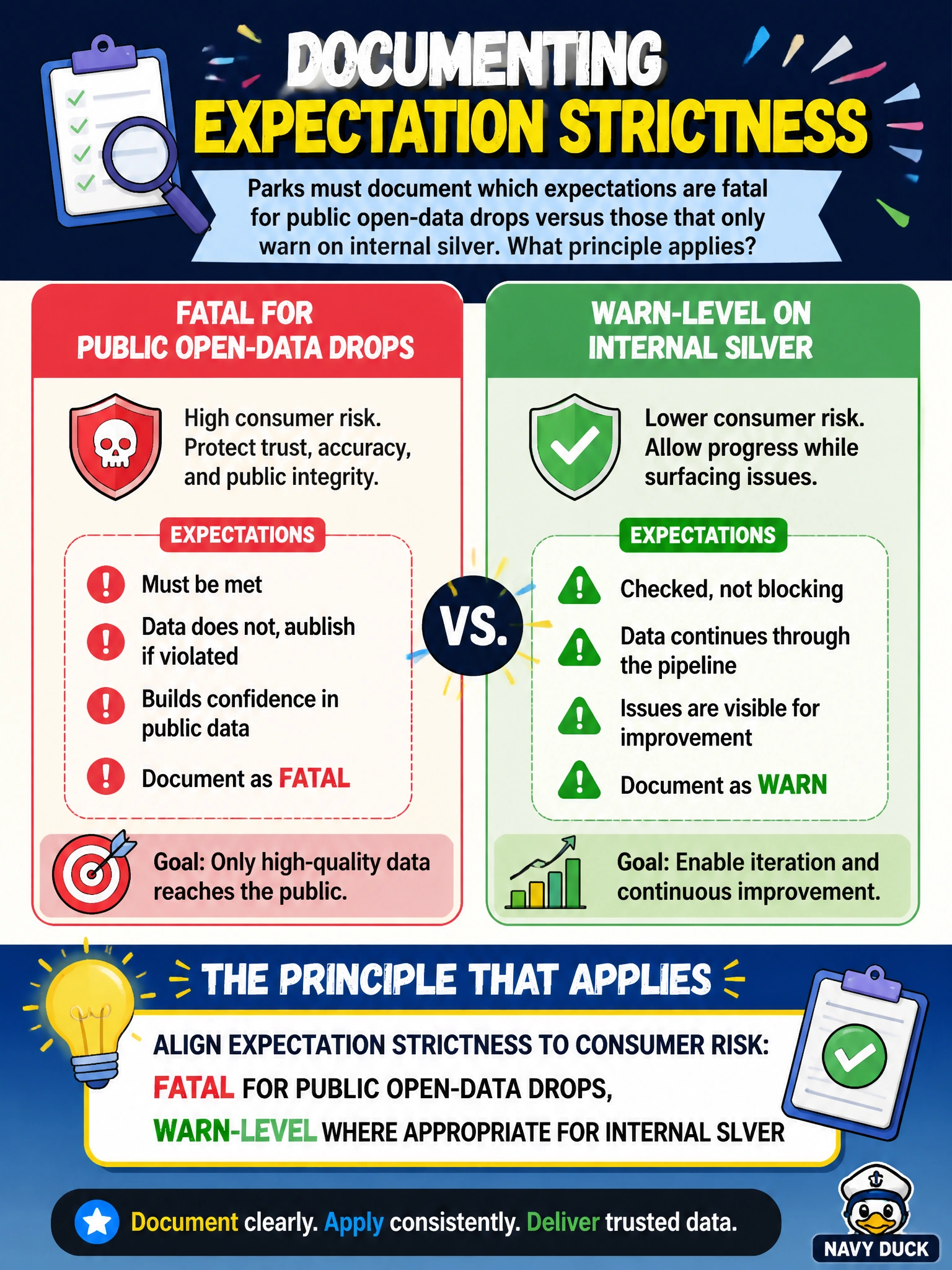
Public open data is the front window display—broken glass gets the hard stop. Internal silver can take a sticky note warning while you fix it.
Full Explanation
Quality policy for civic pipelines should align expectation strictness with consumer risk. Parks open-data drops are public-facing; fatal expectations there stop publishing when critical rules break so residents and partners do not download corrupt datasets. Internal silver tables used by staff may appropriately use warn-level expectations so engineers see quality pressure without always blocking every exploratory or intermediate stage. Documenting which expectations are fatal versus warn makes that risk alignment explicit for operators and auditors. Applying row-level quarantine with expect or drop describes a row-handling mechanism rather than the governing principle: even with fatal for public open-data drops and warn-level tracking for internal silver, it does not document why consumer risk requires public publishing to fail fast while internal stages can tolerate warnings. Driving expectation strictness from freshness SLAs for public open-data drops and internal silver misplaces the decision in timeliness goals instead of consumer risk, so it cannot justify why public paths must fail fast even when freshness targets are met. Gating expectation strictness on job retry policy for public open-data drops and internal silver misplaces the decision in retry behavior instead of consumer risk, so it cannot justify why public publishing needs fatal rules regardless of how retries and logging are configured. Exam caveat: "fatal for public, warn for internal silver" is a common pattern, not a universal law—internal tables that feed life-safety or financial decisions may still need fatal rules. Operational check: break a required open-data field in a test drop and confirm the public publish fails fast; introduce a non-critical silver anomaly and confirm warn metrics appear without blocking the internal refine; review the documented expectation policy with parks open-data owners.
Prefer to study offline? Printable PDF study book + test engine ($7.50, unofficial). These questions stay free here.