
Transit sees repeated failed expectations for AVL vendor null spikes in the pipeline UI. What should engineers do next?
Select an answer to reveal the explanation.
Short Explanation
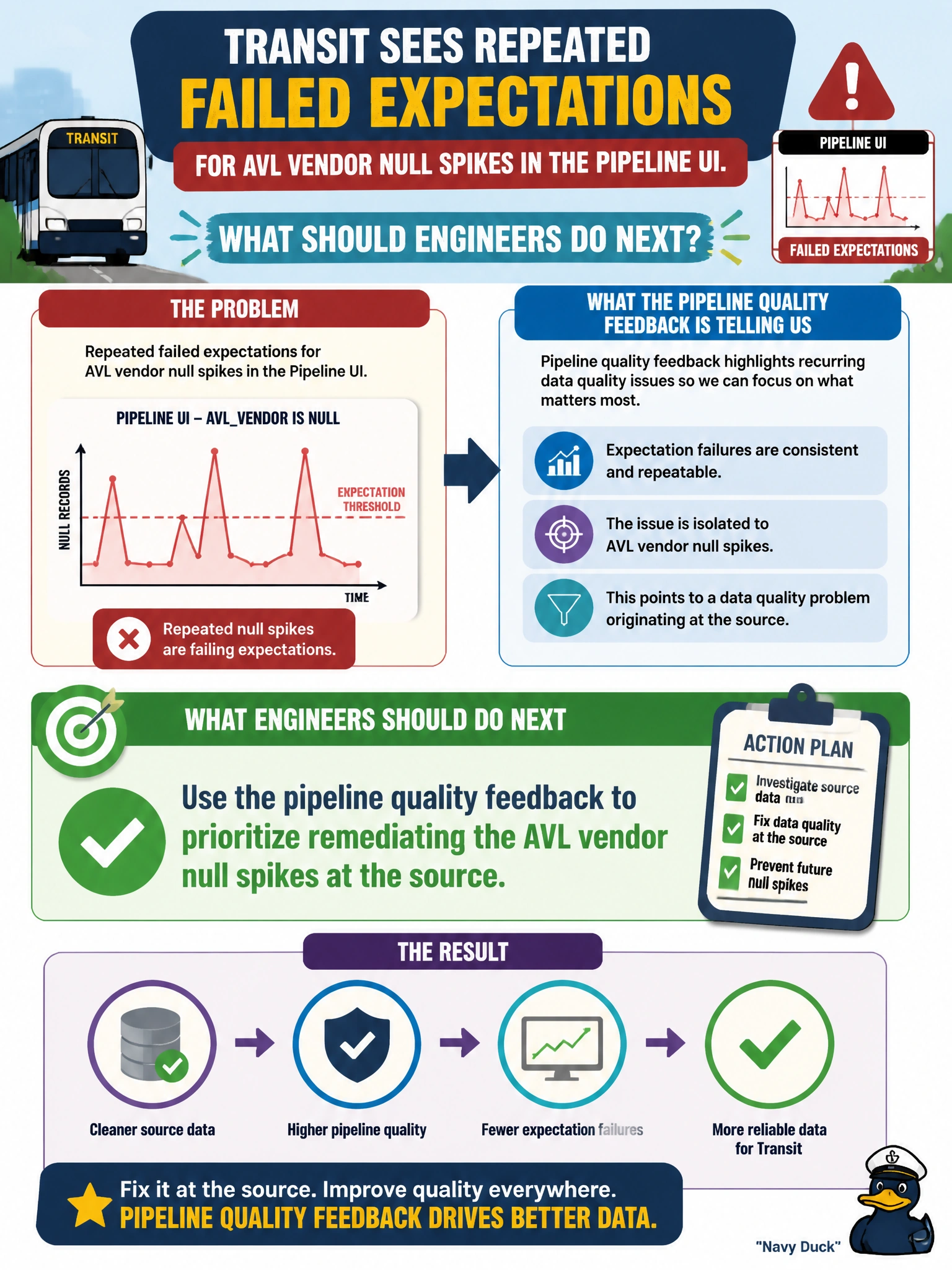
Those red expectation counters are the bus radio saying 'vendor GPS is dropping'. Use them to get the vendor feed fixed, don't tune the rules in the pipeline UI to match the faulty feed.
Full Explanation
Pipeline quality feedback exists so municipal teams close the loop on source defects. When transit repeatedly sees failed expectations for AVL vendor null spikes in the pipeline UI, engineers should use those metrics to prioritize remediating the vendor feed—contracts, device firmware, parsing, or null thresholds—rather than silencing the signal. Expectation counts and trend panels are operational inputs: they show where civic streaming quality is degrading and which vendor behaviors need escalation.
Tuning the AVL null expectation rules in the pipeline UI to reflect current vendor feed behavior fails by concept: it silences the quality signal while bad AVL nulls continue downstream, masking vendor defects instead of fixing them. Enriching the AVL null-spike records with depot reference metadata to keep dispatch mart use complete adds context around the nulls but never remediates the vendor null spikes at the source, so the same quality feedback keeps firing batch after batch. Replaying the AVL null-spike intervals through the transform layer to rebuild daily conformed dispatch marts fails by concept: it replays the same vendor nulls through downstream logic while the vendor feed remains broken, manufacturing a green dashboard and abandoning Domain-style quality operations.
Exam caveat: replaying the AVL null-spike intervals through the transform layer to rebuild daily conformed dispatch marts might seem like an interim control while the vendor feed is fixed, but it replays the same nulls and never remediates the source. Operational check: capture the expectation failure rate and sample null rows, open a vendor/ops ticket with evidence from the pipeline UI, apply interim quarantine if policy requires, and verify expectation failure rates fall after the vendor null spike is corrected.
Prefer to study offline? Printable PDF study book + test engine ($7.50, unofficial). These questions stay free here.