
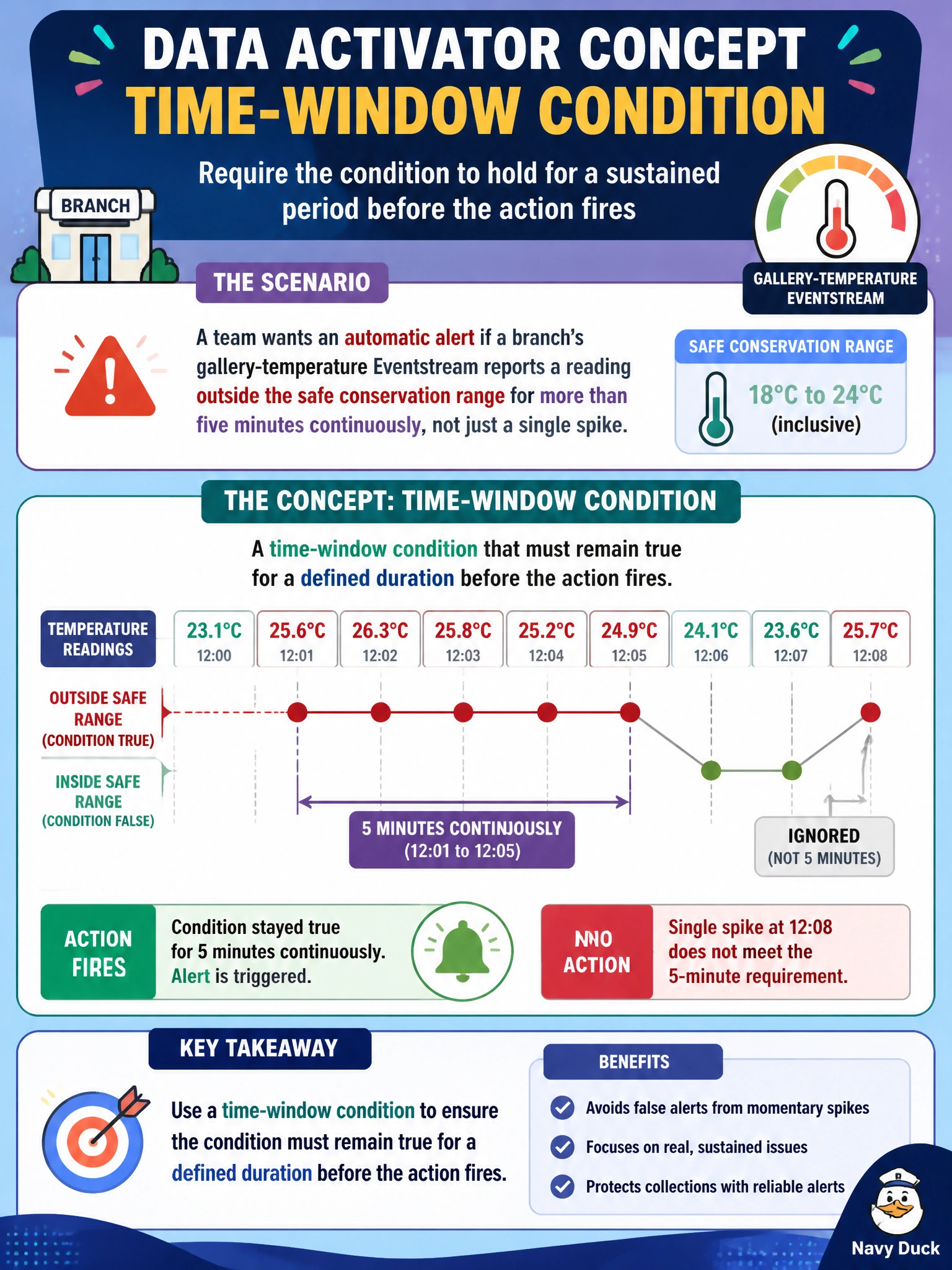
A team wants an automatic alert if a branch's gallery-temperature Eventstream reports a reading outside the safe conservation range for more than five minutes continuously, not just a single spike. Which Data Activator concept lets them require the condition to hold for a sustained period before triggering?
Select an answer to reveal the explanation.
Short Explanation
Requiring the reading to stay out of range for five straight minutes, not just one bad reading, is like a smoke detector with a delay. A puff of steam from tea shouldn't set off the whole building.
Full Explanation
Data Activator conditions can be scoped over a time window, requiring the defined condition to remain true continuously for a set duration before the action fires, which is exactly the mechanism needed to distinguish a single noisy spike from a genuinely sustained temperature excursion in a conservation vault. Item endorsement duration isn't a real concept; endorsement is a one-time certification or promotion state on an item, not a time-based condition setting. A deployment pipeline's stage gate controls promotion of item definitions between development, test, and production stages, an entirely different lifecycle-management concern unrelated to live data thresholds. A OneLake shortcut's refresh interval, where relevant, governs how often cached metadata for a shortcut is refreshed, not how long a monitored condition must hold before an alert fires. Choosing the right duration for the window matters in practice, since too short reintroduces false alarms from brief sensor noise, while too long delays a real response to genuine environmental drift.