
The archives development team wants every change to Fabric items in their digitization workspace tracked with commit history and reviewable before it takes effect, rather than edited directly with no record. What should they set up?
Select an answer to reveal the explanation.
Short Explanation
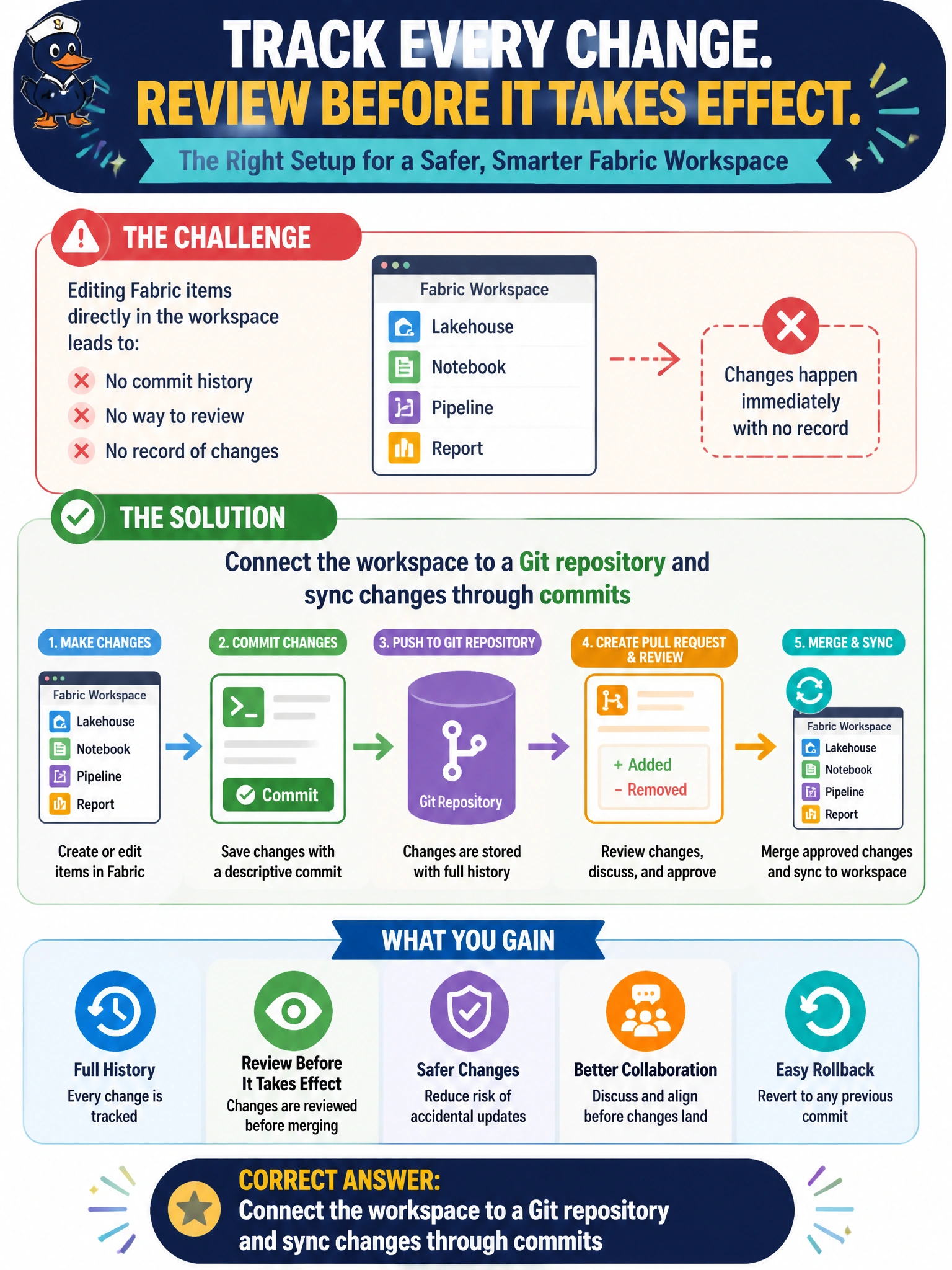
Git integration turns your workspace into something like a shared document with full track-changes history -- every edit becomes a commit you can review, instead of silent changes nobody can trace. Connecting the workspace to a repo and syncing through commits is what gives the team that reviewable trail.
Full Explanation
Connecting a Fabric workspace to a Git repository and syncing item changes as commits is the feature built for exactly this: every change becomes a tracked, reviewable commit tied to the connected branch, and the workspace can be updated from or committed to that branch on demand. Enabling audit logs records who did what and when across the tenant for compliance review, but it is a monitoring trail, not a source-control system with commit history and branch-based review. A deployment pipeline moves content between lifecycle stages like dev, test, and production; it tracks stage differences, not granular commit-level change history. Endorsement badges signal item trustworthiness to consumers and have nothing to do with change tracking. A scope note: Git integration tracks supported item types' definitions, not every possible workspace artifact, so confirm the specific item types the team relies on are Git-syncable. Verify the setup by checking the workspace's Source control pane shows the connected repository, branch, and a clean or pending-changes status after an edit.