
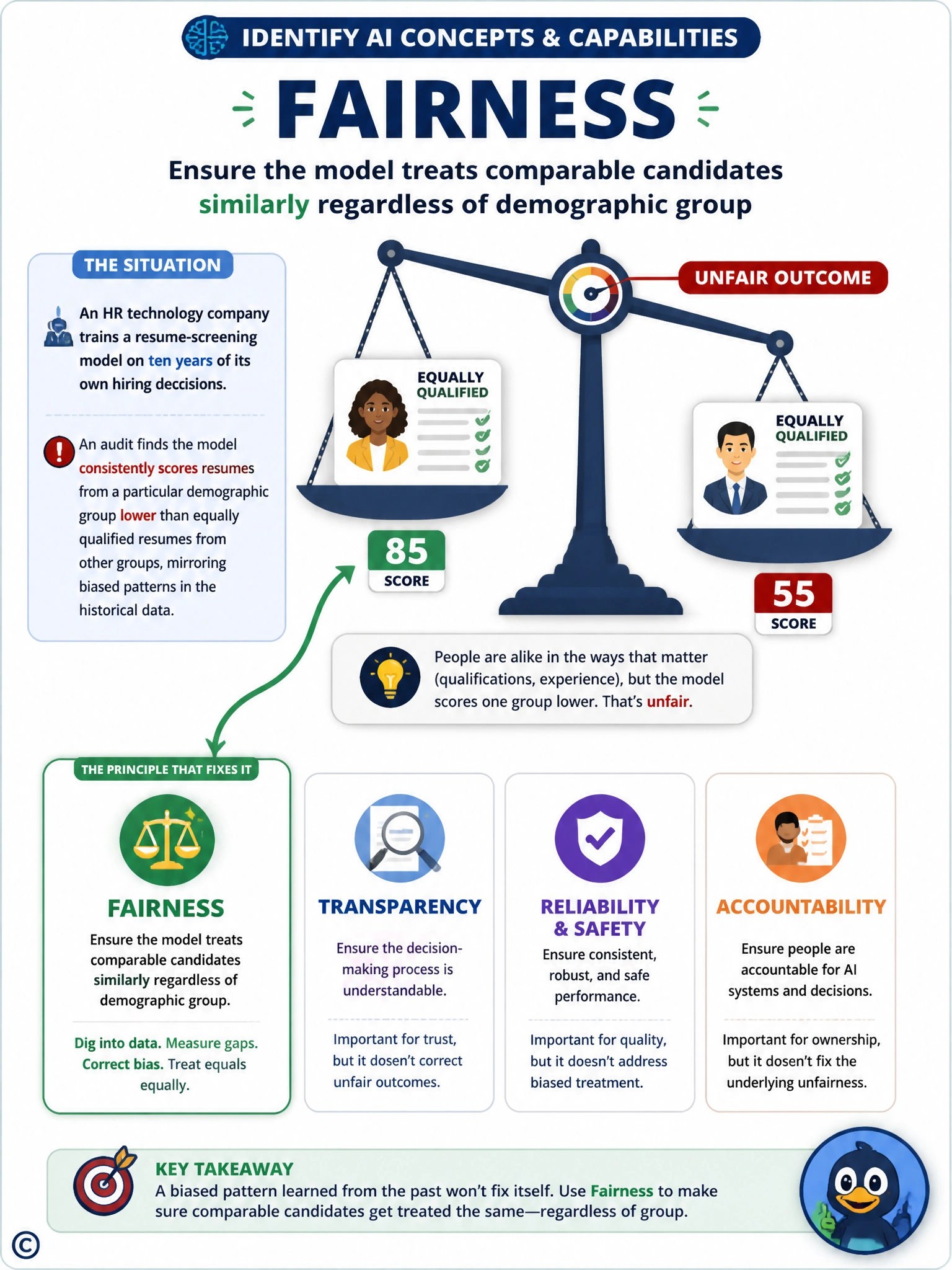
An HR technology company trains a resume-screening model on ten years of its own hiring decisions. A later audit finds the model consistently scores resumes from a particular demographic group lower than equally qualified resumes from other groups, mirroring biased patterns baked into the historical hiring data. Which Responsible AI principle should most directly guide the company's response?
Select an answer to reveal the explanation.
Short Explanation
Picture the model as an apprentice who spent ten years watching a manager make hiring calls, some of them unfair, and picked up the manager's bad habits without anyone correcting them. Once you notice the apprentice keeps giving lower marks to one group of equally qualified people, the fix isn't a faster computer, a diagram nobody outside engineering will read, or handing the problem to someone whose job is tracking feature requests. None of those touch the actual harm. What you need is the principle that's built specifically for this situation: making sure people who are alike in the ways that matter get treated alike, regardless of a trait that shouldn't factor in. That means digging into the training data and the model's behavior, measuring the gap across groups, and correcting it, because a biased pattern learned from the past doesn't fix itself just by scaling infrastructure or writing documentation.
Full Explanation
The correct answer is A. The audit describes a model that produces systematically unequal outcomes for comparable candidates based on group membership, which is precisely what the fairness principle addresses: an AI system should not disadvantage a group of people through biased outcomes, and the company must actively test for and correct that imbalance rather than accept whatever pattern the historical data taught the model. Option B is incorrect because server capacity concerns reliability and safety, which covers consistent technical performance under expected conditions, not biased scoring. Option C is incorrect because transparency is about giving people understandable information on how and why the system makes decisions, such as disclosing that AI is used and explaining its factors; publishing an architecture diagram does nothing to fix or even reveal a fairness problem and is not what transparency requires. Option D is incorrect because accountability means the people and organizations responsible for an AI system are answerable for how it operates and impacts people; assigning someone to track feature requests is a project-management task unrelated to answering for biased hiring outcomes. Only fairness targets the specific harm found in the audit.