
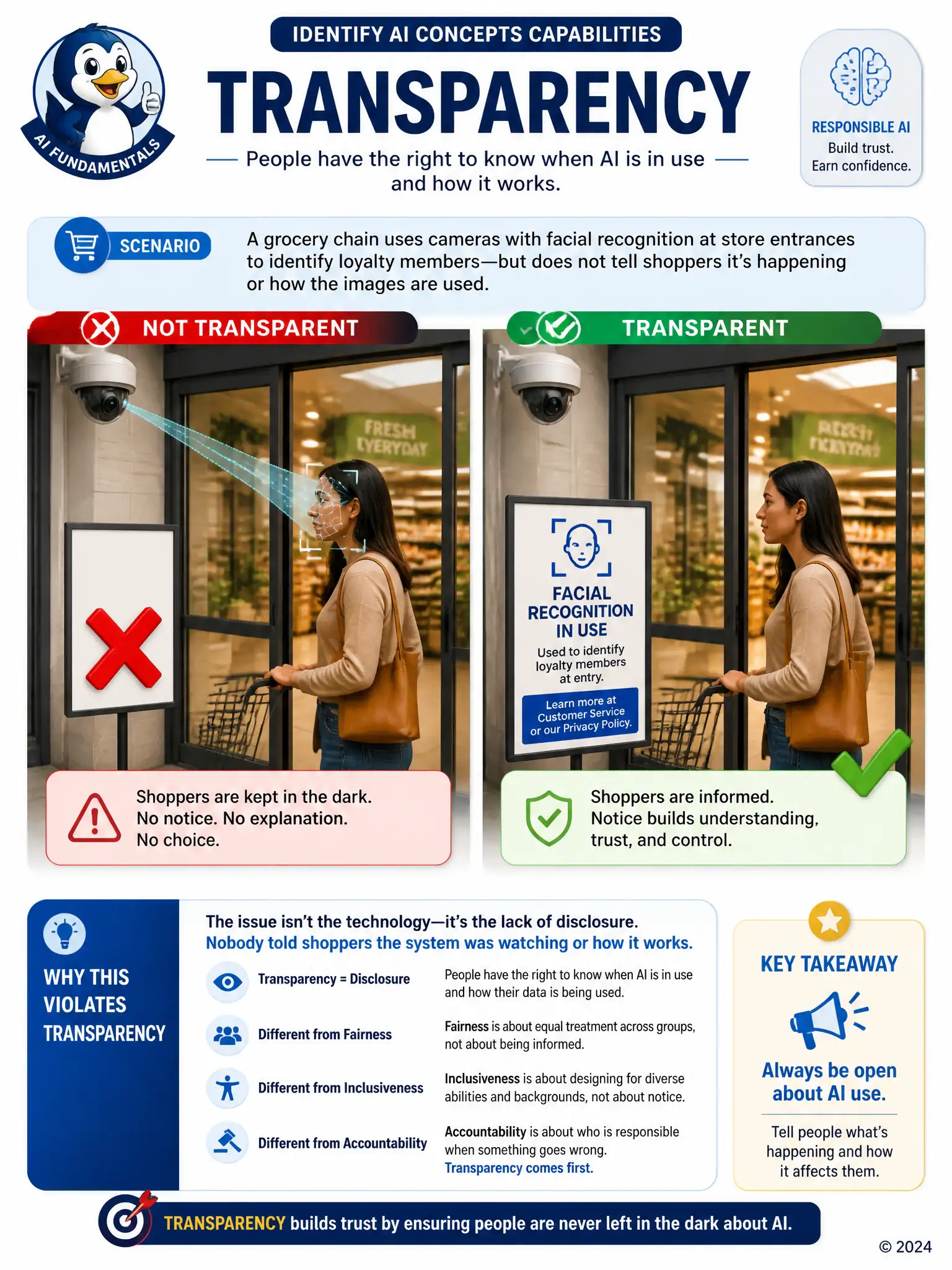
A grocery chain installs cameras with facial recognition at store entrances to automatically identify loyalty-program members as they walk in, but it does not post any signage, update its privacy policy, or otherwise tell shoppers that facial recognition is running or how the images are used. Which responsible AI principle is most directly violated?
Select an answer to reveal the explanation.
Short Explanation
You've got a disclosure problem: shoppers walked in with no clue cameras were identifying their faces. Transparency is the principle that makes sure people know an artificial-intelligence system is running and what it's doing with their data. The other concerns matter, but they don't fix the missing notice.
Full Explanation
Transparency requires that people affected by an artificial-intelligence system understand that it is being used and how it works, and the grocery chain's failure to disclose the facial recognition system through signage or an updated policy directly violates that expectation. The fairness option is incorrect because fairness concerns whether an artificial-intelligence system treats different groups of people equitably, such as recognition accuracy varying across demographics, which is a separate issue from whether shoppers were told the system exists. The inclusiveness option is incorrect because inclusiveness concerns designing systems that work well for and empower people of varying abilities and backgrounds, not the act of disclosing a system's presence. The accountability option is incorrect because accountability concerns having identifiable people and processes responsible for how an artificial-intelligence system behaves and for remediating problems, which is a governance concern distinct from the lack of customer notice described here. Since the core problem in the scenario is that shoppers were kept in the dark about a system observing them, transparency is the principle at stake.