
An airport wants a self-service kiosk that compares a traveler's live camera photo against their passport photo to confirm identity before boarding, speeding up the line. Privacy advocates raise concerns about storing biometric images. Which Azure AI capability provides the core identity-matching function the airport is describing?
Select an answer to reveal the explanation.
Short Explanation
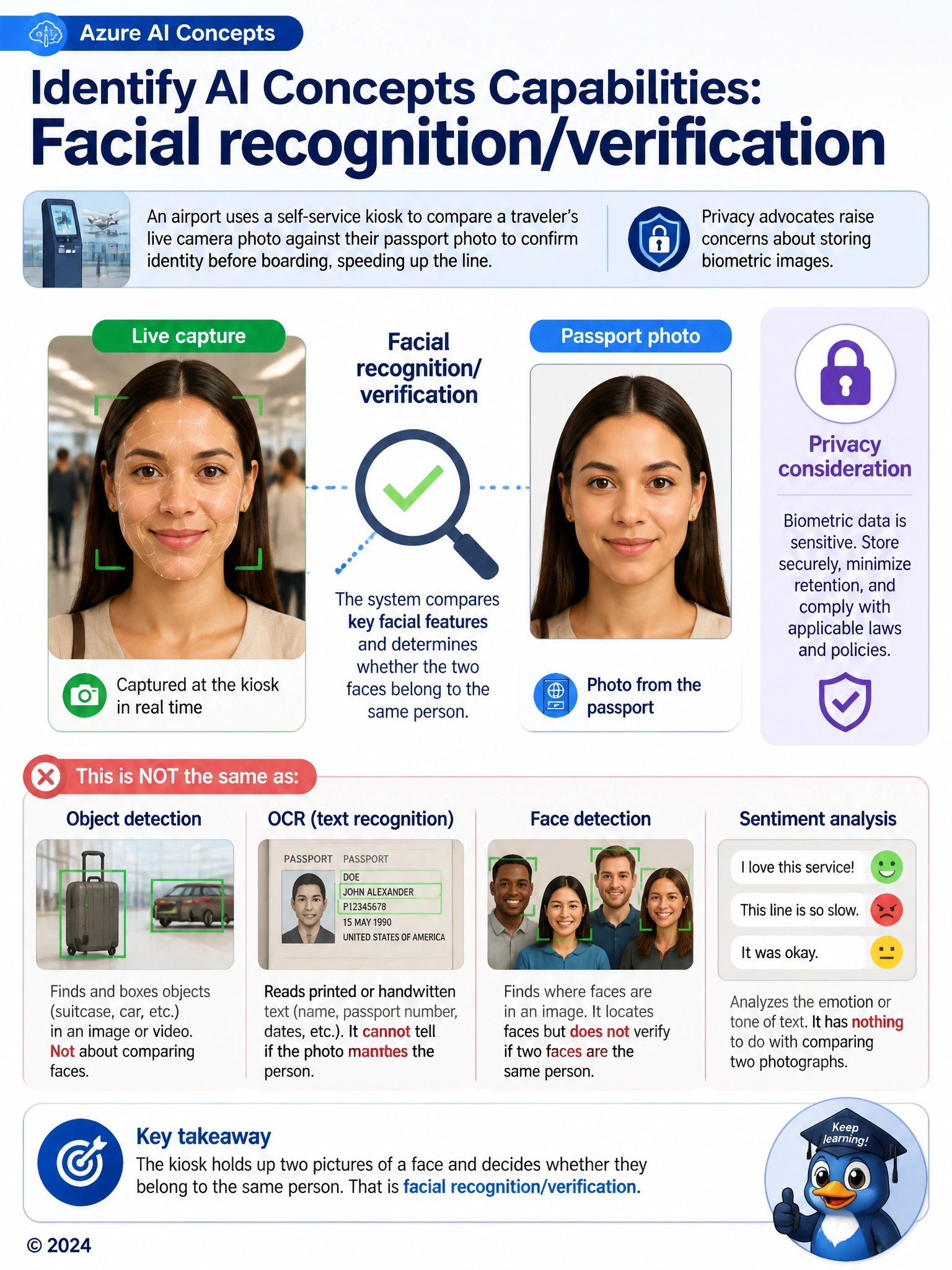
Strip away the privacy debate for a second and just ask what the kiosk is technically doing: it's holding up two pictures of a face, the live one and the passport one, and deciding whether they belong to the same person. That's a face-matching job, plain and simple. It's not the same as spotting and boxing generic objects like a suitcase or a car in a camera feed, since here the target is specifically a face being compared against another face rather than just located. It's also not about pulling the printed name or passport number off the document page, since text extraction can read what's written but can't tell you whether the photo matches the person standing there. And judging emotional tone in language obviously has nothing to do with comparing two photographs. The core capability being described is matching faces against each other.
Full Explanation
The correct answer is D. Comparing a live photo of a traveler against their passport photo to confirm they are the same person is a face-matching task, which is the facial recognition/verification capability within Azure AI Vision's face services. Option A is incorrect because object detection is designed to locate and box generic objects such as luggage or vehicles within an image, not to compare two faces and determine whether they belong to the same individual. Option B is incorrect because optical character recognition extracts printed text, such as the name and passport number on the document page, but it does not compare facial images to verify identity. Option C is incorrect because sentiment analysis evaluates the emotional tone of text, which has no role in a visual identity-matching task involving photographs. While the privacy concerns raised about storing biometric images are legitimate and relate to responsible AI principles, the specific technical capability the kiosk relies on for matching the two photos is facial recognition.