
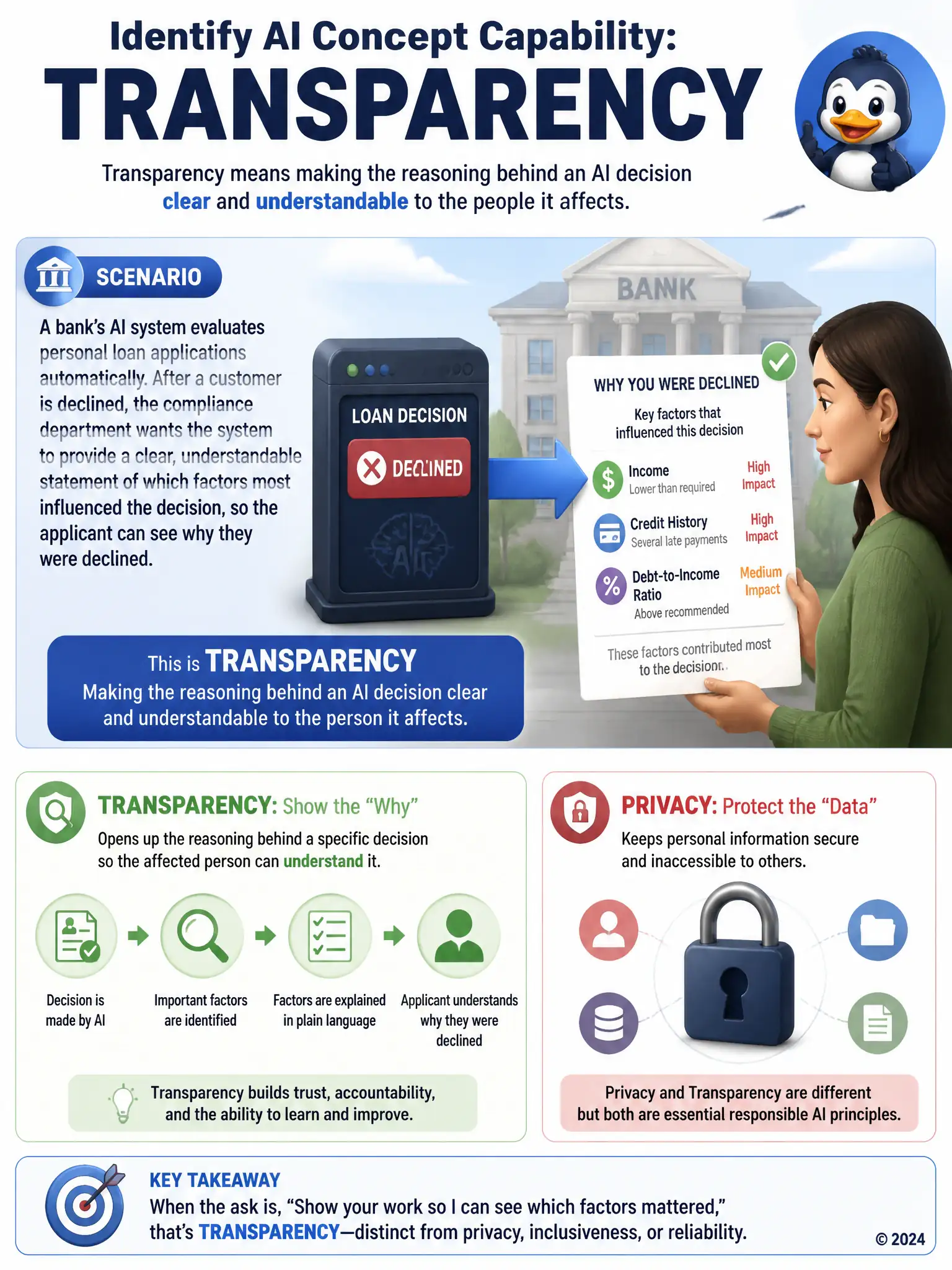
A bank's AI system evaluates personal loan applications automatically. After a customer is declined, the compliance department wants the system to provide a clear, understandable statement of which factors most influenced the decision, so the applicant can see why they were declined. This requirement aligns most directly with which responsible AI principle?
Select an answer to reveal the explanation.
Short Explanation
Notice what the compliance team's asking for: not better data protection, not broader accessibility, just a plain-language answer to why the decision came out this way. When you need to show your work so a declined applicant can see which factors mattered, that's the transparency principle in responsible AI.
Full Explanation
The correct answer is transparency. The compliance department wants the loan decision explained in clear terms so applicants understand which factors drove the outcome, and making an AI system's reasoning understandable to the people affected by it is exactly what the transparency principle addresses. The privacy and security principle is incorrect because it concerns protecting personal data from misuse or unauthorized access, not explaining why a decision was reached. The inclusiveness principle is incorrect because it is about designing systems that work well for people across different abilities, backgrounds, and circumstances, which is a separate concern from providing a decision explanation. The reliability and safety principle is incorrect because it focuses on the system performing consistently and safely under expected and unexpected conditions, not on communicating the reasoning behind a specific outcome to an individual applicant.