
A finance multi-agent system can draft wire instructions but policy forbids sending wires above a threshold without human approval. How should you implement human-in-the-loop?
Select an answer to reveal the explanation.
Short Explanation
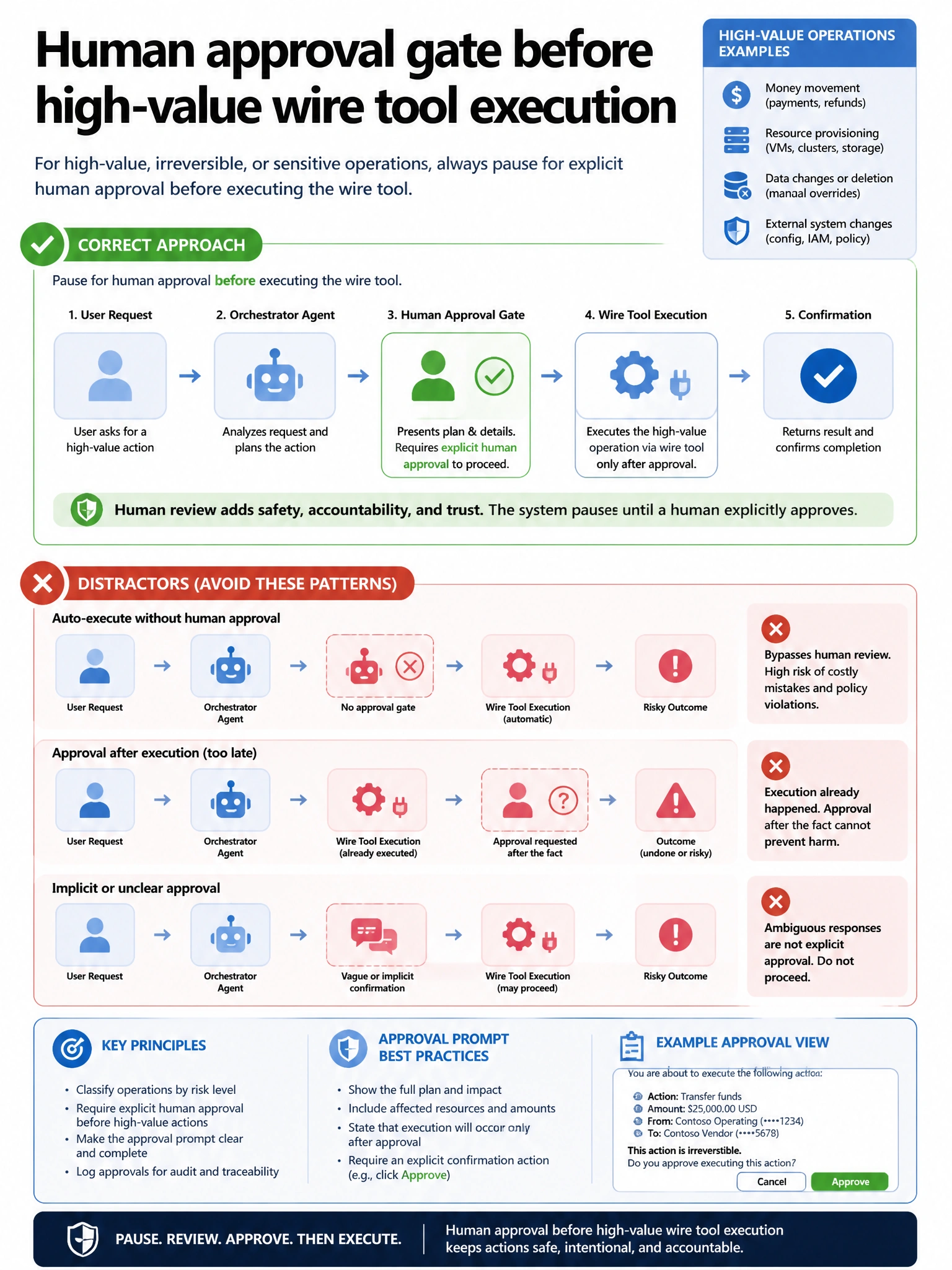
B is the HITL pattern the exam wants: approval workflows, overrides, and edge-case handling that actually block tool execution until a human decides. Passive after-the-fact email (A) is not a control for irreversible wires. C security-by-obscurity on tool names fails. D chat memory is not an audit-grade approval system. Build HITL as a real workflow step in the orchestration graph, not a suggestion in the prompt.
Full Explanation
Correct Answer — B
Human-in-the-loop processes include approval workflows, overrides, and edge-case handling. High-risk tools (wires above threshold) must be gated so execution cannot proceed without recorded human decision.
Why A is wrong: After-the-fact review does not prevent unauthorized high-value transfers.
Why C is wrong: Hiding tools without enforcement is not a control.
Why D is wrong: Chat memory lacks durable auditability and reliable enforcement.
Exam tip: HITL must interpose before irreversible tool side effects.