
A bank is designing a Zero Trust multi-agent investment-research platform on Azure. Compliance demands that a compromised research agent must not be able to invoke trade-execution tools used by a separate trading agent. Which architectural specification best implements this requirement?
Select an answer to reveal the explanation.
Short Explanation
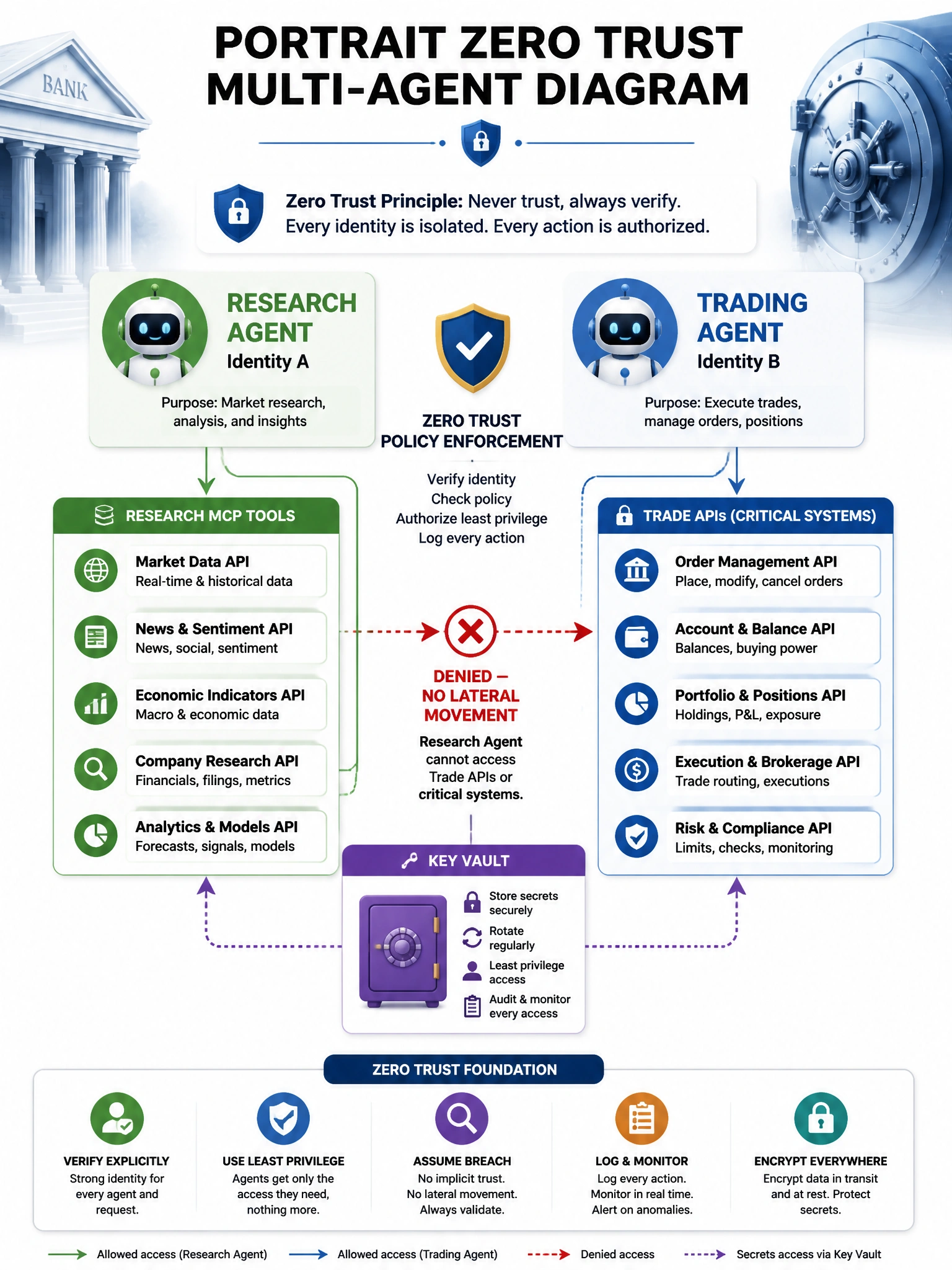
B is Zero Trust for multi-agent systems. Per-agent identity scoping means the research agent’s identity can call research tools and knowledge sources, not trade execution. Authorization sits at the tool/API boundary, so even if the research agent is prompt-injected, it lacks credentials and RBAC to move laterally into trading. A is the anti-pattern—one fat identity is total compromise. C puts secrets in prompts and shares them, which is both leaky and non-attributable. D makes forensics worse and is not a control. Spec Zero Trust components up front: unique identities, least-privilege tool scopes, network/API boundaries, and compliance mapping for regulated deployments.
Full Explanation
B is correct because Zero Trust multi-agent architecture requires per-agent identity scoping, lateral movement prevention, and compliance-oriented access design. Distinct identities with role-appropriate tool permissions ensure a compromised research agent cannot invoke trade-execution tools. A is incorrect: a shared highly privileged identity maximizes blast radius. C is incorrect: shared API keys in prompts violate secrets management (e.g., Key Vault-backed retrieval) and prevent fine-grained attribution. D is incorrect: suppressing tool-call logs undermines observability and incident response. Pair identity scoping with structured authorization middleware and audited tool gateways.