
A multi-agent system previously used one shared service principal with broad access to Key Vault, SQL, and Storage for every agent. Security mandates Zero Trust with lateral movement prevention. What identity design should you implement?
Select an answer to reveal the explanation.
Short Explanation
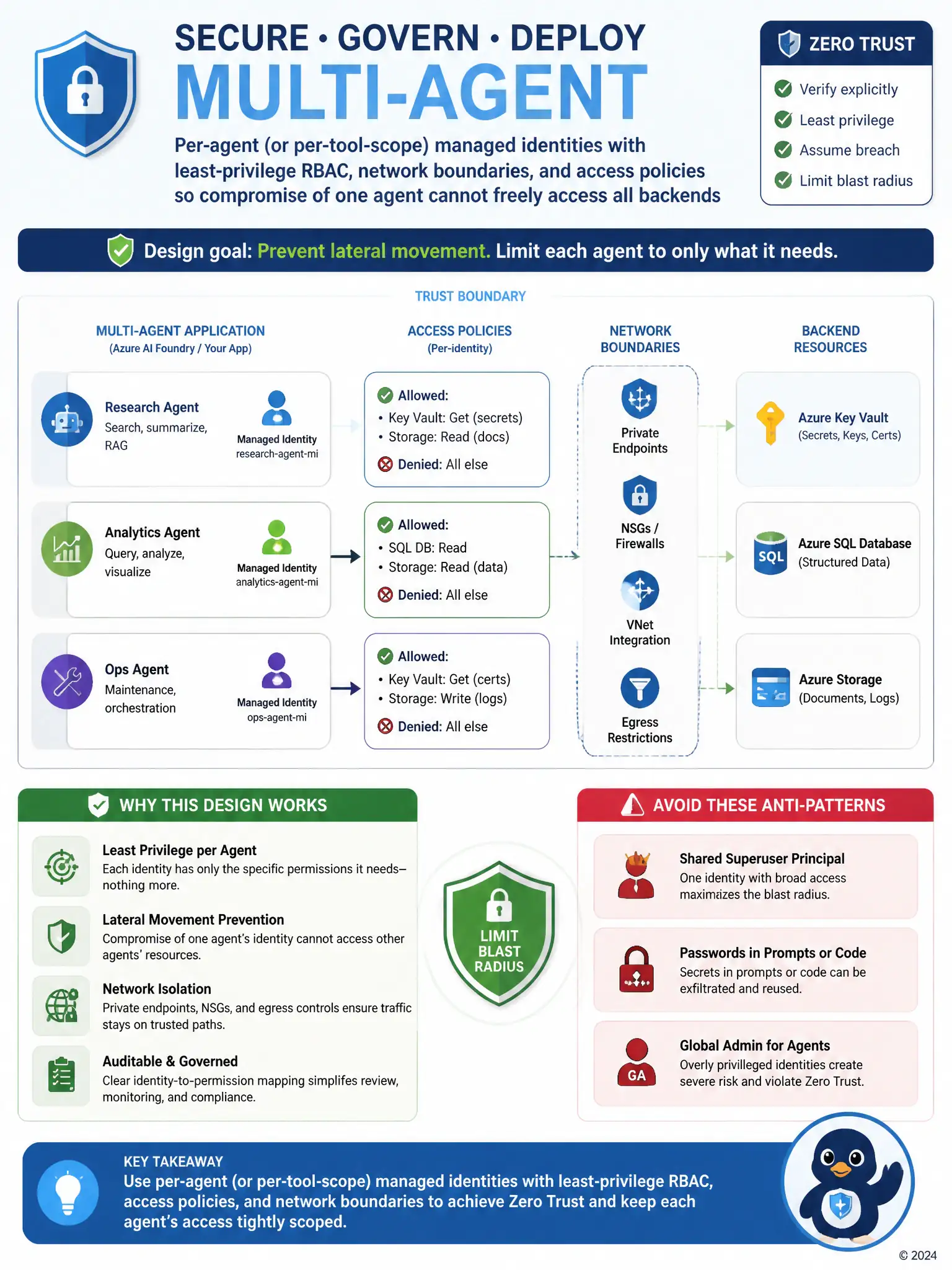
You should give each agent or tool scope its own managed identity, with least-privilege access controls, network boundaries, and access policies. That way, if one agent is compromised, it cannot freely reach every backend. Shared superuser principals, passwords in prompts, and Global Admin for agents are bad ideas.
Full Explanation
Use per-agent or per-tool-scope managed identities with least-privilege RBAC, network boundaries, and access policies so compromise of one agent cannot freely access all backends. Security skills include resource access via identity-based access, network boundaries, access control policies, RBAC, and Zero Trust multi-agent identity scoping. Assign distinct managed identities to orchestrator vs specialists; grant only the tools/data each needs; prefer private endpoints. Map identities to compliance controls for regulated deployments. Keeping one superuser principal and trusting all agents equally is wrong because shared broad credentials enable lateral movement after any single agent compromise. Embedding SQL admin passwords in each agent system prompt is wrong because secrets belong in Key Vault or equivalent, never prompts. Granting every agent permanent Global Administrator in Microsoft Entra ID is wrong because directory Global Administrator is vastly excessive for agent workloads.