
You are implementing multi-agent orchestration on Azure using a graph-based framework. The design needs an orchestrator that delegates to specialist subagents, supports conditional branches, and can wait for human approval on high-risk steps. Which approach fits?
Select an answer to reveal the explanation.
Short Explanation
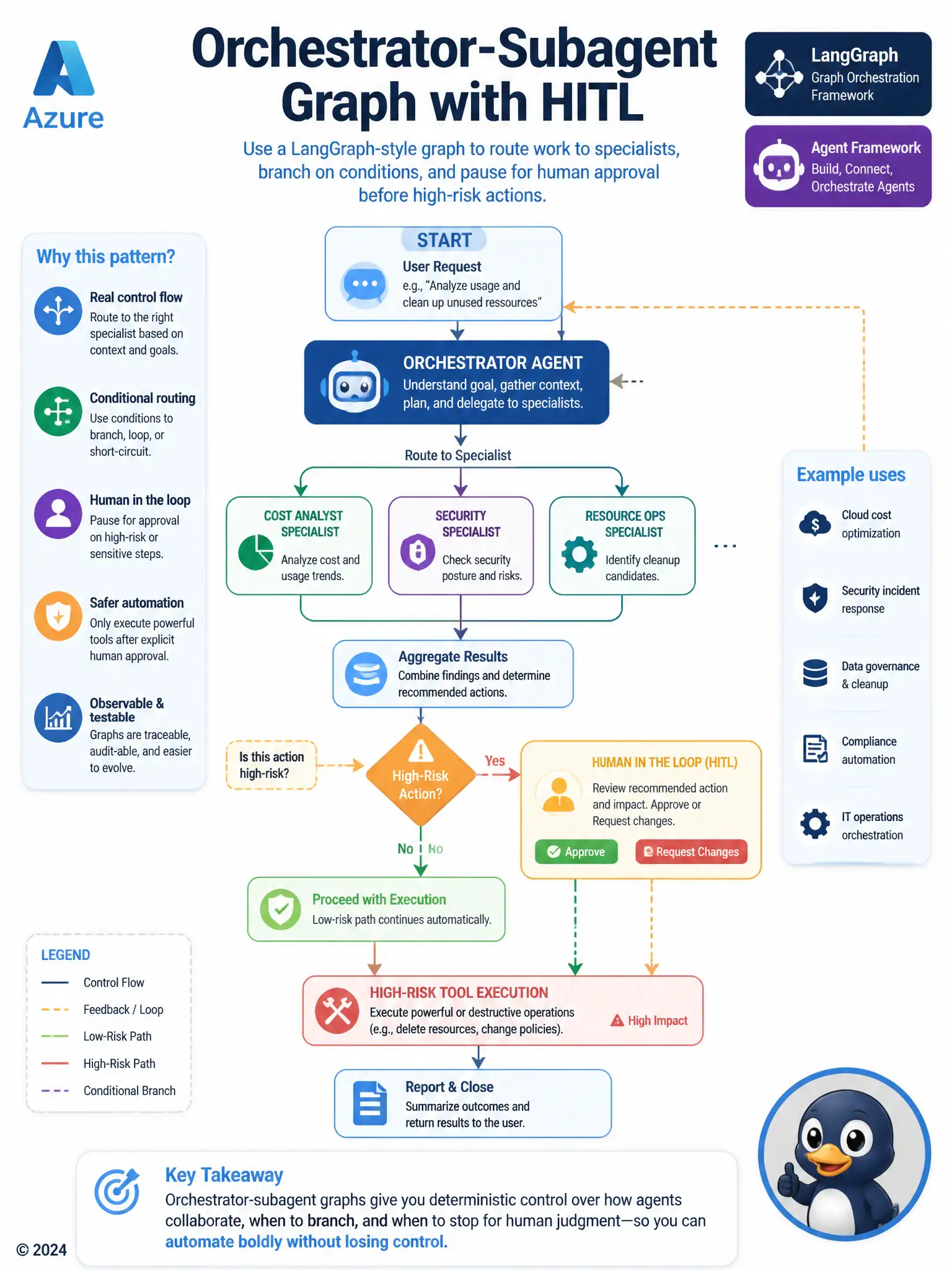
You need a real graph-based orchestrator-subagent pattern: route to specialist nodes, branch on conditions, and pause for human approval before high-risk tools. A single non-branching script or manual chat handoffs won't give you that control.
Full Explanation
Implementing multi-agent orchestration includes orchestrator-subagent patterns and frameworks such as Microsoft Agent Framework, LangChain, and LangGraph, plus HITL approval workflows. The graph-based orchestrator-subagent approach with specialist nodes, conditional edges, and an interrupt/HITL node before high-risk tools correctly maps the required control flow. The single non-branching string replacement script with no agent nodes is not multi-agent orchestration. The five unrelated chat sessions with manual copy-paste is a manual anti-pattern. The peer-to-peer spontaneous calls with no graph, orchestrator, or HITL hooks omit required structure. Exam tip: graph frameworks plus HITL interrupt nodes are expected for conditional multi-agent workflows with approvals.