
Tailwind Toys is launching a customer-facing multi-agent shopping assistant. Responsible AI and HAX (human-AI experience) requirements include: users must understand when AI is acting, high-impact returns/refunds need human confirmation, and the system must avoid dark patterns that pressure purchases. Which architectural controls best satisfy these requirements?
Select an answer to reveal the explanation.
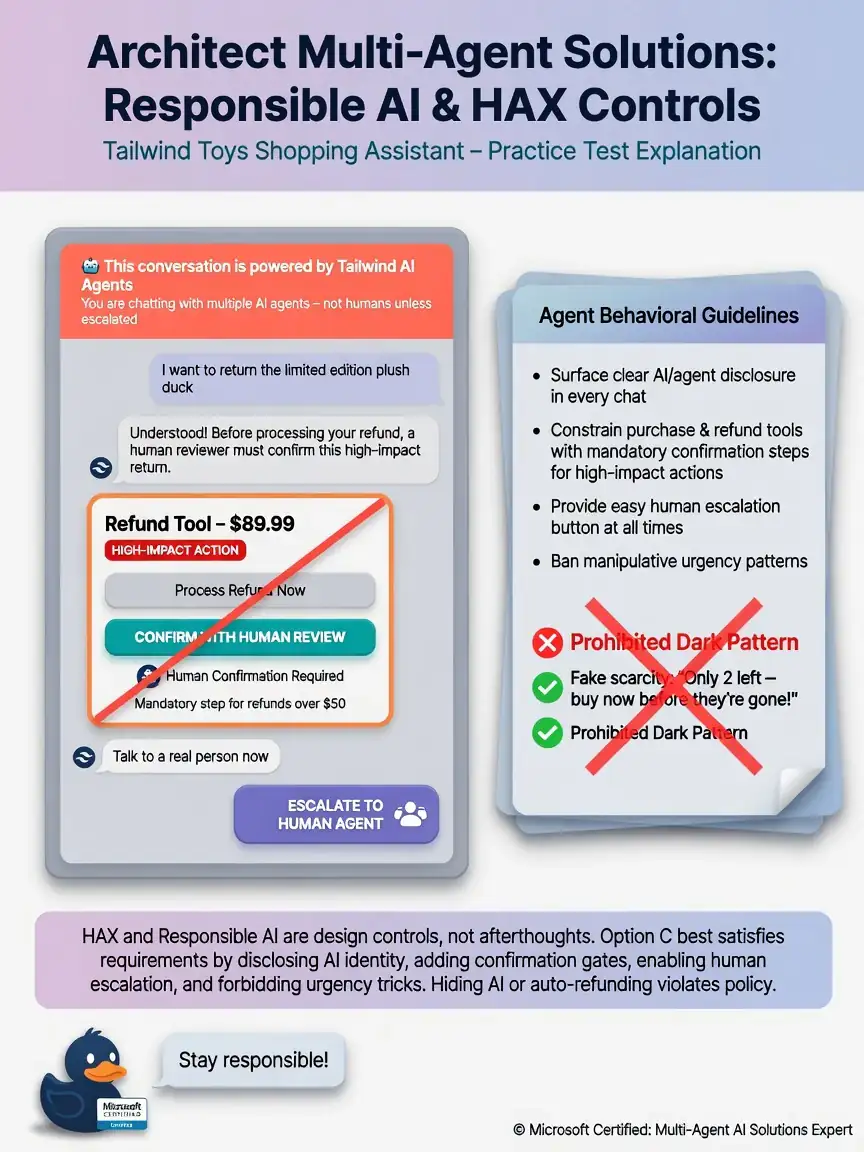
Short Explanation
You need controls that make the assistant visible, put confirmation around high-impact refunds and purchases, give users an easy human escape hatch, and ban pressure tactics. That is the disclosure, constrained autonomy, escalation, and behavioral-guideline package. Hiding identity, auto-refunding, correlation IDs only, or removing tools all miss the point.
Full Explanation
AI-500 requires designing controls for human-AI experience and responsible AI principles inside multi-agent solutions. The correct control set implements transparency, constrained autonomy for high-impact actions, human escalation, and explicit behavioral guardrails against manipulative patterns.
The option that hides agent identity, auto-submits refunds without confirmation, and maximizes urgency language violates transparency and user control and introduces harmful persuasion patterns.
The option that exposes only technical correlation IDs to users and keeps all autonomy decisions internal with no UX disclosure fails customer-facing transparency; internal telemetry identifiers are not a substitute for understandable AI disclosure and control affordances.
The option that removes all tools so the agent can only chat avoids risk by removing capability rather than designing safe capability — usually unacceptable when business value depends on actions.
Exam tip: High-impact tools + customer UX ⇒ disclosure, confirmation, escalation, and policy-bound personas.