
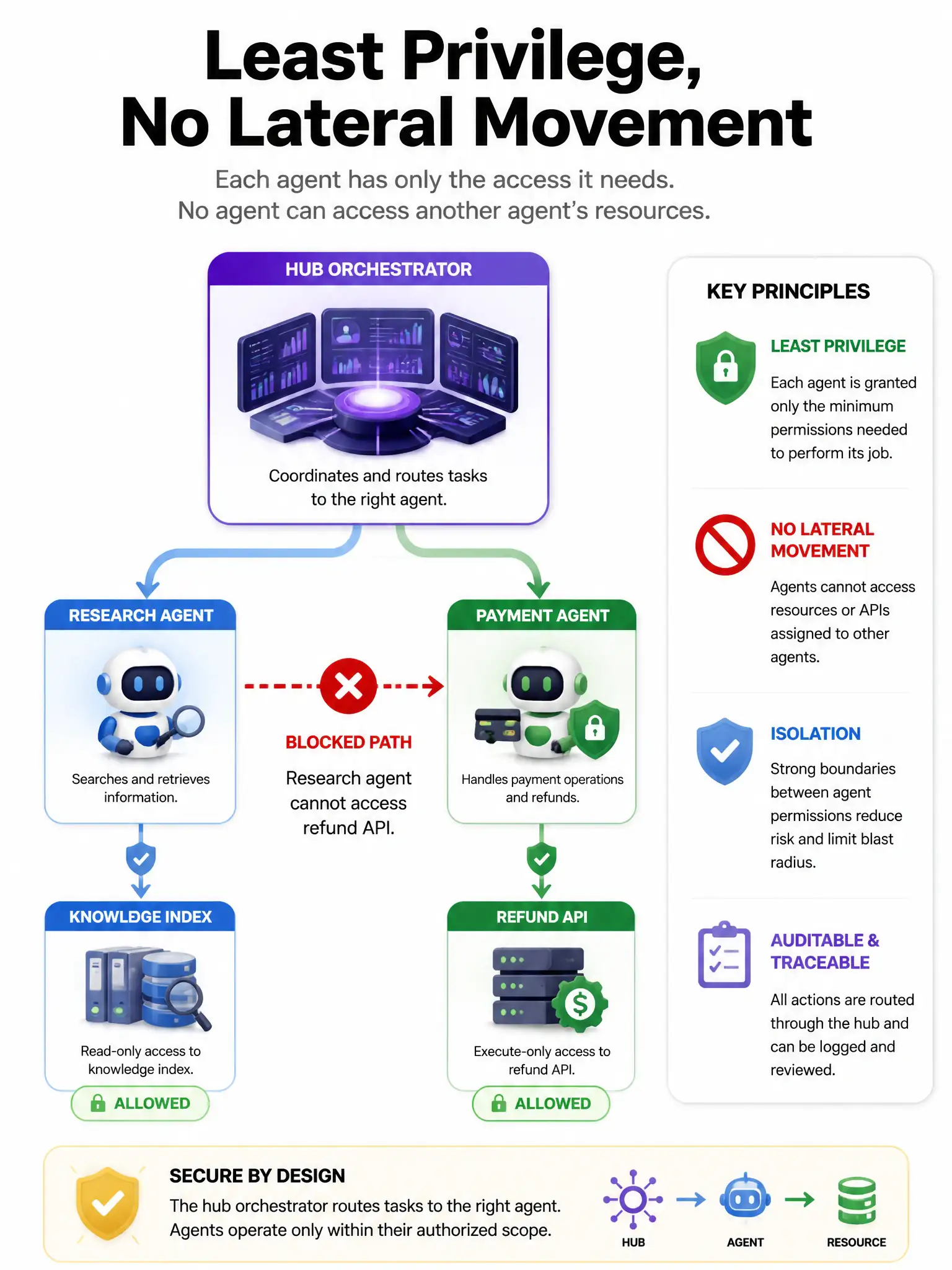
In a hub-and-spoke multi-agent design, the research subagent only needs read access to a knowledge index, while the payment subagent needs to initiate refunds. Security requires preventing lateral movement if the research agent is compromised. What identity design should you apply?
Select an answer to reveal the explanation.
Short Explanation
Give each agent its own identity and lock it down with least-privilege RBAC and tool permissions scoped only to what it needs. That way, if the research agent gets popped, it can’t touch refund or payment APIs. Shared broad roles or shared full database strings just hand an attacker the whole environment.
Full Explanation
Zero Trust multi-agent design requires per-agent identity scoping and lateral movement prevention. The correct design gives each agent its own identity with least-privilege RBAC and tool permissions scoped only to required resources, denying the research agent refund or payment APIs. The shared Contributor role and shared db_owner connection string create shared high privilege, so a compromised research agent can initiate refunds. Disabling Azure RBAC and relying on agent-name obscurity removes access control. Enforce tool gateways that check caller identity, use managed identities, and review role assignments whenever tools are added.