
Platform engineering must release a new orchestrator version that changes tool-routing logic. They want limited blast radius, fast rollback, and production traffic validation—not a big-bang cutover. Which release methodology best fits?
Select an answer to reveal the explanation.
Short Explanation
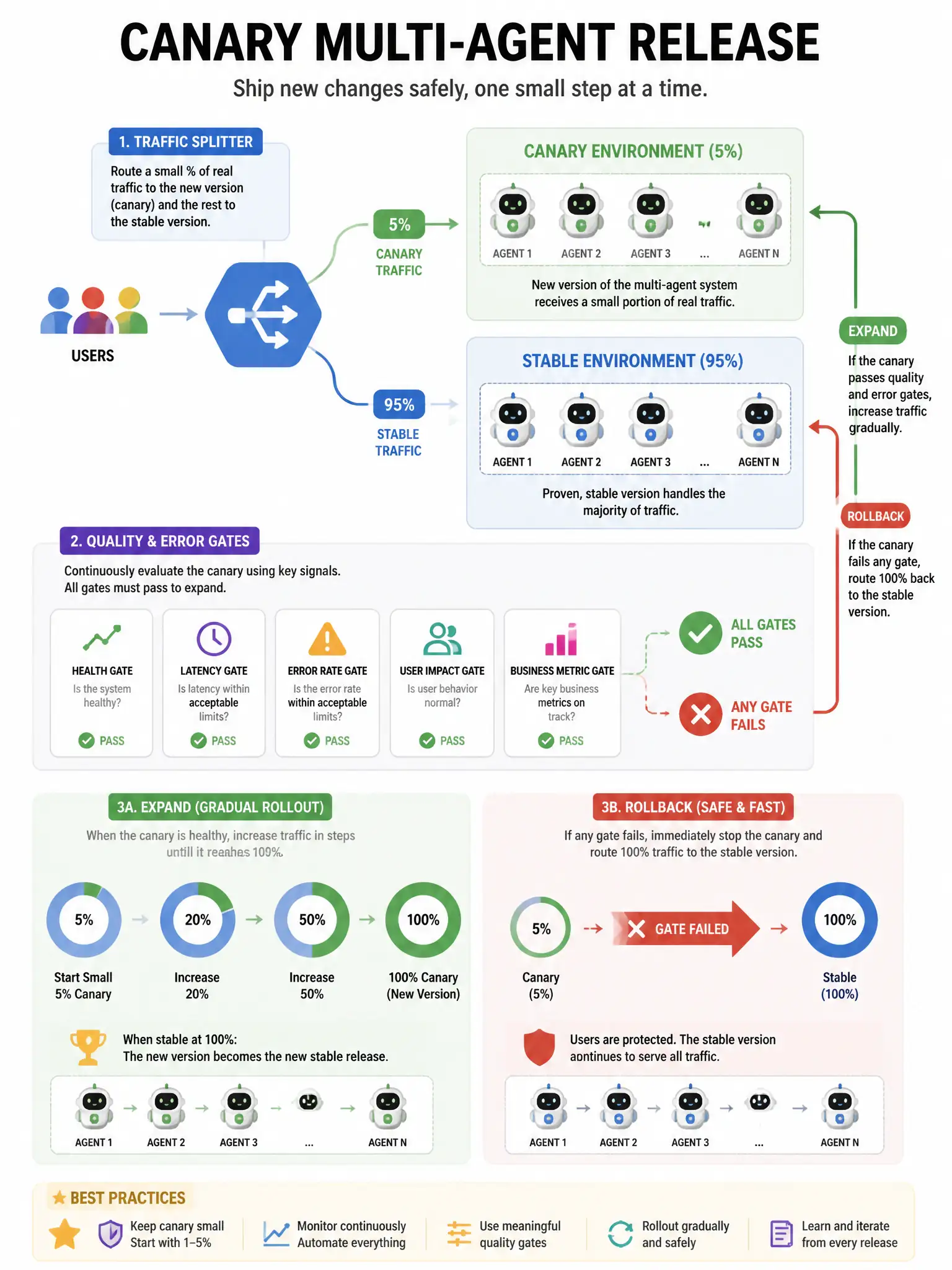
You want limited blast radius, so use a canary: send a small share of production traffic to the new orchestrator, check health and quality gates, expand gradually, and roll back automatically if errors or eval scores degrade. That gives you production validation without a big-bang cutover.
Full Explanation
Release methodologies for multi-agent solutions include DTAP, blue/green, and canary. Limited blast radius, production validation, and fast rollback align with canary. The canary approach sends a small traffic percentage to the new orchestrator, uses health and quality gates, expands gradually, and automates rollback if errors or eval scores degrade. The simultaneous Friday-night dual-region replacement is a high-risk big-bang cutover. The developer-laptop-as-production approach is not a release strategy. Hot-editing prompts in the production container filesystem without version control destroys auditability and is uncontrolled. Pair canary with infrastructure-as-code, versioned agent packages, and rollback to the prior orchestrator image and prompt set.