
A team deploys multi-agent infrastructure and prompt/tool packages by clicking in the Azure portal and copying files over SSH. Releases are inconsistent across environments. What CI/CD approach should they adopt?
Select an answer to reveal the explanation.
Short Explanation
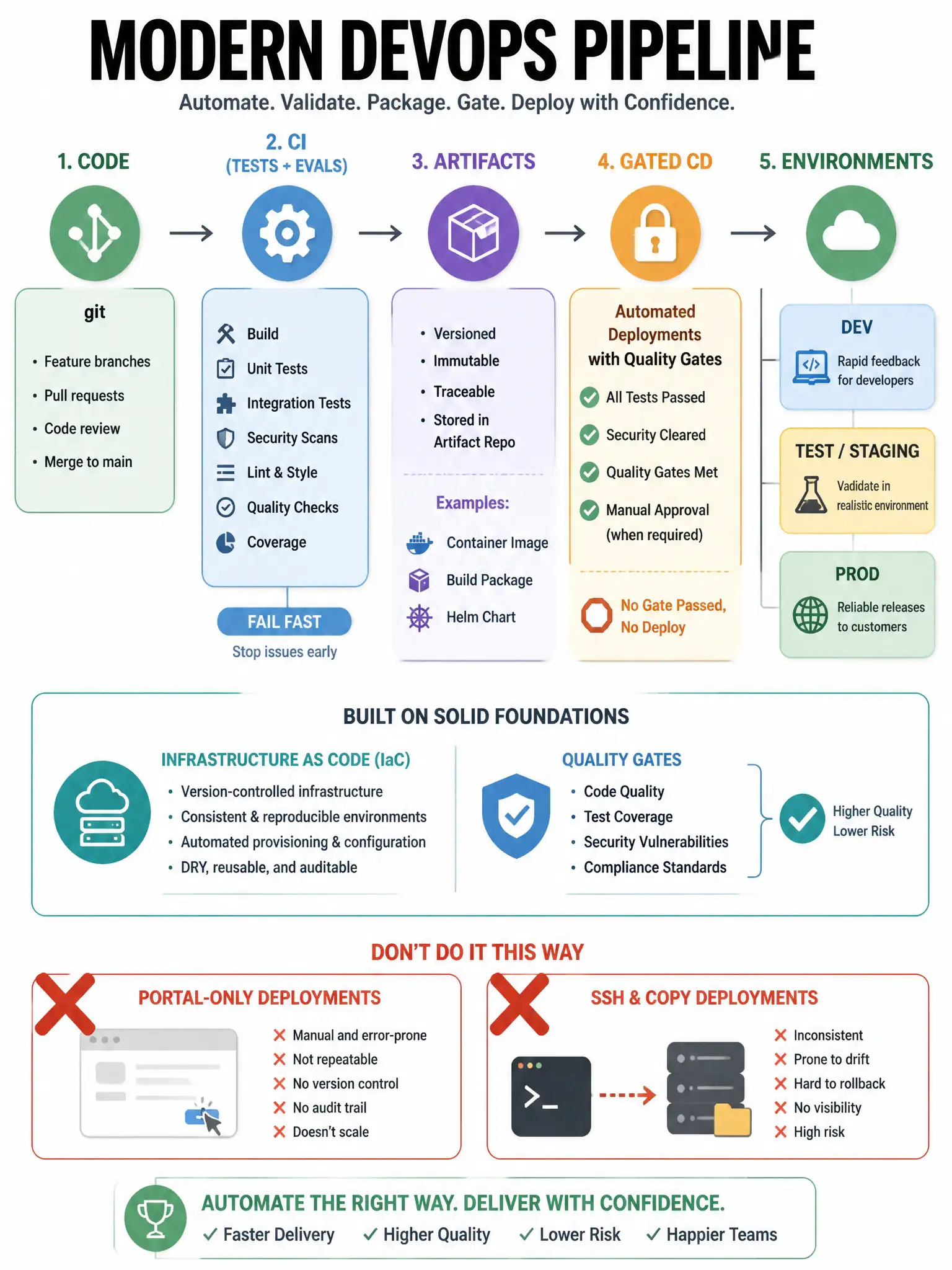
You need to treat multi-agent systems like real software. Put infrastructure-as-code and application artifacts in source control, run automated tests and evaluations in pipelines, and promote versioned builds with gated approvals. Portal click-ops, open production SSH, and USB sneaker-net don't scale; they guarantee drift and weak audit trails.
Full Explanation
CI/CD for multi-agent solutions needs release automation, infrastructure-as-code, and testing. The correct approach stores configs and artifacts in source control, runs automated tests and evaluations in pipelines, and promotes versioned builds with gated approvals. It builds container or agent packages, applies infrastructure-as-code, runs unit, integration, and evaluation tests, then deploys with progressive delivery and rollback. Secrets stay in Key Vault, not logs; evaluations gate quality. Portal-only wiki documentation is manual, non-repeatable, and causes drift and weak audit trails. Unrestricted production SSH is insecure and bypasses controls. USB drives are non-repeatable, insecure, and lack audit trails.