
A team is building tool access for multi-agent solutions using Model Context Protocol. They want serverless scale, managed identity to backend APIs, and centralized governance. Which implementation approach best fits Azure-centric MCP tool hosting?
Select an answer to reveal the explanation.
Short Explanation
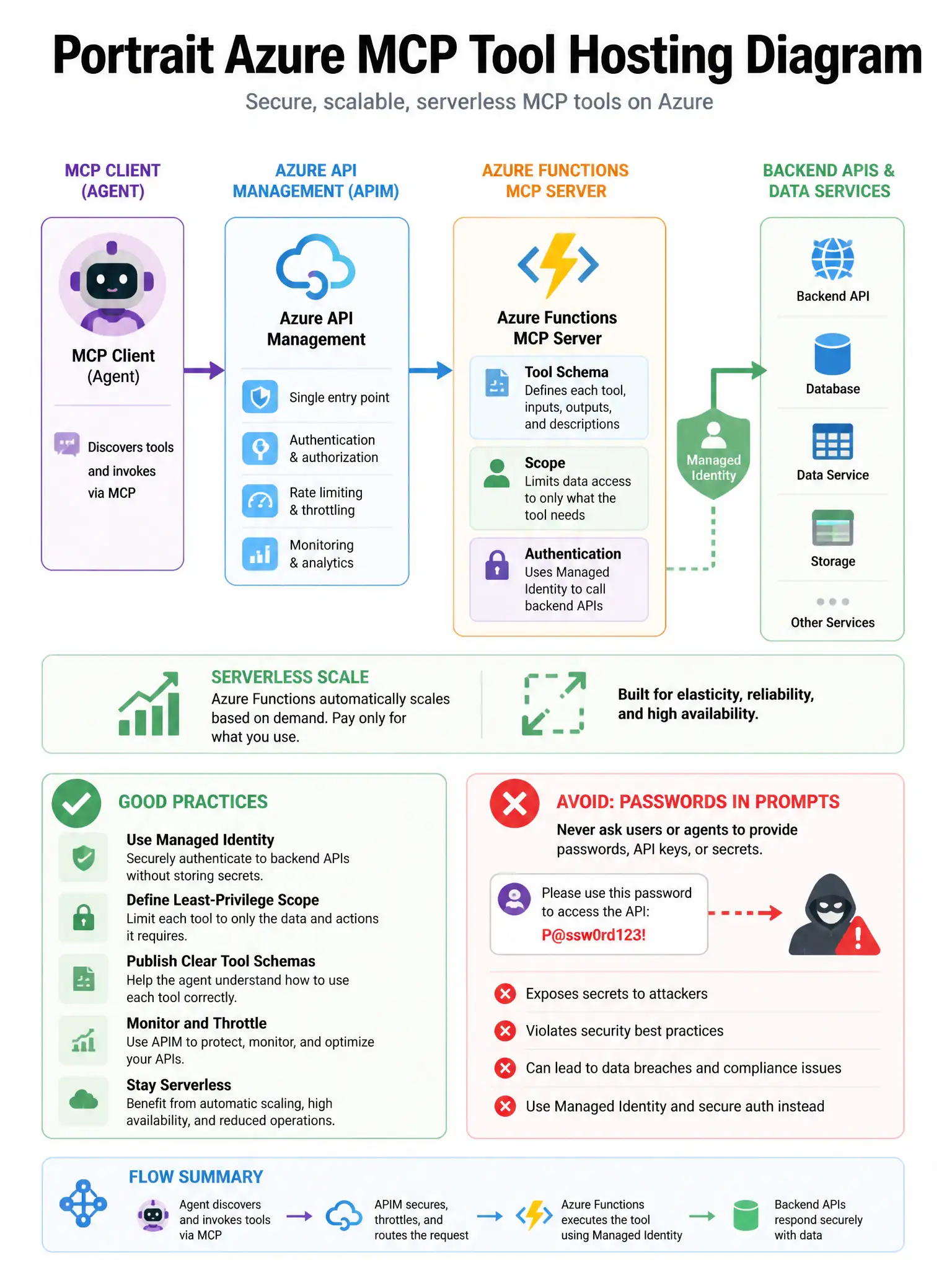
You want the Azure Functions and Azure API Management approach with managed identity and scoped tools. It gives you serverless scale, removes secret sprawl, adds governance, and keeps clients from seeing more than they need. The password-in-prompt, shared-admin RDP, and public unauthenticated endpoint ideas are security anti-patterns.
Full Explanation
The correct approach implements MCP servers as Azure Functions or comparable managed endpoints, fronts them with Azure API Management where needed, uses managed identity, and exposes only scoped tools. This fits Azure-centric MCP hosting because tool ecosystems include MCP servers and clients built with Azure Functions, Logic Apps, and API Management, using secure authentication and scoped exposure. Serverless hosts scale, managed identity removes secret sprawl, API Management adds governance, and clients see only scoped tools. Hard-coded passwords with curl lack lifecycle control and auditability. Shared admin RDP violates least privilege and is not a tool contract. Unauthenticated public endpoints invite abuse. Combine MCP tool schemas with result validation and error handling on the server side.