
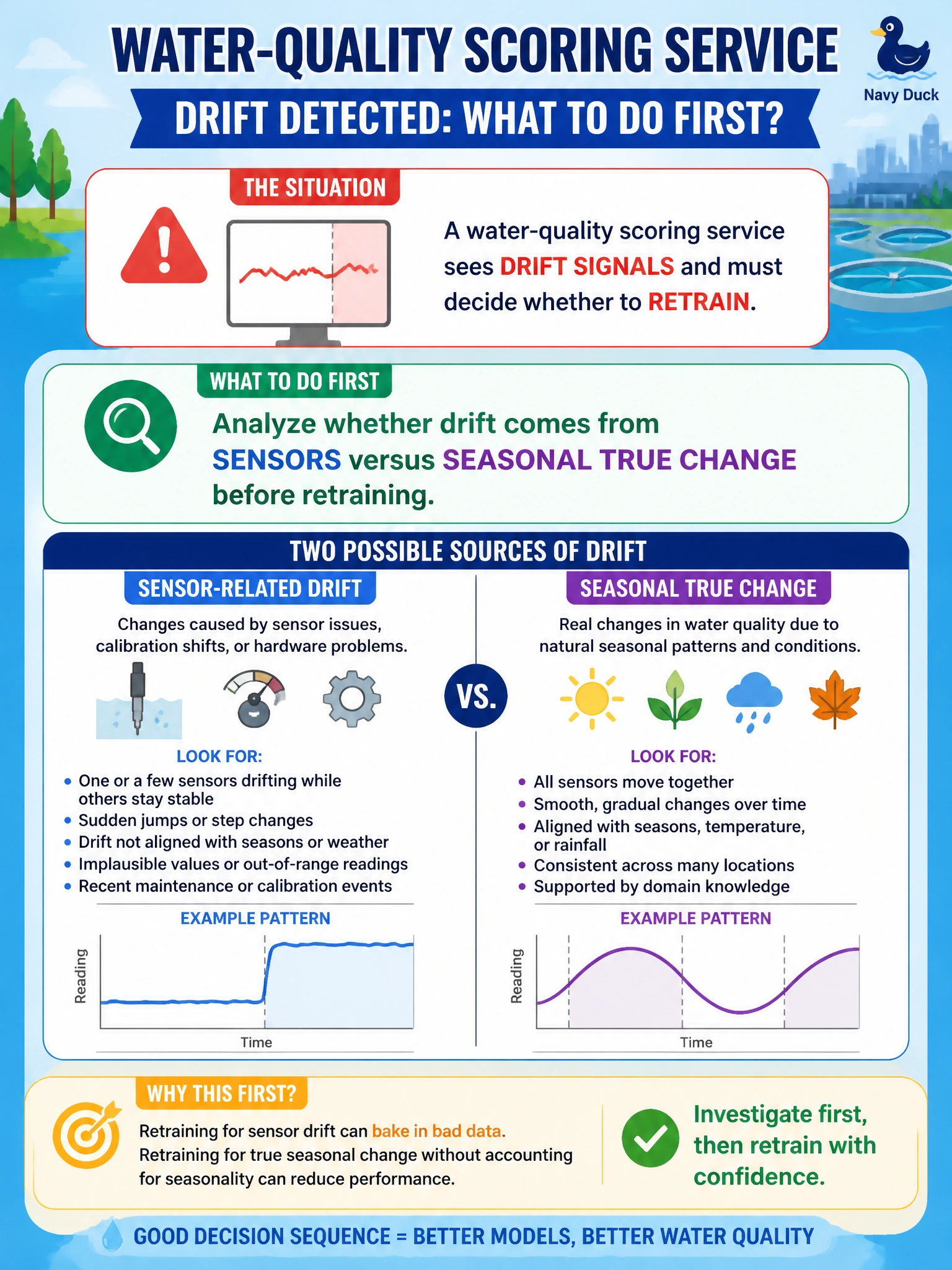
A water-quality scoring service sees drift signals and must decide whether to retrain. What analysis should happen first?
Select an answer to reveal the explanation.
Short Explanation
Not every water-quality wiggle is a broken model — seasons and sensors both move the needle. Figure out which story it is before you retrain.
Full Explanation
Analyzing whether drift comes from sensors versus seasonal true change before retraining is correct because water-quality scoring services often see distribution shifts from instrumentation faults, calibration drift, outages, or genuine seasonal and operational change. Root-cause analysis first prevents encoding bad sensor readings into a new model and avoids unnecessary retrains when the right fix is repairing upstream meters or adjusting for expected seasonality. Municipal stability depends on diagnosing the drift story before lifecycle churn. Examining whether seasonal flow variation explains scoring shifts before retraining fails as a first step because seasonal flow alone cannot distinguish genuine seasonal change from sensor fault, so checking only flow variation risks missing bad instrumentation and retraining on faulty readings. Checking whether turbidity and pH importance shifts track seasonal baselines before retraining fails as a first response because importance shifts in just two features cannot tell sensor error from true seasonal change; you cannot interpret those shifts until you have diagnosed instrumentation versus genuine change across the service. Assessing whether recent local sensor readings define drift window before retraining fails as a first step because window definition depends on the drift source; using unverified recent local readings before distinguishing sensor faults from genuine seasonal change can bake a faulty period into retraining. Exam caveat: drift-plus-retrain stems that mention sensors or seasonal change want analyze-then-decide, not examining seasonal flow variation alone, checking turbidity and pH importance in isolation, or assessing drift window from recent local readings before full root cause. Operational check: on a water-quality drift alert, compare sensor health and calibration logs to historical seasonal baselines, document whether the shift is instrumentation versus true change, then either fix sensors, adjust features, or proceed to a governed retrain—not just examining seasonal flow variation alone.
Prefer to study offline? Printable PDF study book + test engine ($7.50, unofficial). These questions stay free here.