
Citywide AI platforms depend on App Configuration reads. What availability consideration applies?
Select an answer to reveal the explanation.
Short Explanation
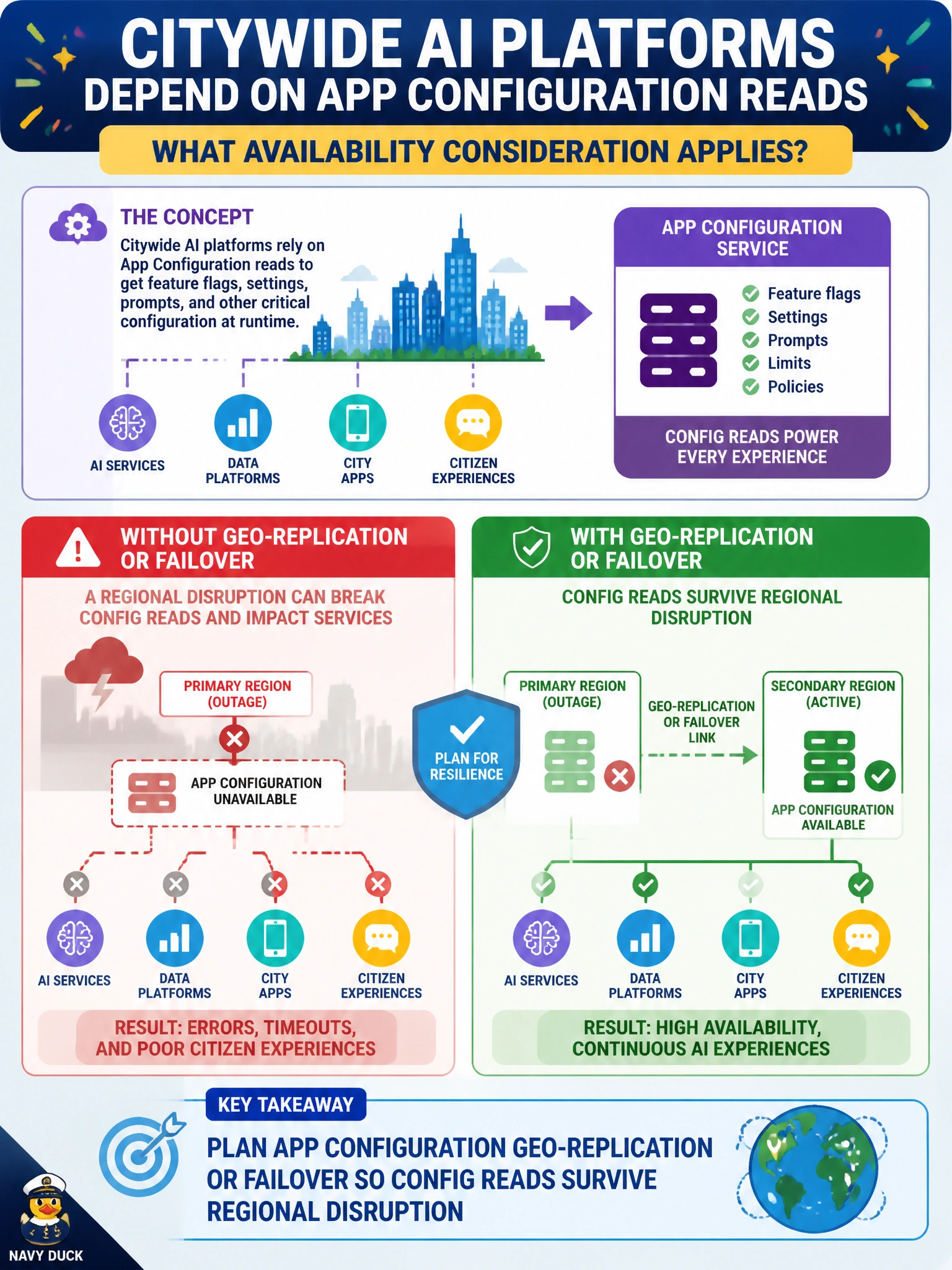
Geo-replication for App Configuration is like having a second records vault in another district when the first floods.
Full Explanation
Citywide AI platforms that depend on App Configuration reads must plan for App Configuration geo-replication or failover so configuration and feature-flag reads survive regional disruption. If a single-region store becomes unavailable, agents across departments can fail closed on flag and setting reads even when compute is healthy; geo-replication/multi-region strategies improve configuration availability for municipal platforms.
Running a single App Configuration store with no geo-replication or failover plan creates a regional single point of failure for citywide AI configuration. Caching configuration only in browser localStorage with no server-side store is inappropriate for server agents and cannot be authoritative across services. Recreating the entire store manually from memory after each outage is slow, error-prone, and not an availability architecture.
Exam caveat: Replica/failover patterns must consider consistency of keys/labels, connection endpoints used by apps, and how clients retry or fall back to last-known-good cached configuration. Geo-replication complements—not replaces—RBAC, private networking, and soft-delete. Test failover; do not assume DNS or endpoint changes are automatic for every client SDK setup.
Operational check: Enable a multi-region App Configuration strategy appropriate to the city's architecture, point platform services at the resilient endpoint pattern, run a failover or replica-outage drill, confirm agents continue to read flags/settings or safely use cached config within policy, and document RTO expectations for configuration in the AI platform runbook.