
Internal agent services read App Configuration. How should the city harden networking?
Select an answer to reveal the explanation.
Short Explanation
Locking App Configuration off the public net is like keeping the policy binders in a staff-only room.
Full Explanation
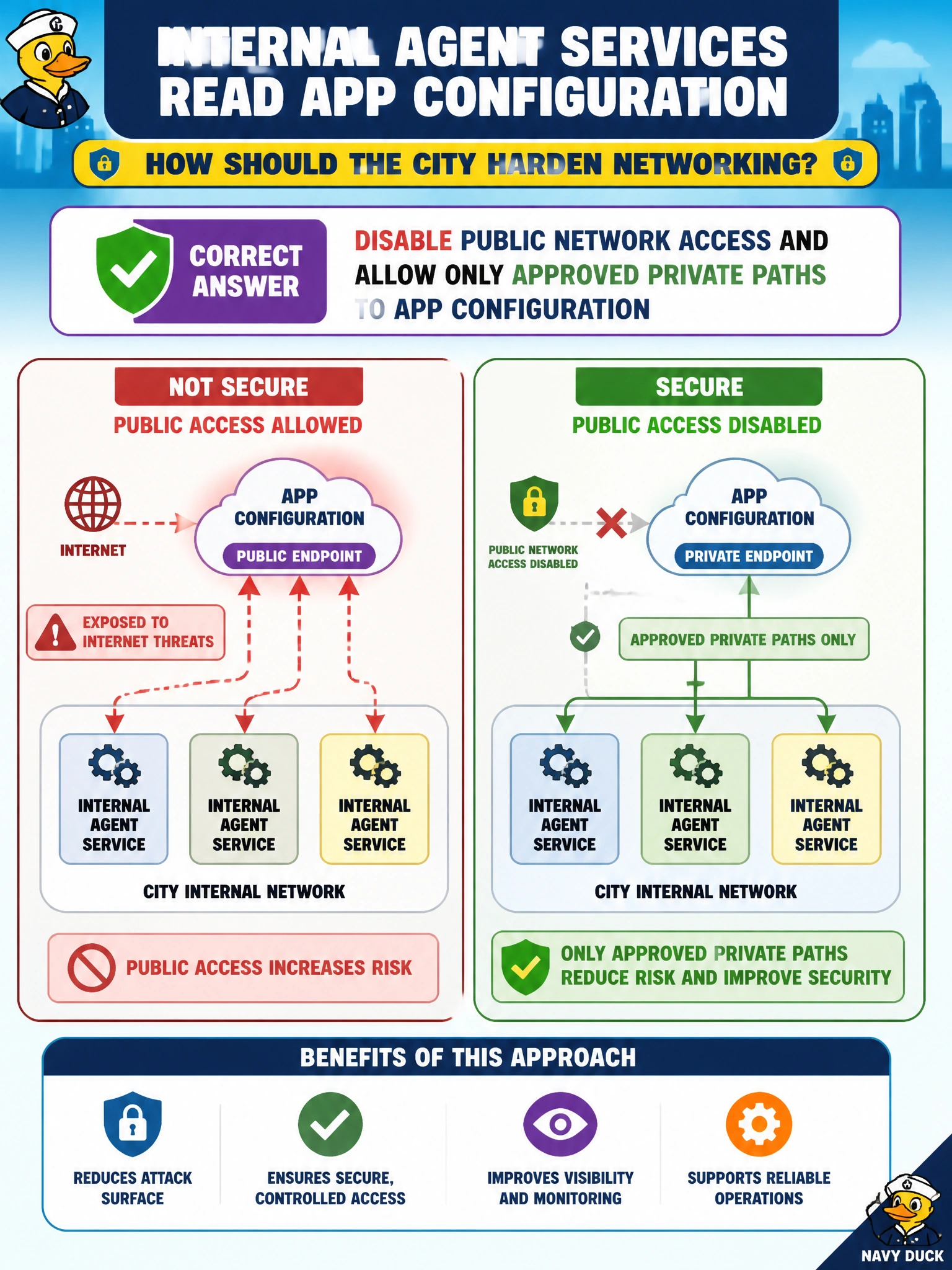
Internal agent services that read App Configuration should be hardened by disabling public network access and allowing only approved private paths (private endpoint / controlled network rules) to the App Configuration store. Feature flags, model deployment names, and municipal policy toggles are sensitive operational controls; keeping them off the public internet reduces exposure while private connectivity from the city's VNets or approved agents continues to work.
Exposing App Configuration on the public internet with anonymous read invites unauthorized reads of configuration that can reveal internal endpoints and rollout state. Mirroring every production key into a public blob container duplicates configuration outside governance and access controls. Granting every guest user Contributor on the App Configuration store vastly exceeds least privilege and enables destructive or malicious changes.
Exam caveat: Network isolation complements Entra ID RBAC and managed identity—private access alone is not authorization. Soft-delete, purge protection, and key/label design still apply. Clients must resolve private DNS correctly, and local developer access may need carefully governed exceptions rather than reopening public anonymous access.
Operational check: Disable public network access on the store, confirm agent services reach App Configuration via private endpoint, verify unauthorized public clients fail, review RBAC so only approved identities can read/write, and test that feature flag reads still succeed for internal agents after the network lock-down. Log and alert on forbidden access attempts.