
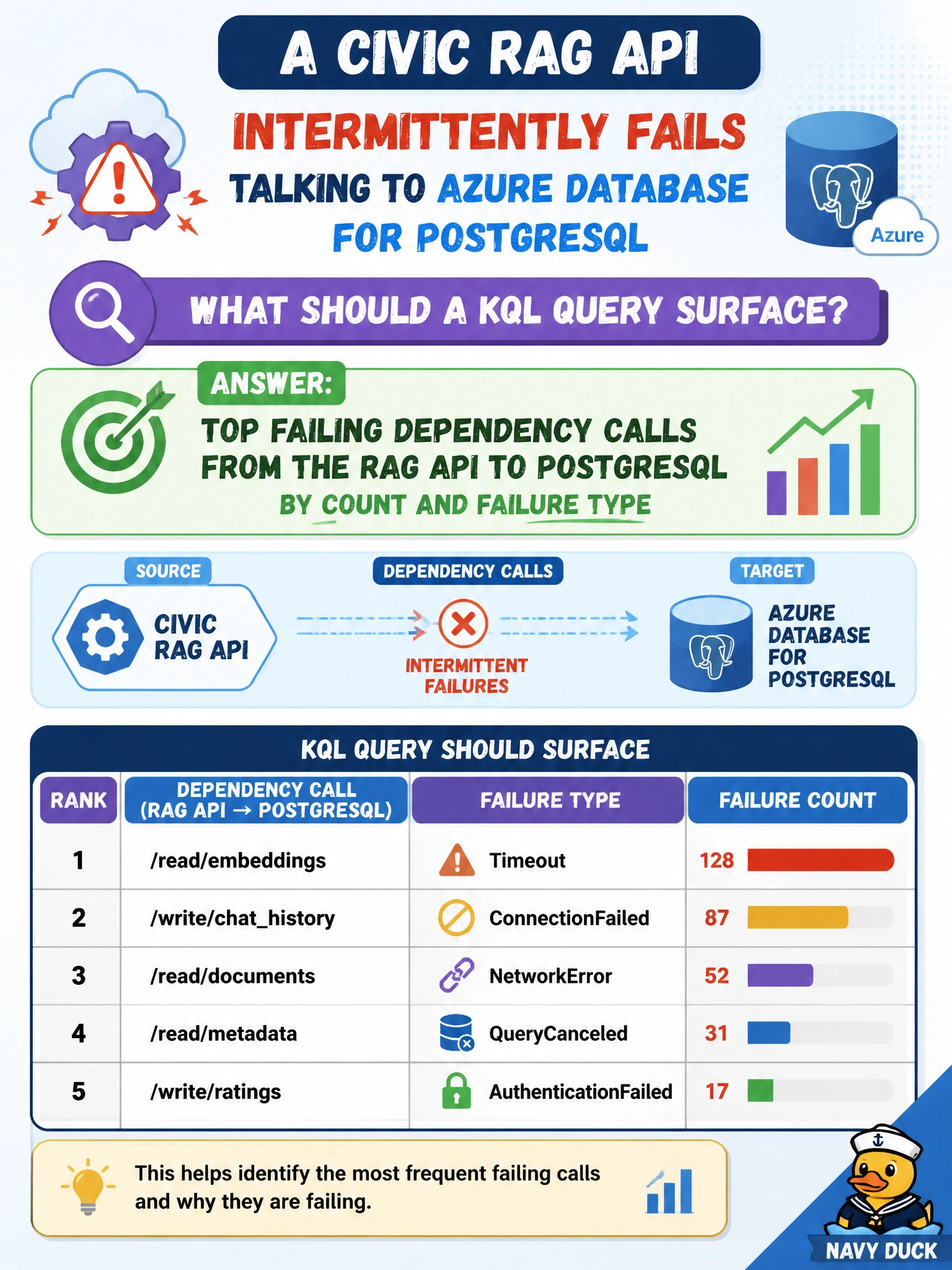
A civic RAG API intermittently fails talking to Azure Database for PostgreSQL. What should a KQL query surface?
Select an answer to reveal the explanation.
Short Explanation
Top failing dependencies are like a most-wanted list of broken links—PostgreSQL trouble shows up first.
Full Explanation
When a civic RAG API intermittently fails talking to Azure Database for PostgreSQL, KQL should surface the top failing dependency calls from the RAG API to PostgreSQL by count and failure type. Dependency telemetry (often from Application Insights / OpenTelemetry) tells municipal ops whether timeouts, authentication errors, connection resets, or query failures dominate—and whether the fault is concentrated on the PostgreSQL dependency rather than the model or search tier.
Showing only successful Redis cache hits with no dependency failure breakdown can look healthy while PostgreSQL calls are failing underneath. ACR image layer sizes are build artifacts unrelated to runtime dependency errors. App Configuration key counts without dependency telemetry do not explain intermittent database talk failures in the RAG path.
Exam caveat: "Dependency" in Application Insights refers to outbound calls; ensure PostgreSQL is instrumented (or inferred) as a dependency target and that operation correlation remains intact. Intermittent failures may be pool exhaustion, failover, or network path issues—failure type and duration percentiles matter as much as raw counts. Distinguish application query errors from platform availability faults.
Operational check: Run a KQL summary of failed dependencies filtered to the RAG API and PostgreSQL target over the intermittent window, rank by failure type, correlate with PostgreSQL metrics (connections, CPU, failover events), and validate connection strings/private networking. After remediation, confirm failing dependency counts drop while RAG answer success rates recover for civic users.