
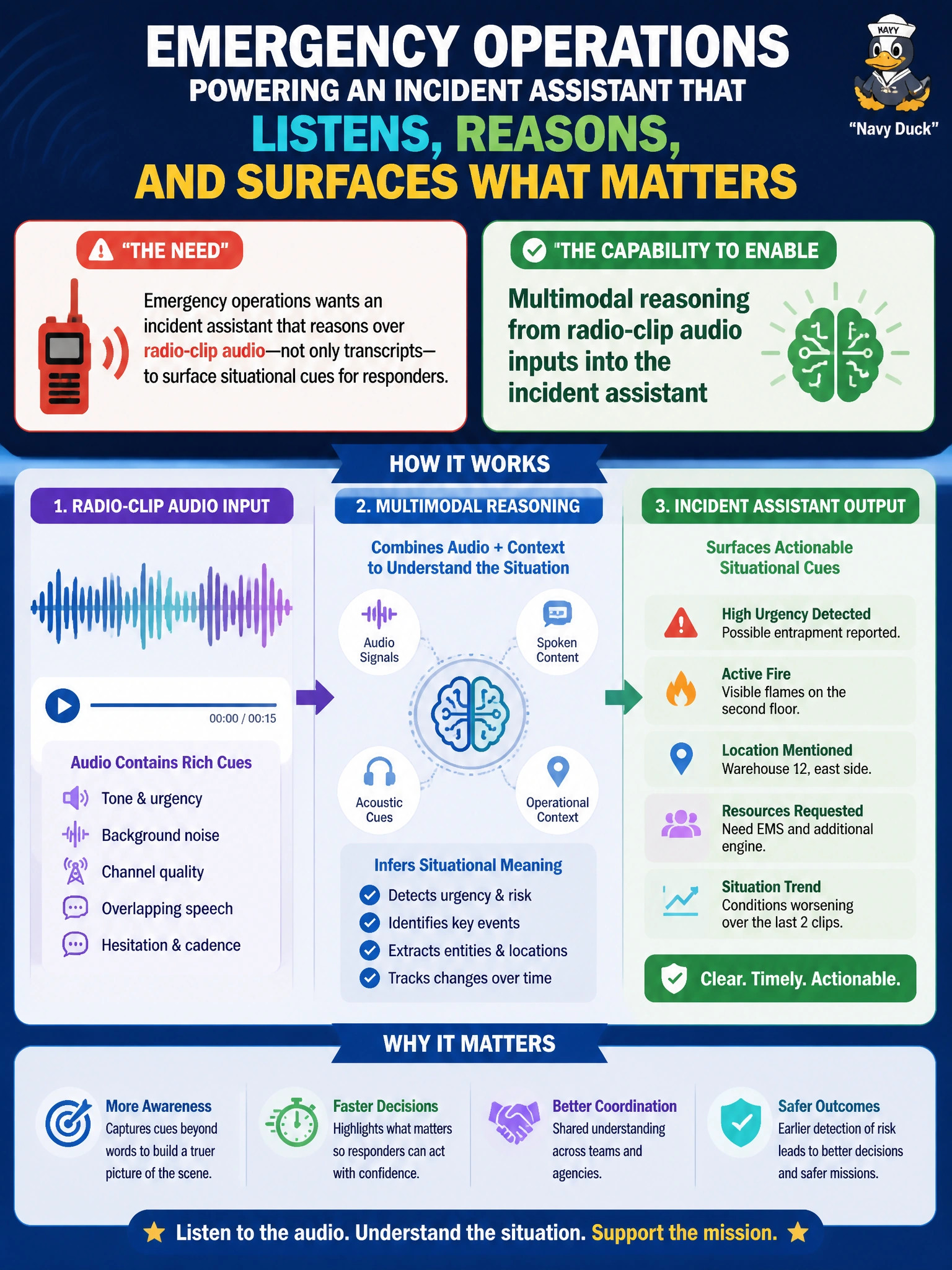
Emergency operations wants an incident assistant that reasons over radio-clip audio—not only transcripts—to surface situational cues for responders. Which capability should they enable?
Select an answer to reveal the explanation.
Short Explanation
Radio clips carry urgency in the sound, not just in noise-level reasoning from radio-clip audio inputs. You'll need multimodal reasoning from audio so the assistant hears those cues for responders. Keyword-based reasoning from radio-clip audio inputs and speaker-based reasoning from radio-clip audio inputs only catch words or who's talking, so you'll miss urgency and scene cues.
Full Explanation
Emergency operations wants an incident assistant that reasons over radio-clip audio—not only transcripts—to surface situational cues for responders. They should enable multimodal reasoning from radio-clip audio inputs into the incident assistant so urgency, overlapping speech, and auditory scene cues can inform recommendations even when transcripts are incomplete. In EOC and field response contexts, the sound of the radio traffic itself carries operational meaning.
Noise-level reasoning from radio-clip audio inputs into the incident assistant only measures loudness or background noise and does not reason over urgency, overlapping speech, and scene content to surface full situational cues for responders. Keyword-based reasoning from radio-clip audio inputs into the incident assistant listens only for specific spoken words and misses tone, urgency, overlapping speech, and auditory scene cues needed for live situational reasoning. Speaker-based reasoning from radio-clip audio inputs into the incident assistant identifies who is speaking but does not reason over urgency and auditory scene cues in the incoming radio-clip audio to surface situational cues. Each option fails the requirement for full multimodal reasoning from the audio itself, either by reducing it to noise level, reducing it to keywords, or limiting it to speaker identity.
Exam caveat: multimodal audio reasoning is stronger than noise-level reasoning from radio-clip audio inputs when the stem insists on cues beyond loudness alone. Exams distinguish noise-level reasoning from radio-clip audio inputs from true audio-capable multimodal assistants.
Operational check: feed labeled incident radio clips into the assistant, compare insights against after-action reports, restrict audio access by role, and document when the model used acoustic cues versus transcribed words. Keep a human incident commander reviewing high-severity recommendations before they reach field units.
Prefer to study offline? Printable PDF study book + test engine ($7.50, unofficial). These questions stay free here.