
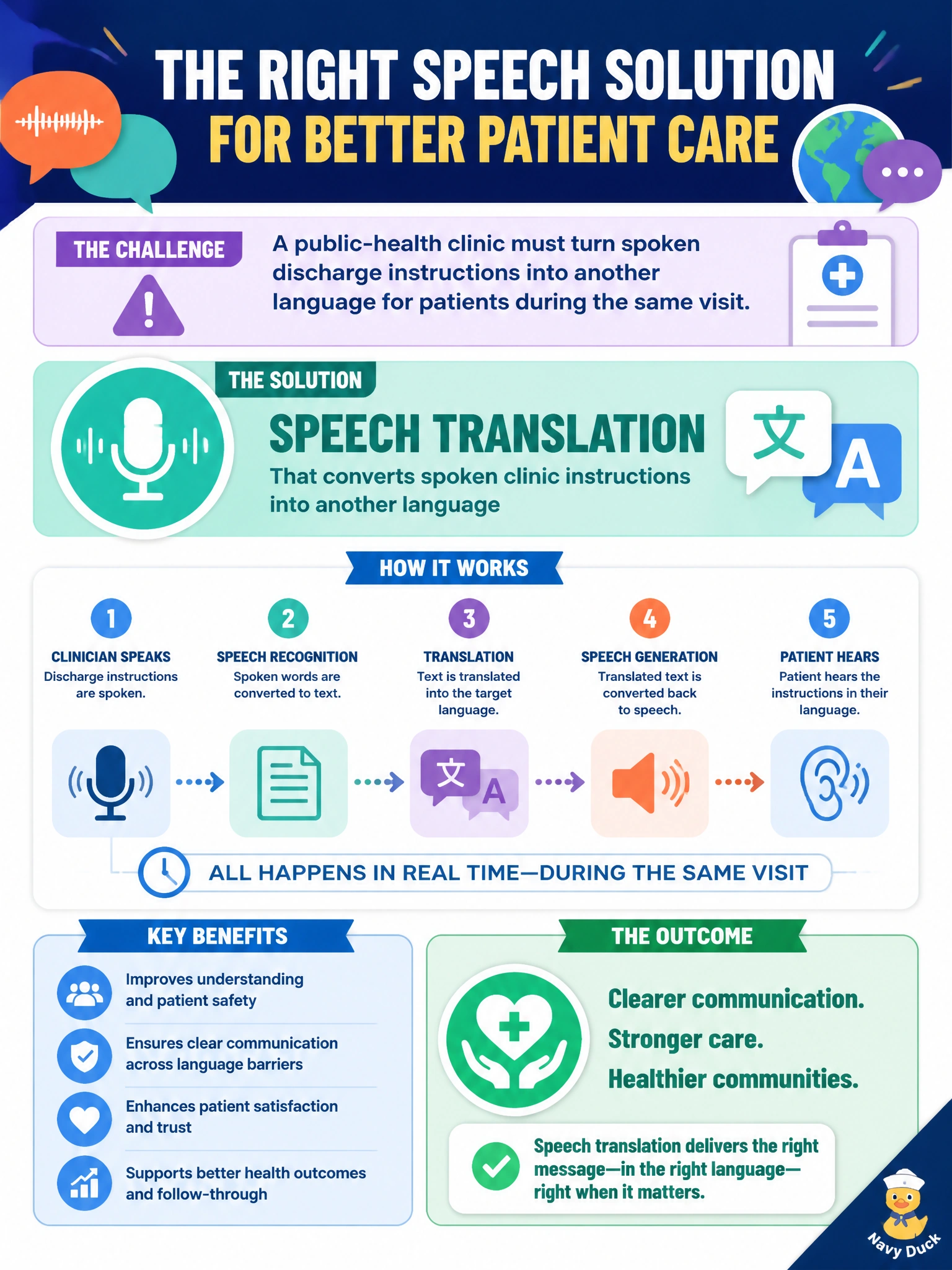
A public-health clinic must turn spoken discharge instructions into another language for patients during the same visit. Which speech solution should they implement?
Select an answer to reveal the explanation.
Short Explanation
When you're giving same-visit instructions, you'll need live conversion on the spot. Speech translation converts what the clinician says into the patient's language in the moment. Speech transcription leaves you with text, speech synthesis plays back typed text, and speaker recognition just checks identity by voice profile, so they don't give you live translation.
Full Explanation
The public-health clinic must turn spoken discharge instructions into another language for patients during the same visit. Speech translation converts spoken clinic instructions into the patient’s language in the moment, supporting same-visit comprehension without waiting for a separate document workflow. This civic clinical scenario prioritizes timely, spoken cross-language delivery of care instructions.
Speech transcription that converts spoken clinic instructions into written text only produces written text in the original language rather than converting live speech into the patient’s language, so it documents what was said without delivering same-visit cross-language comprehension. Speech synthesis that converts written clinic instructions into spoken audio generates playback from typed or already-translated text and never directly converts the clinician’s live spoken words into the patient’s language in the moment. Speaker recognition that identifies spoken clinic instructions by voice profile only confirms or identifies the speaker’s voice by voice profile and performs no language conversion, so it provides no translated instructions the patient can understand. Those options miss speech translation of clinical instructions into another language at the point of care.
Exam caveat: speech translation differs from speech transcription (speech to same-language text), from speech synthesis (typed text to spoken audio for playback), and from speaker recognition (identification by voice profile). When the stem says spoken instructions into another language in the same visit, choose speech translation. Still verify medical terminology accuracy; exams may expect human interpreter escalation for high-risk consent conversations.
Operational check: pilot speech translation on common discharge scripts (medications, return precautions), have bilingual clinicians validate critical phrases, offer teach-back, and fall back to qualified interpreters for complex consent. Log language pair, model, and whether a human interpreter joined, for clinic quality review.
Prefer to study offline? Printable PDF study book + test engine ($7.50, unofficial). These questions stay free here.