
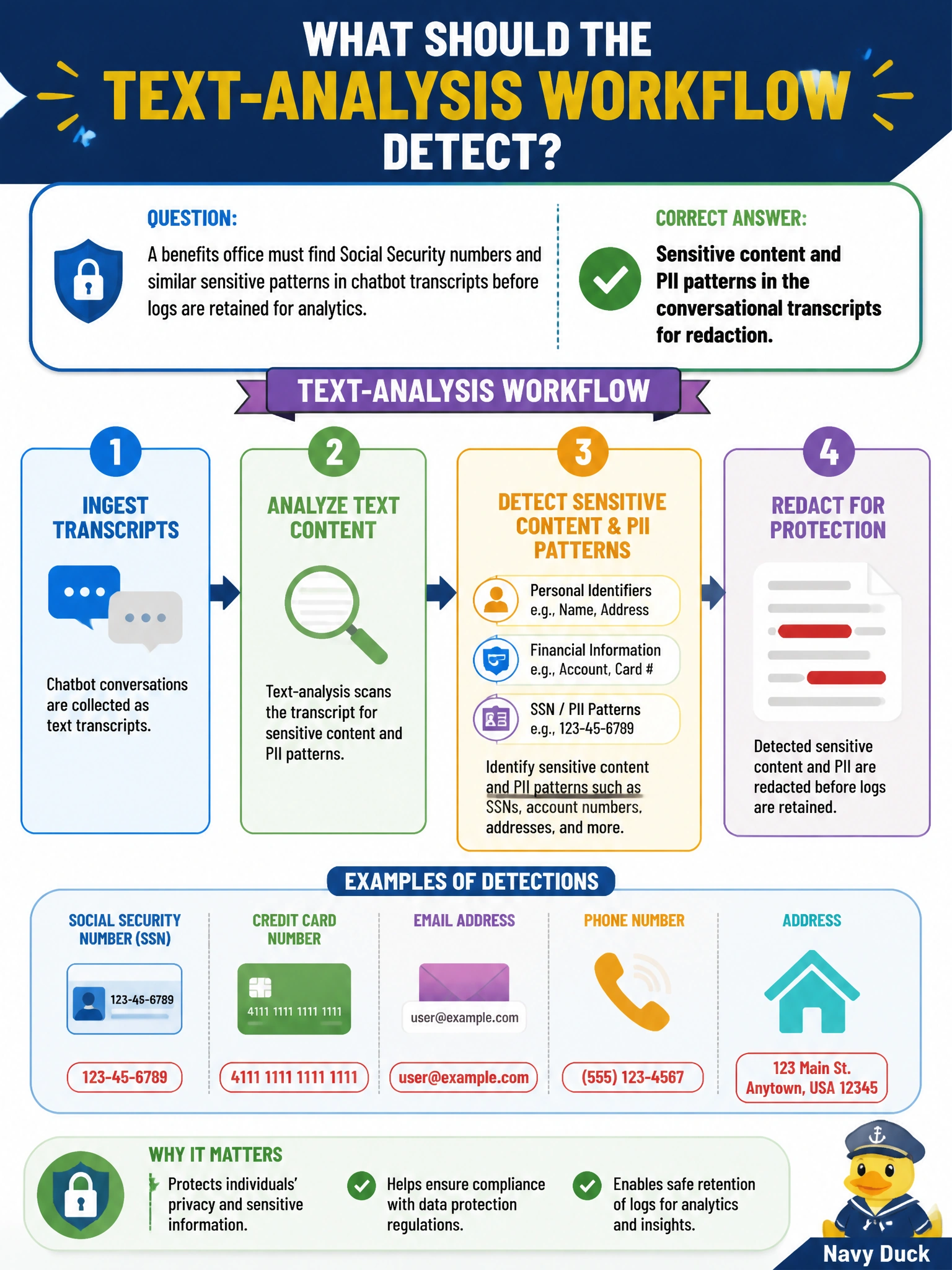
A benefits office must find Social Security numbers and similar sensitive patterns in chatbot transcripts before logs are retained for analytics. What should the text-analysis workflow detect?
Select an answer to reveal the explanation.
Short Explanation
Chat logs can accidentally keep someone's wallet open on the desk. Detecting PII and sensitive patterns lets the benefits office redact before analytics ever see the raw transcript. Benefit-case classifiers, retained-transcript audit reviews, or live-reply PII filters won't scrub the private data you'll need redacted before retention.
Full Explanation
The benefits office must find Social Security numbers and similar sensitive patterns in chatbot transcripts before logs are retained for analytics. The text-analysis workflow therefore needs PII and sensitive-content detection so those spans can be redacted or tokenized before long-term storage. In municipal benefits operations, chat logs often accidentally capture identifiers that analytics teams must never see in the clear; detection-plus-redaction is the compliance-oriented first control.
Training custom entity models on transcript phrases for benefit case classification organizes transcripts by case type but does not target Social Security numbers or other sensitive identifiers the office must redact. Running PII pattern detection in the retained analytics transcripts for audit review happens after storage and does not flag sensitive spans before logs are retained for analytics. Detecting sensitive PII patterns in live chatbot conversational replies for response filtering moderates live output but does not redact sensitive spans in transcripts before retention. Those options fail because they analyze a different signal than the sensitive-pattern detection the retention risk requires.
Exam caveat: PII detection for redaction before retention is not interchangeable with detecting sensitive PII patterns in live conversational replies for response filtering; that live filtering moderates chatbot output rather than finding sensitive patterns in transcripts before retention. Knowing a live reply was filtered for PII does not remove an SSN from a transcript. Also distinguish pattern-based detectors (regex/ML for IDs) from broader confidential-content classifiers; exams often expect you to name the privacy step that runs before analytics retention.
Operational check: run detection on a staged transcript corpus that includes SSNs, case IDs, and phone numbers; verify redaction before the analytics warehouse ingest; sample false negatives with counsel; and confirm that retention policies reference scrubbed text only. Document who can access pre-redaction logs and for how long, then prove the pipeline blocks clear-text PII from leaving the chat boundary.
Prefer to study offline? Printable PDF study book + test engine ($7.50, unofficial). These questions stay free here.