
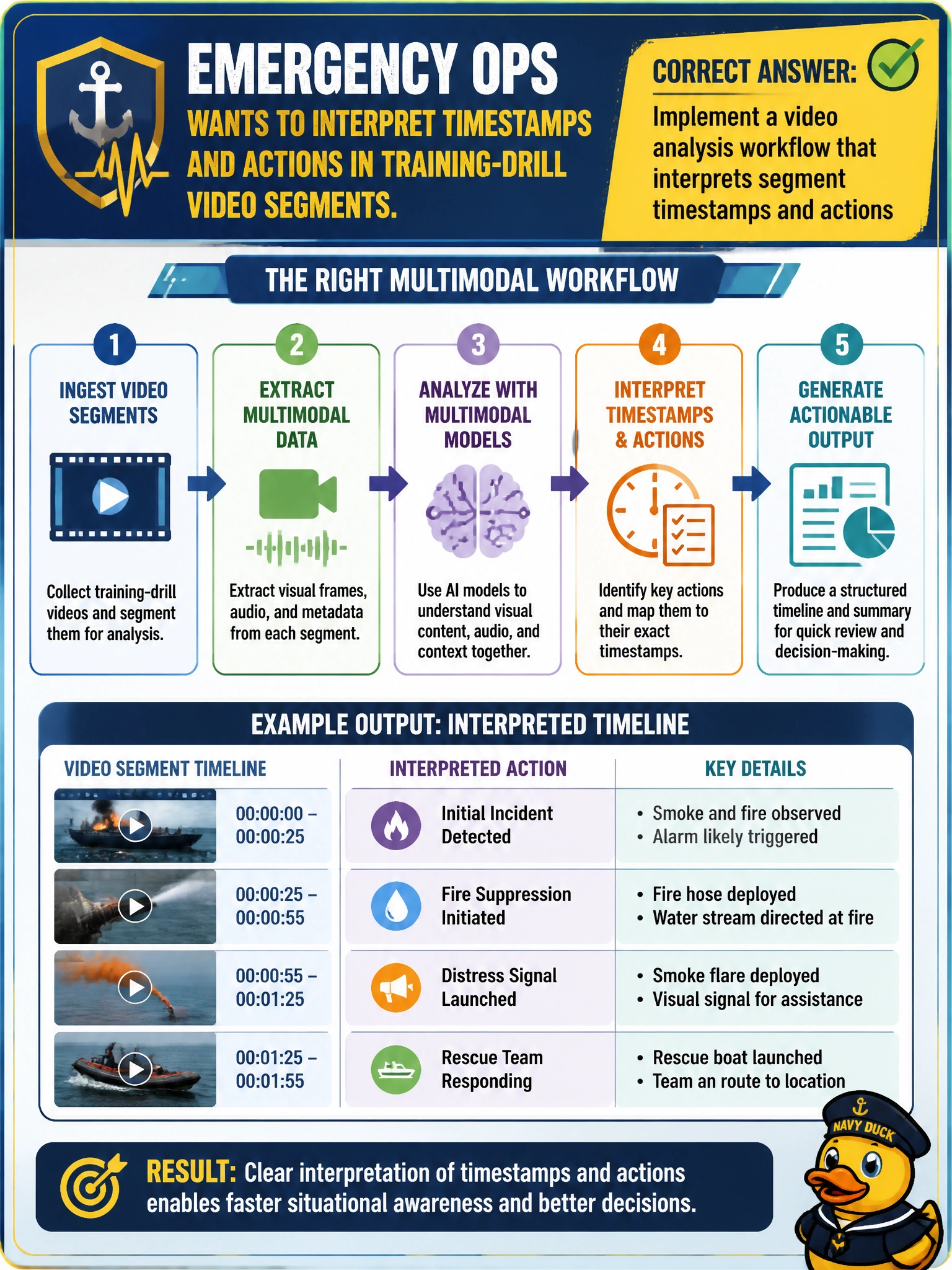
Emergency ops wants to interpret timestamps and actions in training-drill video segments. Which multimodal workflow should they implement?
Select an answer to reveal the explanation.
Short Explanation
Drill film is useless if nobody can find the moment the team staged. Video analysis reads the segments—timestamps, actions—so emergency ops can learn from the tape. Focusing only on narration segments, equipment segments, or face segments won't give you the full segment timestamps and action interpretation you'll need.
Full Explanation
Video analysis workflows interpret segments of recorded media—including timestamps and observed actions—so organizations can learn from footage without scrubbing blindly. Emergency operations reviewing training-drill video should implement that multimodal understanding path: segment the drill recording, extract timing, and interpret actions so after-action reviews can cite when teams staged, moved, or completed checklist steps. Automated segment interpretation turns long recordings into reviewable operational insight.
Deploying a video analysis workflow that interprets narration segment timestamps and actions focuses on spoken narration timing rather than the observed team movements and operational actions across the drill segments. Building a video analysis workflow that interprets equipment segment timestamps and actions narrows interpretation to equipment-focused moments and cannot supply the full segment timestamps and continuous action detail an after-action review needs from the drill footage. Creating a video analysis workflow that interprets face segment timestamps and actions limits timing and action interpretation to faces rather than interpreting overall segment timing and team actions from the drill video itself.
Exam caveat: video analysis supports training improvement; recordings of real incidents may involve privacy, retention, and evidentiary rules that differ from drill media. Models can miss concurrent actions outside the frame. Operational check: run analysis on a known drill clip, confirm reported timestamps align with the timeline, have trainers validate interpreted actions, and store analysis outputs with the after-action packet rather than replacing human AAR judgment.
Prefer to study offline? Printable PDF study book + test engine ($7.50, unofficial). These questions stay free here.