
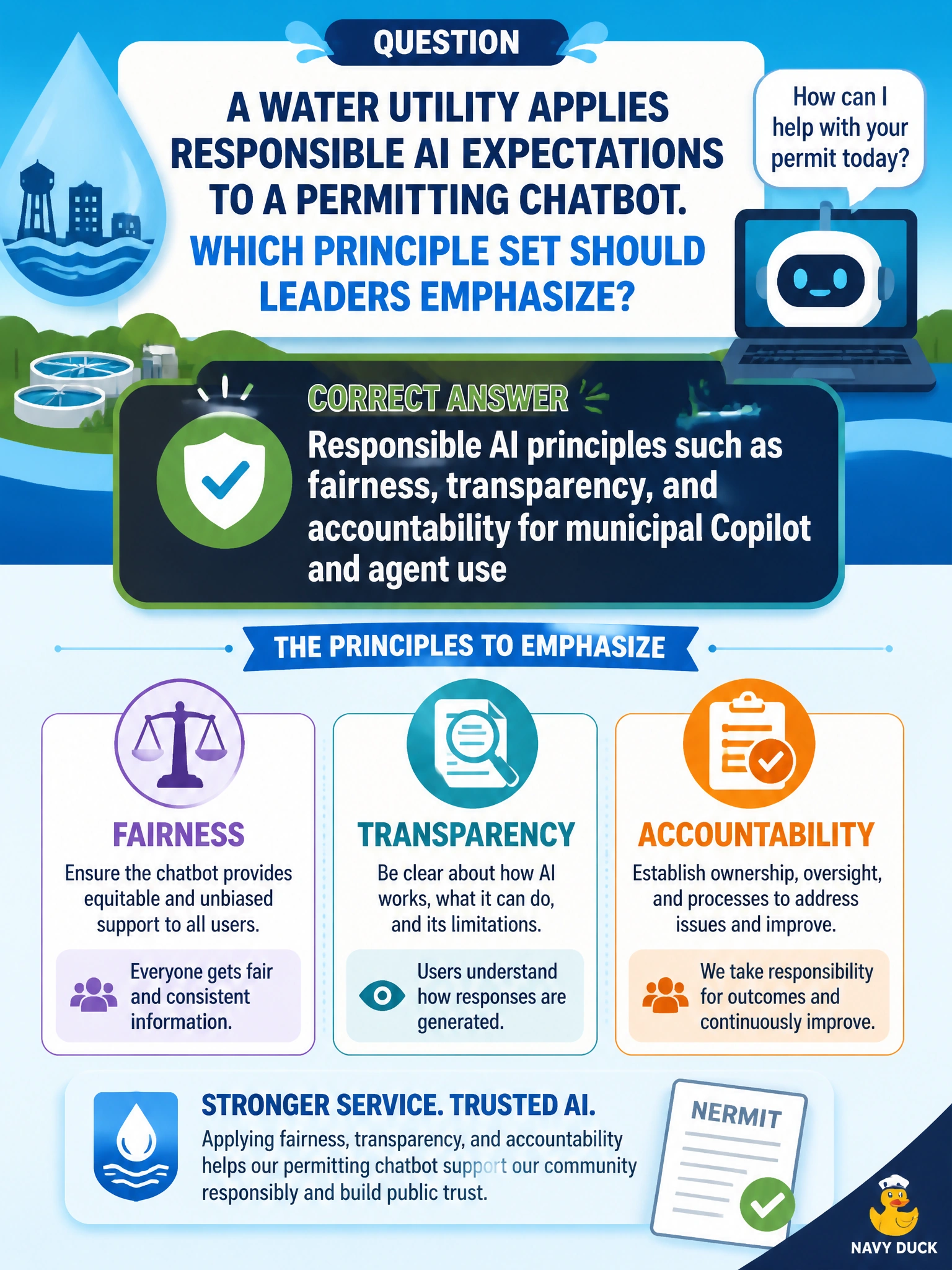
A water utility applies responsible AI expectations to a permitting chatbot. Which principle set should leaders emphasize?
Select an answer to reveal the explanation.
Short Explanation
Responsible AI isn't a vibe—it's fairness, transparency, and accountability for how the permitting chatbot behaves with residents. You won't find that principle set in accuracy, latency, and coverage metrics, encryption, access reviews, and response tasks, or prompting, grounding, and citation tips. Those principles keep civic AI honest.
Full Explanation
A water utility rolling out a permitting chatbot should emphasize responsible AI principles such as fairness, transparency, and accountability for municipal Copilot and agent use. Those principles guide how residents are treated when they ask about permits, how the utility explains AI-assisted answers, and who owns remediation when guidance is wrong. Framing the chatbot under fairness (consistent treatment), transparency (clear that AI assisted the reply), and accountability (named staff ownership) keeps civic AI aligned with public-service expectations rather than treating the model as an unchecked black box.
"Responsible AI principles such as accuracy rates, latency, and coverage for municipal Copilot and agent use" doesn't answer the question: those are performance and operations metrics, not the responsible AI principles that determine how residents are treated, whether AI assistance is disclosed, and who owns remediation when permit guidance is wrong. "Responsible AI principles such as encryption, access reviews, and response for municipal Copilot and agent use" isn't the principle set being asked for: those are important identity and security controls, but they don't establish fairness, transparency, and accountability for resident-facing Copilot and agent decisions. "Responsible AI principles such as prompting, grounding sources, and citation for municipal Copilot and agent use" isn't a responsible AI principle set: those are effective-use practices for getting grounded, cited answers, not safeguards for residents interacting with a live permitting agent.
Exam caveat: AB-900 tests recognition of responsible AI principles in Microsoft Copilot and agent scenarios at a fundamentals level. It does not require implementing a full Responsible AI review board charter or listing every Microsoft Responsible AI Standard clause. Fairness, transparency, and accountability are the durable principle set to recall for municipal Copilot and agent questions.
Operational check: Before widening the permitting chatbot, document which answers require staff confirmation, how the utility discloses AI assistance to residents, who owns escalation when guidance affects fees or timelines, and that Entra identity and access controls remain intact for any agent that acts on municipal data.
Prefer to study offline? Printable PDF study book + test engine ($7.50, unofficial). These questions stay free here.