
A housing caseworker has standing Copilot instructions for tone but needs a different approach for one letter. How should they think about it?
Select an answer to reveal the explanation.
Short Explanation
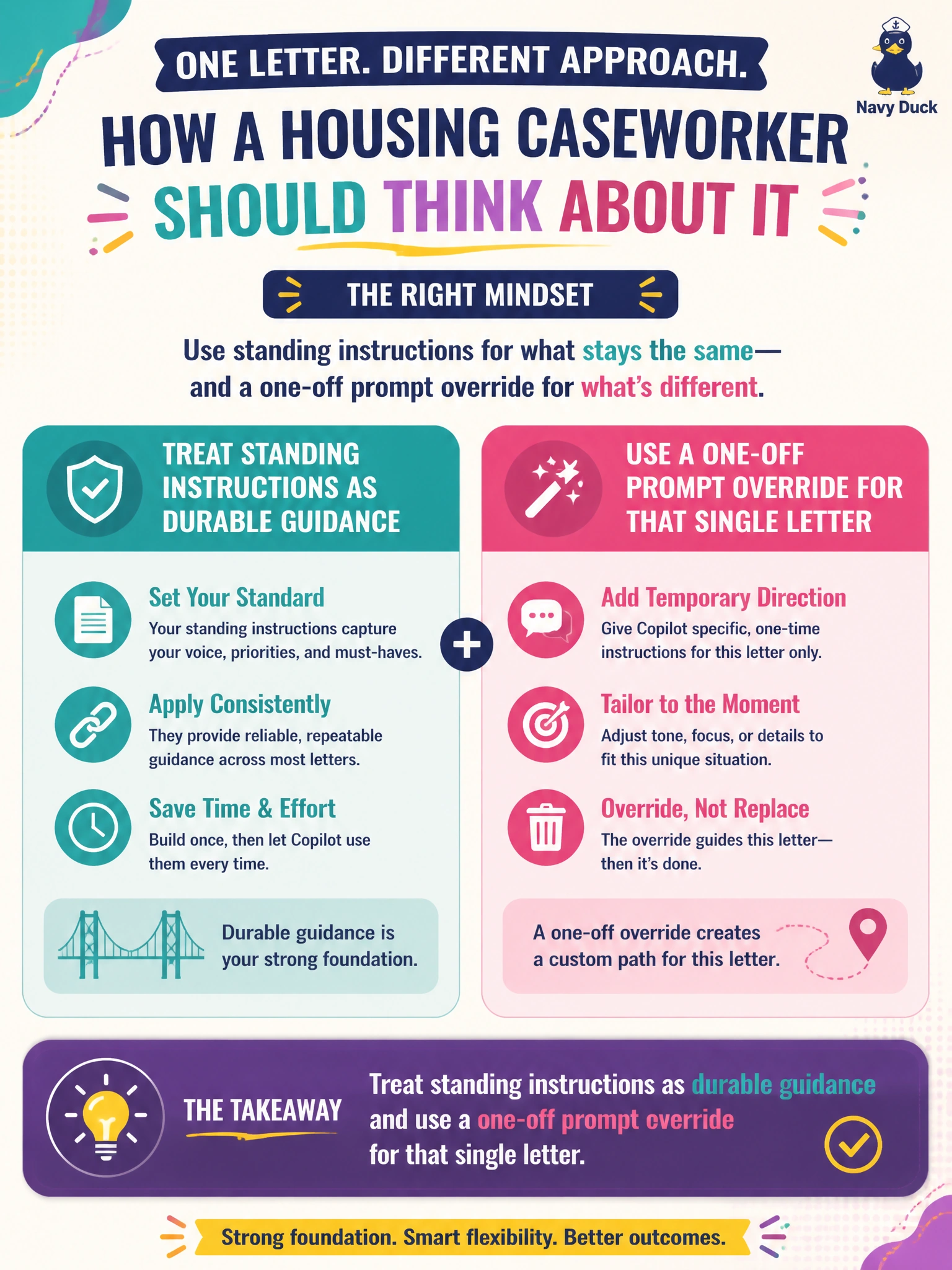
Standing instructions are the house rules; a one-off prompt is today’s special. For one different housing letter, override in that prompt—don’t burn down the durable guidance.
Full Explanation
Standing Copilot instructions are meant to be durable house rules; exceptional letters need a local override, not demolition of the rules. Treating standing instructions as durable guidance and using a one-off prompt override for that single housing letter is correct because it preserves the caseworker’s normal tone settings while allowing a deliberate exception for one correspondence. Municipal housing work often needs a firmer or softer register for a specific notice without permanently rewriting office standards.
Deleting all standing instructions permanently every time one letter needs a different tone fails durability; staff would constantly rebuild baseline guidance and introduce inconsistency across the caseload. Ignoring both instructions and the prompt and sending an empty letter fails the service obligation to communicate. Pasting the resident’s full case file identifiers into Copilot for every rewrite fails minimization and increases sensitive-data exposure without solving the tone exception.
Exam caveat: a one-off override changes behavior for that prompt only—confirm it did not accidentally get saved into instructions or memory if the exception should remain temporary. Operational check: keep standing tone instructions intact, state the one-letter override clearly in the prompt, review the output for accuracy and dignity, and avoid dumping full case identifiers into the rewrite request.