
A public-health writer notices Copilot drafts sound alarmist and wants calmer language going forward. What should they do?
Select an answer to reveal the explanation.
Short Explanation
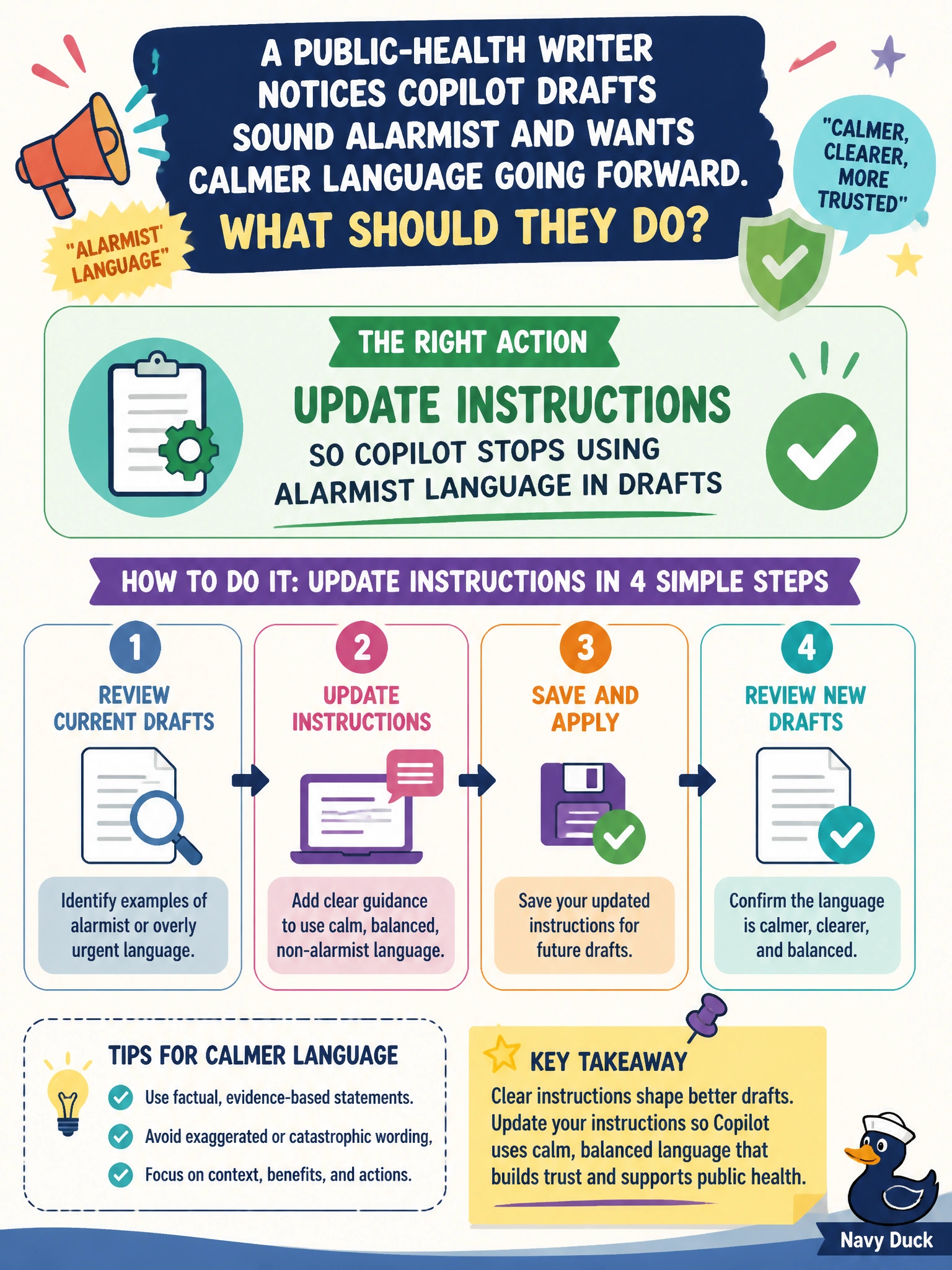
When your public-health drafts sound alarmist, update Copilot’s standing instructions so future drafts use calmer language. That guidance helps you avoid repeatedly accepting scare language while keeping communication proportionate.
Full Explanation
When public-health drafts sound alarmist, the durable fix is to update the instructions so Copilot stops using alarmist language in drafts. Revised standing guidance can shift future drafts toward calmer, proportionate municipal health communication. Calm clarity helps residents act on real guidance, such as vaccination sites, clinic hours, and prevention steps, without panic that erodes trust. Leaving the instructions unchanged and continuing to accept alarmist drafts does not address the recurring pattern, so it is likely to persist. Asking Copilot to escalate every routine notice into an emergency alert abandons risk communication discipline and can create alert fatigue, weakening responses when a true emergency arrives. Including private patient identifiers in every rewrite prompt for “urgency” fails to protect privacy and does not improve tone control. Exam caveat: calmer-language instructions must not suppress genuinely urgent protective actions when epidemiology or emergency management declares an emergency; the goal is proportion, not denial. Practical check: update the standing instructions, regenerate a routine notice and an emergency notice, confirm routine items remain calm while true emergencies retain required urgency, and keep patient identifiers out of prompts.