
An emergency planning cell needs the night shift to see the same evolving incident narrative. What should they use?
Select an answer to reveal the explanation.
Short Explanation
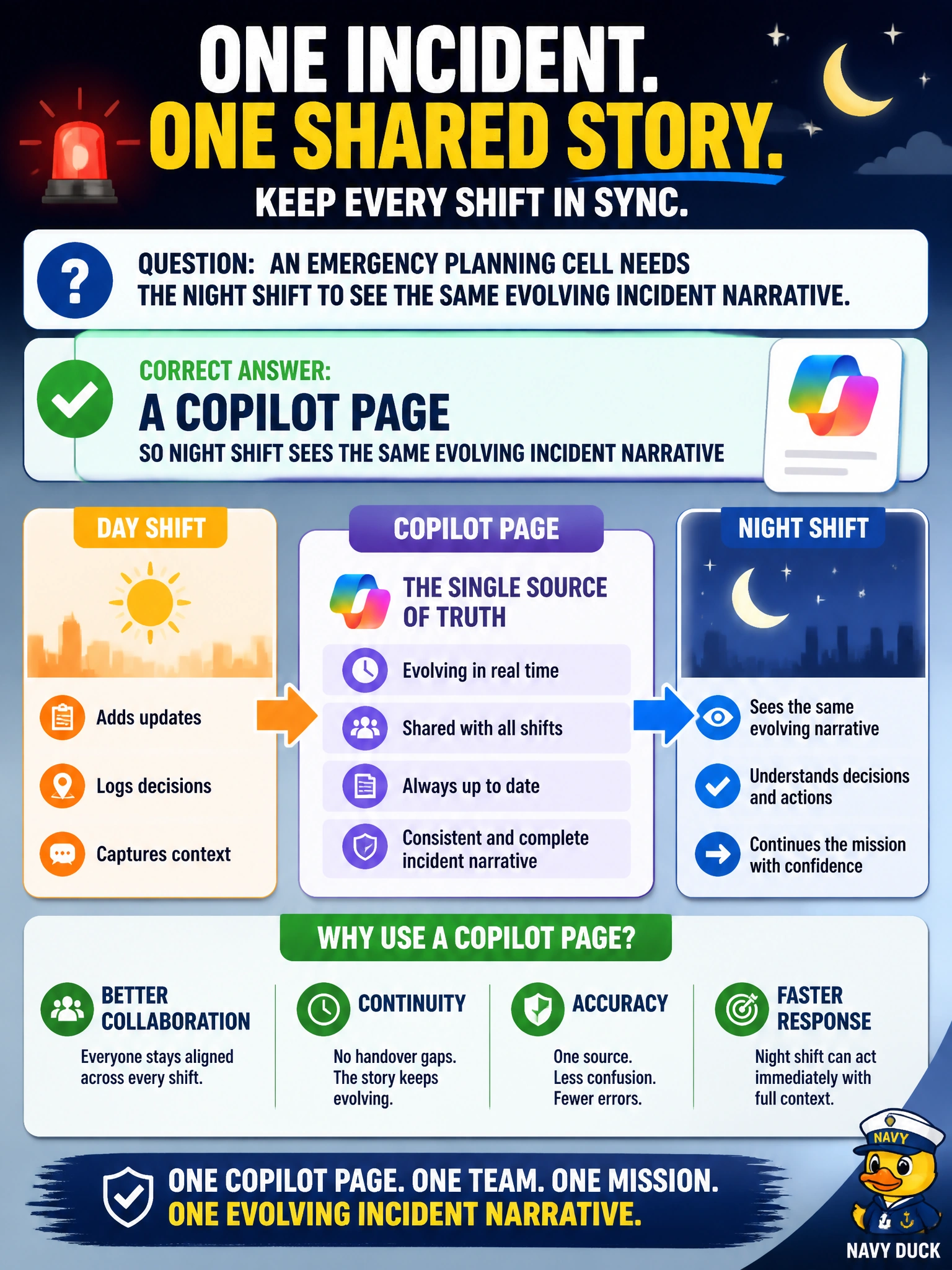
Night shift shouldn’t chase rumors—put the evolving incident narrative on a Copilot Page. Same living page means the handoff stays aligned.
Full Explanation
An emergency planning cell that spans day and night shifts needs one evolving narrative, not fragmented private notes. Using a Copilot Page so the night shift sees the same evolving incident narrative is correct because Pages act as a living shared workspace: updates to objectives, resource status, hazards, and public messaging remain visible to incoming staff without relying on memory handoffs. In municipal emergency management, continuity across watches reduces contradictory orders and missed hazards when the night crew takes over.
Separate private notebooks that the night shift cannot open fail continuity of operations; critical context stays locked with the day team. Verbal hallway rumors with nothing written down fail reliability and auditability—rumors mutate and leave no after-action trail. A one-time email that is never updated as the incident changes fails freshness; incidents evolve hour by hour, so a static message quickly becomes dangerous stale guidance.
Exam caveat: a shared Page still requires access control and classification discipline—sensitive tactical details belong only to authorized roles, and Copilot assistance on the Page does not replace Incident Commander decision authority. Operational check: confirm night-shift accounts can open the Page, require outgoing shift leads to update status before handoff, keep unverified reports labeled preliminary, and verify the narrative against the official incident log at each shift change.