
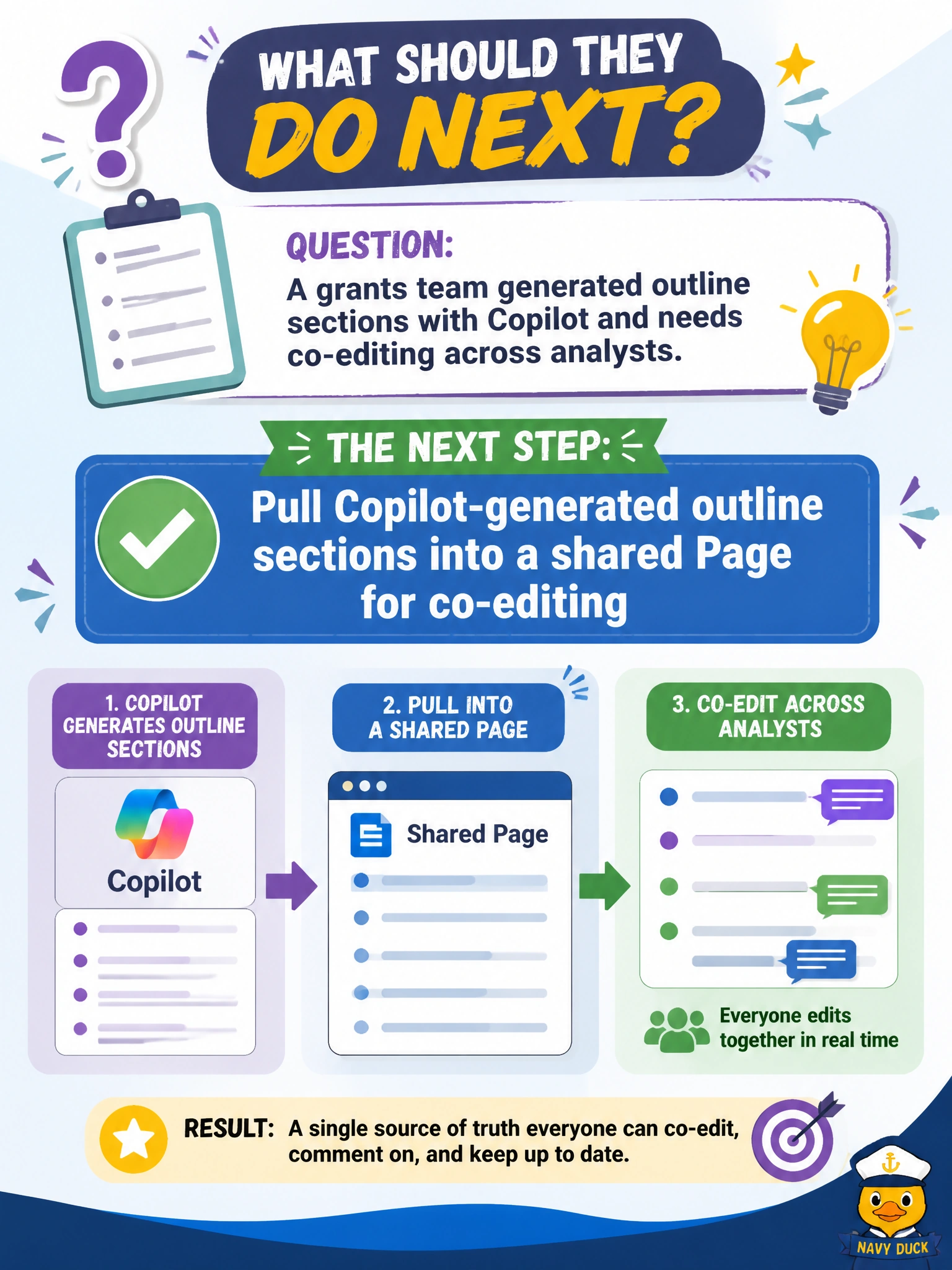
A grants team generated outline sections with Copilot and needs co-editing across analysts. What should they do next?
Select an answer to reveal the explanation.
Short Explanation
Copilot drafted the outline chunks—now drop them on a shared Page so the grants team can co-edit. Generation plus collaboration beats scattered personal chats.
Full Explanation
When a grants team has already generated outline sections with Copilot, the next value step is shared refinement—not leaving fragments stranded. Pulling Copilot-generated outline sections into a shared Page for co-editing is correct because Pages let analysts collaboratively strengthen narrative logic, evidence placement, and compliance language against the NOFO while retaining a single living draft. Municipal grants work depends on multi-reviewer input from finance, program, and legal before submission.
Leaving each outline section only in separate personal chats forever fails collaboration and version control; nobody can assemble a coherent application efficiently. Submitting the grant without any human review of the Copilot outline fails quality and integrity gates; generative outlines can miss mandatory elements or invent unsupported claims. Replacing the outline with fabricated award histories not in city records is fraud risk and misrepresentation to the funder.
Exam caveat: moving content to a Page improves co-editing but does not certify factual accuracy—claim-level review against city records remains mandatory before submission. Operational check: consolidate sections on the shared Page, assign reviewers by section, verify every performance claim against source data, and keep fabrication out of the narrative entirely.