
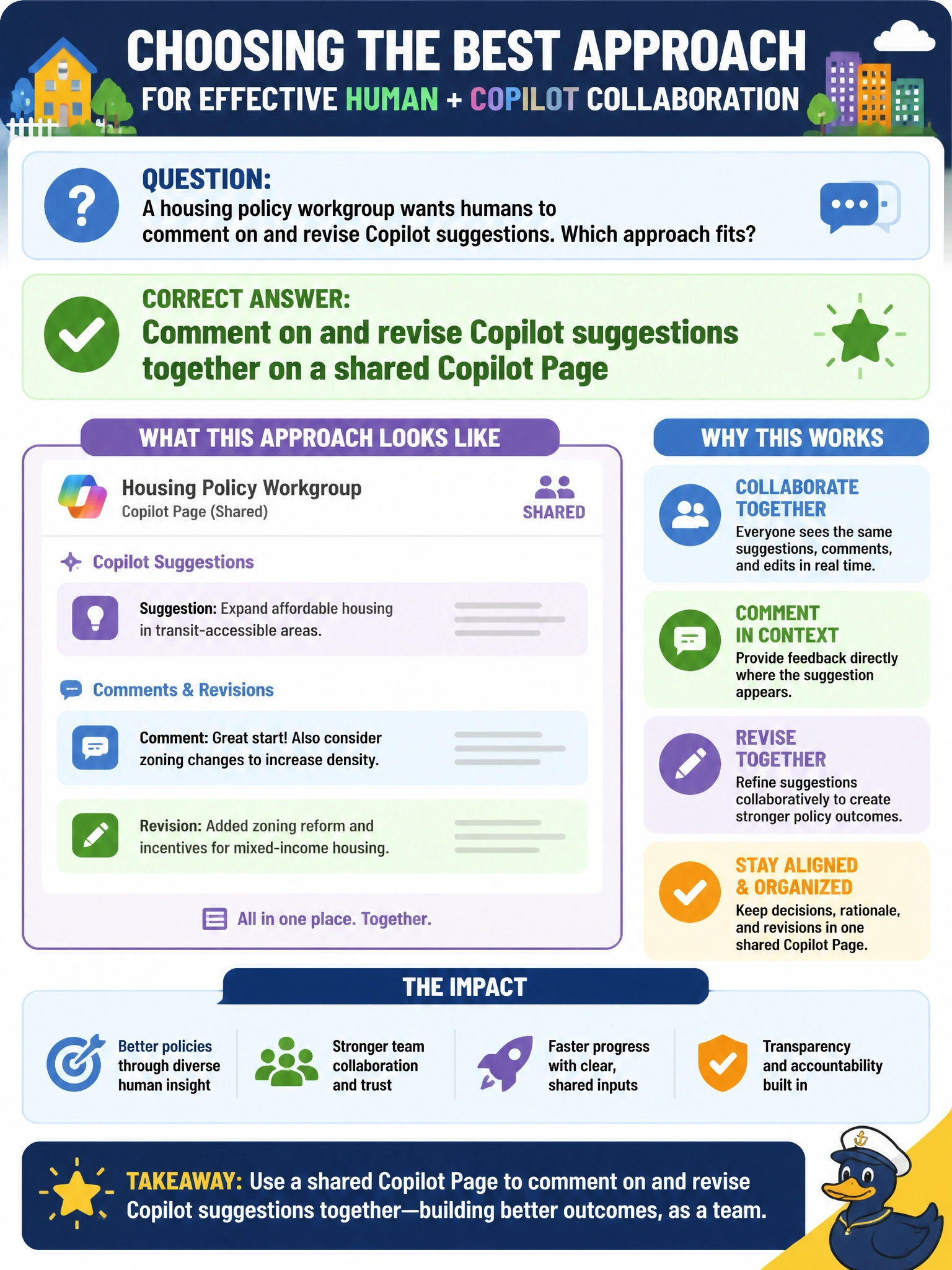
A housing policy workgroup wants humans to comment on and revise Copilot suggestions. Which approach fits?
Select an answer to reveal the explanation.
Short Explanation
Copilot’s suggestions aren’t gospel—you can put them on a shared Copilot Page so your housing policy workgroup can comment and revise together. That human oversight is the point.
Full Explanation
Housing policy drafting benefits when humans can question AI output in the same place they revise it. Commenting on and revising Copilot suggestions together on a shared Copilot Page supports multi-editor collaboration: workgroup members can annotate weak claims, correct local code references, and reshape Copilot language before anything becomes a public draft. For municipal housing policy, collective human oversight helps preserve equity, legal sufficiency, and program feasibility. Accepting every Copilot suggestion without comment or revision fails quality control; generative text can misstate statutes, invent program rules, or miss council direction. Hiding Copilot drafts from all members except one person undermines collaborative governance and concentrates undetected errors in a single gatekeeper. Sharing a draft policy containing residents’ unapproved medical details fails privacy and process; those details do not belong in public policy drafts and were never cleared for release. Exam caveat: collaborative revision on a Page is still pre-decisional work product until authorized policy owners approve publication or formal introduction. Practical check: keep the working draft on a permissioned Page, require at least one subject-matter reviewer and one legal reviewer to comment, strip resident medical or case identifiers, and export only reviewed language to the official policy channel.