
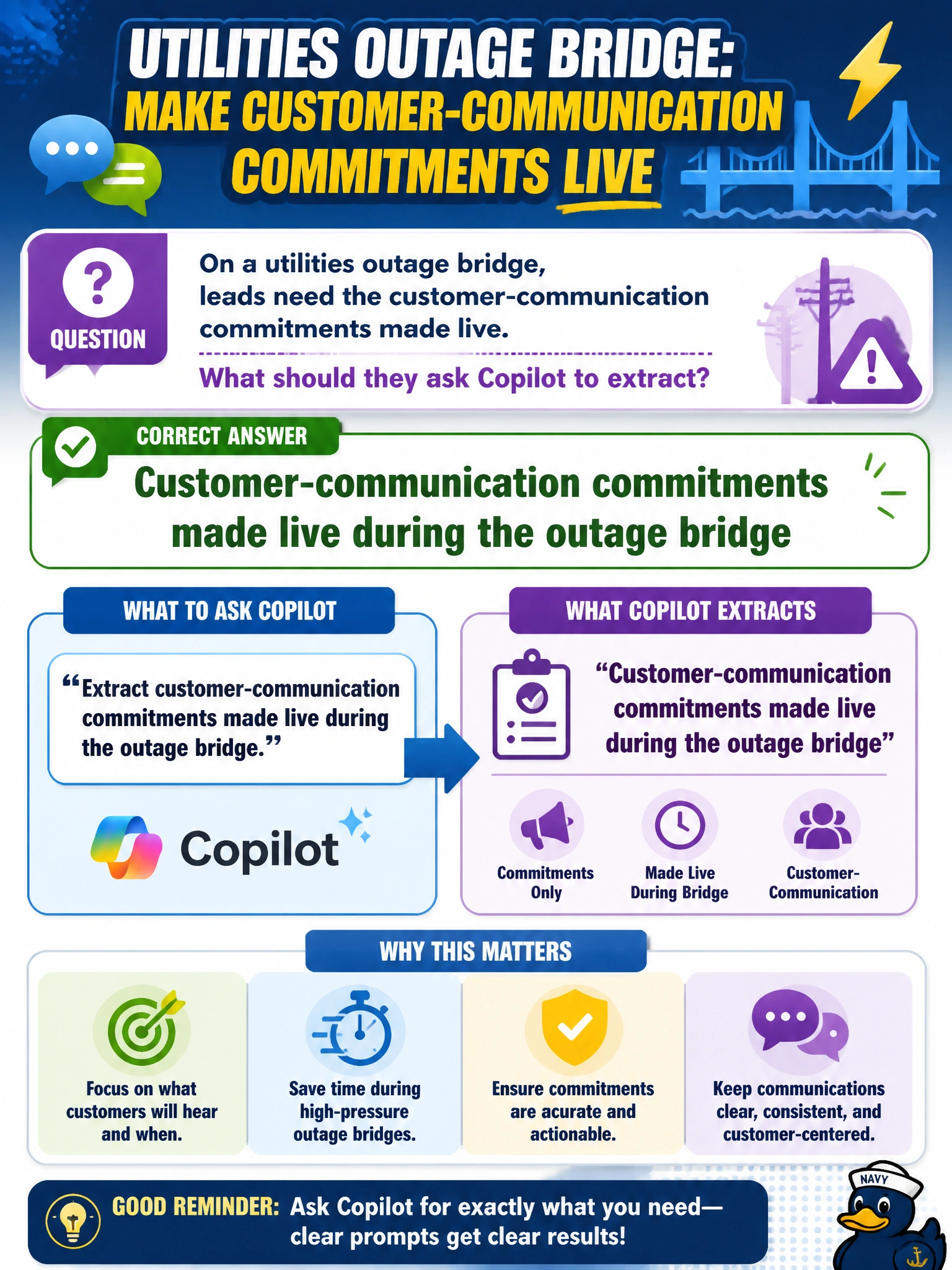
On a utilities outage bridge, leads need the customer-communication commitments made live. What should they ask Copilot to extract?
Select an answer to reveal the explanation.
Short Explanation
What did the utilities bridge actually promise customers? Ask Copilot to extract those live communication commitments. You’re grabbing the promises made—not inventing ETAs.
Full Explanation
On a utilities outage bridge, customer-facing promises made live become operational commitments that field, call center, and communications teams must honor consistently. Asking Copilot to extract customer-communication commitments made during the outage bridge is correct because it turns spoken pledges—notification cadence, channel choice, restoration window language, vulnerable-customer outreach—into a checklist staff can execute and audit. Extraction focuses Copilot on what was actually committed, which is the municipal accountability need during service disruption.
Fabricated restoration times that were never promised on the bridge fail truthfulness and can trigger complaint surges when invented ETAs slip. Harvesting home addresses of every caller mentioned during the outage discussion fails privacy minimization; addresses are not required to list communication commitments and create unnecessary exposure. A directive to stop all customer notices until the outage is fully over fails public-safety and service norms. Customers often need interim updates (boil-water advisories, outage maps, cooling centers) before full restoration.
Exam caveat: extracted commitments are not a license to publish speculative ETAs; only commitments that ops actually stated—and that remain valid—should move into rider or ratepayer messaging. Operational check: have the bridge lead confirm the extracted commitment list, assign owners for each notice, strip caller personal data from the extraction artifact, and align public language with the verified commitments only.