
An emergency-management coordinator configures suggested prompts for a field agent. Which set best matches operations?
Select an answer to reveal the explanation.
Short Explanation
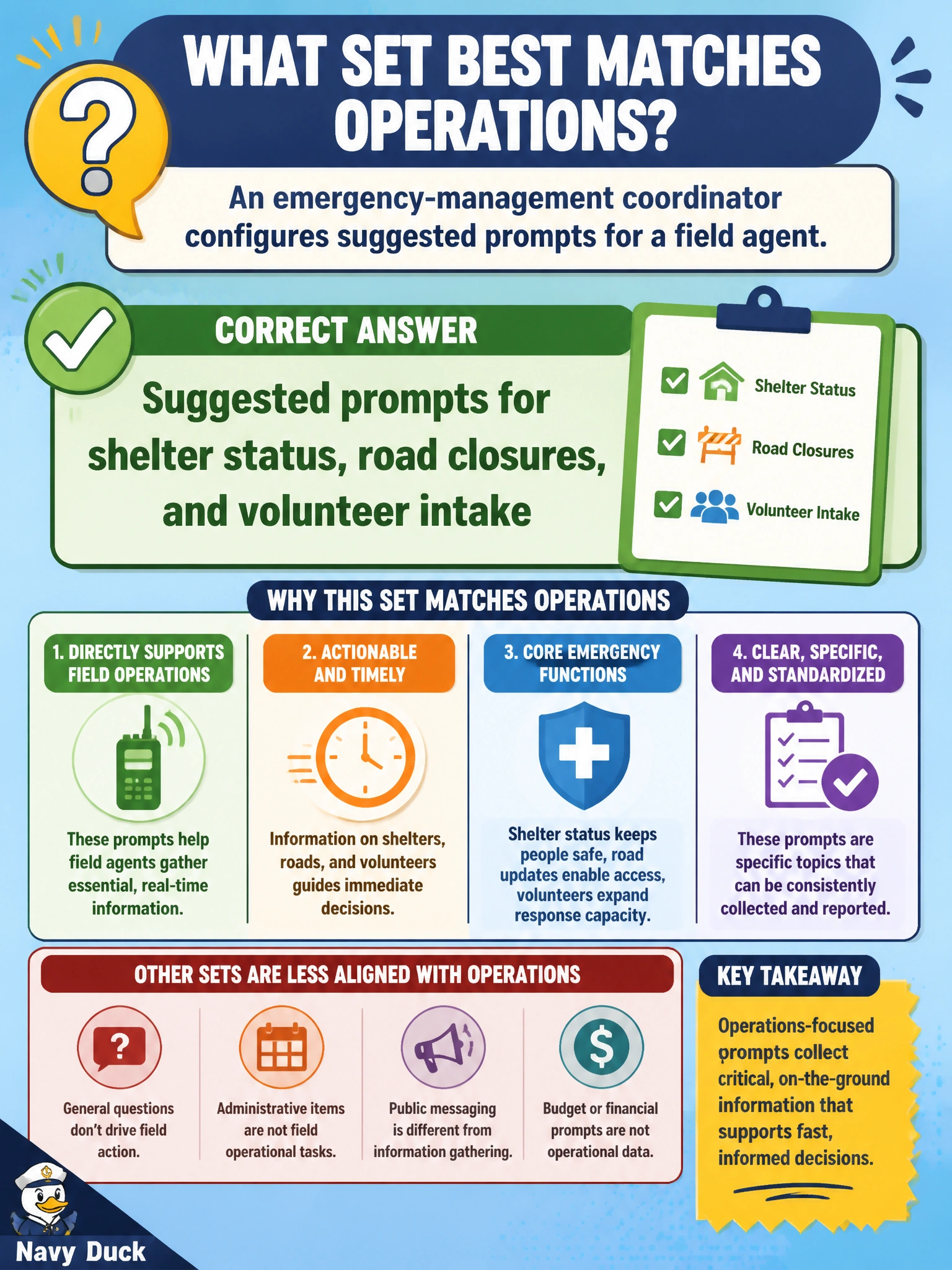
Emergency ops need starters that match the day—shelter status, road closures, volunteer intake. Dessert menus and end-runs around command don’t belong on that list.
Full Explanation
Suggested prompts for shelter status, road closures, and volunteer intake best match emergency-management field operations. Suggested prompts should mirror the scenarios the municipal agent serves during an activation: where shelters stand, which roads are closed, and how volunteers check in. Those starters reduce prompt improvisation when coordinators are moving fast and keep the agent pointed at operational knowledge.
Suggested prompts only about cafeteria dessert menus for city hall fail by irrelevance. They consume the prompt surface with non-incident topics and train users away from the field questions that matter in an emergency.
Suggested prompts that ask the agent to bypass incident commander approvals fail as a governance violation. Emergency structure depends on command approvals; starters that encourage end-runs create unsafe operational guidance even if the model “helps” faster.
Suggested prompts that request private medical details for every volunteer fail on privacy and least-privilege concepts. Collecting sensitive medical data by default through a Copilot starter exceeds typical intake needs and risks improper handling of protected information.
Exam caveat: AB-730 expects suggested prompts to align with role and scenario; cute or reckless starters are scored as misconfiguration for municipal emergency agents.
Operational check: During a tabletop, open the field agent and confirm the visible starters cover shelter status, road closures, and volunteer intake; remove any prompt that bypasses command or solicits unnecessary medical detail before go-live.