
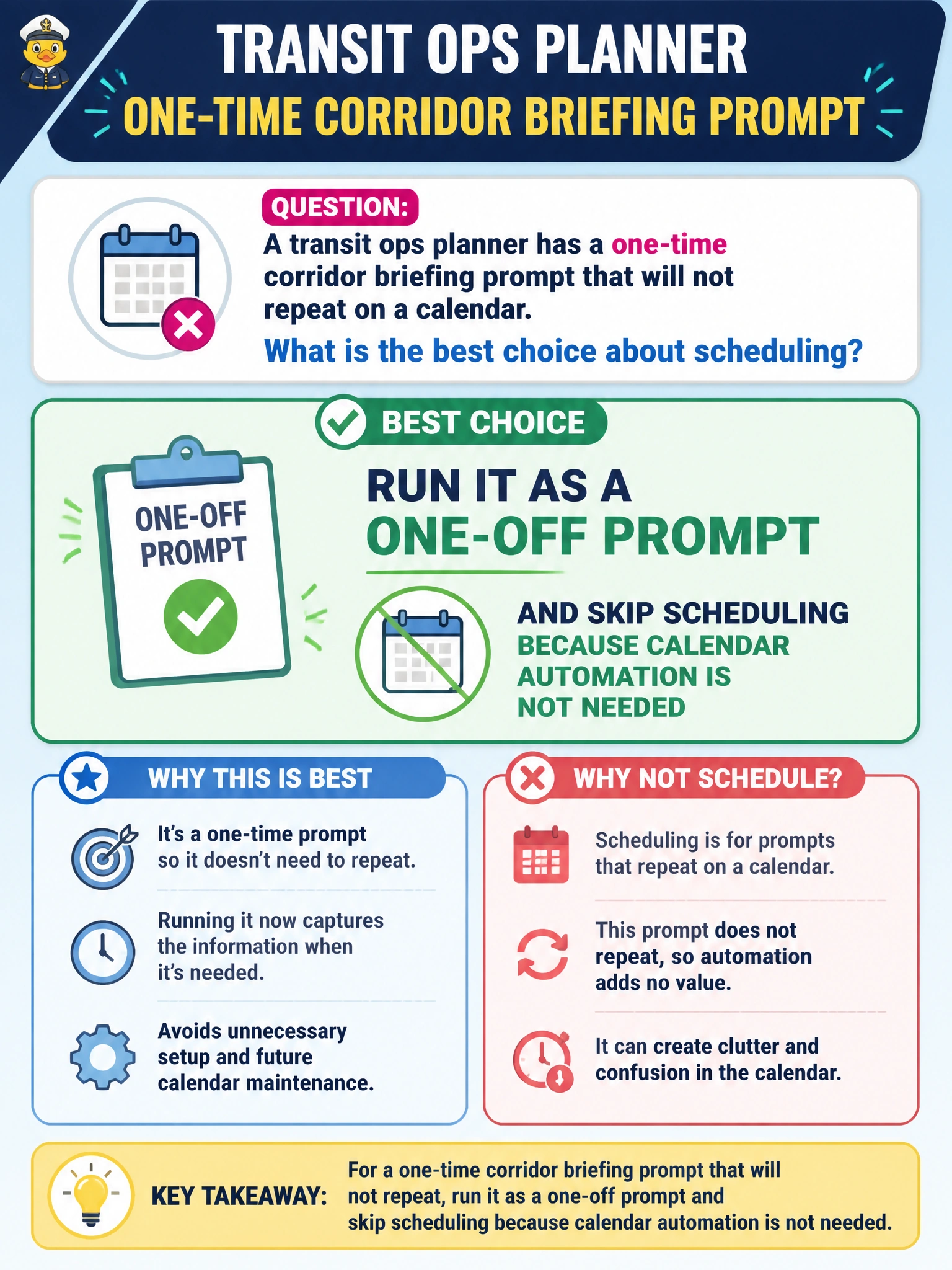
A transit ops planner has a one-time corridor briefing prompt that will not repeat on a calendar. What is the best choice about scheduling?
Select an answer to reveal the explanation.
Short Explanation
For a one-time corridor briefing, you don’t need a recurring timer. Run it once and skip scheduling; automation is for work that actually repeats.
Full Explanation
Because the corridor briefing will not recur on a calendar, the planner should run it as a one-off prompt and skip scheduling. Scheduling supports recurring municipal work on a known cadence; for a non-recurring briefing, a single on-demand run avoids perpetual draft noise. The planner may save the prompt text for future similar corridors, but saving it for reuse is different from scheduling automatic runs. Scheduling the briefing daily indefinitely would create duplicate drafts and inbox clutter without operational value. Scheduling it hourly would flood the inbox with identical drafts, adding even more noise and review burden. Sharing the one-off prompt with every city mailbox before deciding whether it recurs is not a substitute for determining whether recurrence exists, and it fails least-privilege and relevance. Exam caveat: “one-off” describes calendar recurrence, not whether the prompt text might be reused later for a different corridor. If the briefing later becomes a weekly series, scheduling may then be appropriate; until recurrence is established, do not automate. Keep briefing content scoped to authorized planning data. Practical check: confirm with the project lead that no standing weekly or monthly corridor update was intended, run the prompt once, deliver the single briefing draft, and leave scheduling unset; optionally save the prompt for manual reuse on a distinct corridor.