
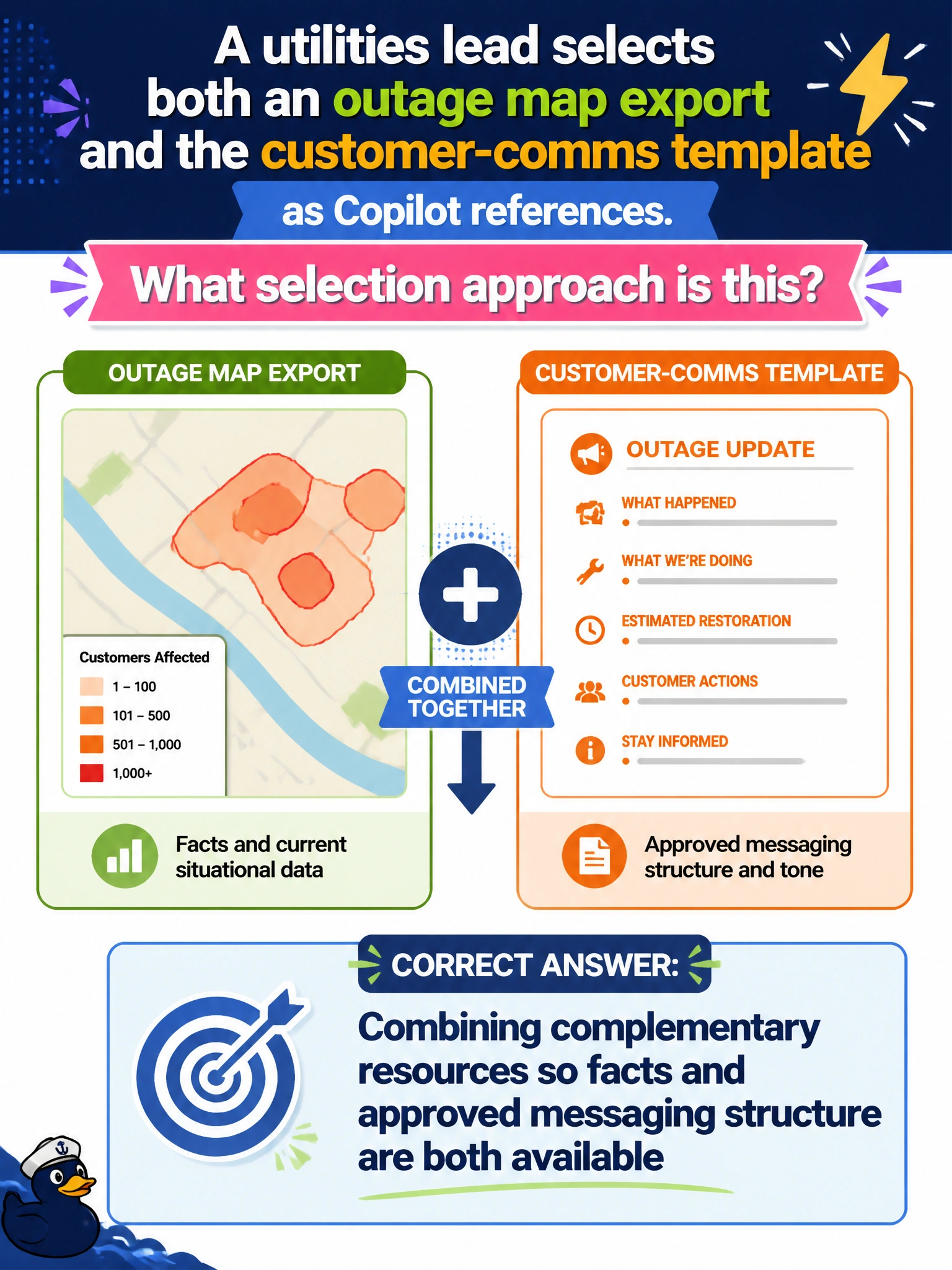
A utilities lead selects both an outage map export and the customer-comms template as Copilot references. What selection approach is this?
Select an answer to reveal the explanation.
Short Explanation
Map for the facts, template for the tone—two complementary references beat either alone. Give Copilot the outage export and the approved comms shell. Complementary sources, clearer customer updates.
Full Explanation
Combining complementary resources so facts and approved messaging structure are both available is the selection approach when a utilities lead references an outage map export and the customer-comms template together. The map supplies operational truth; the template supplies tone, required disclaimers, and structure residents expect. The correct approach works because either resource alone is incomplete: facts without approved voice, or voice without current outage facts, produce weak customer updates.
Referencing only social media rumors instead of operational exports fails because rumors are unreliable grounding for utility outage communications. Attaching every sealed finance ledger to maximize template creativity fails conceptually: sealed finance content is irrelevant to outage messaging and adds sensitive-data risk. Avoiding templates so Copilot invents utility outage tone from scratch each time fails because reinventing tone increases inconsistency and may omit required municipal disclaimers.
Exam caveat: complementary resources must stay synchronized—an accurate map with an obsolete template (or the reverse) still yields a bad customer message. Operational check: export the current outage map or status file, attach the approved customer-comms template, instruct Copilot to take facts only from the export and structure from the template, then have a utilities supervisor verify affected areas and disclaimer language before send.