
A courts clerk declines to reference a sealed personnel file when drafting a public hearing notice. What resource judgment does this show?
Select an answer to reveal the explanation.
Short Explanation
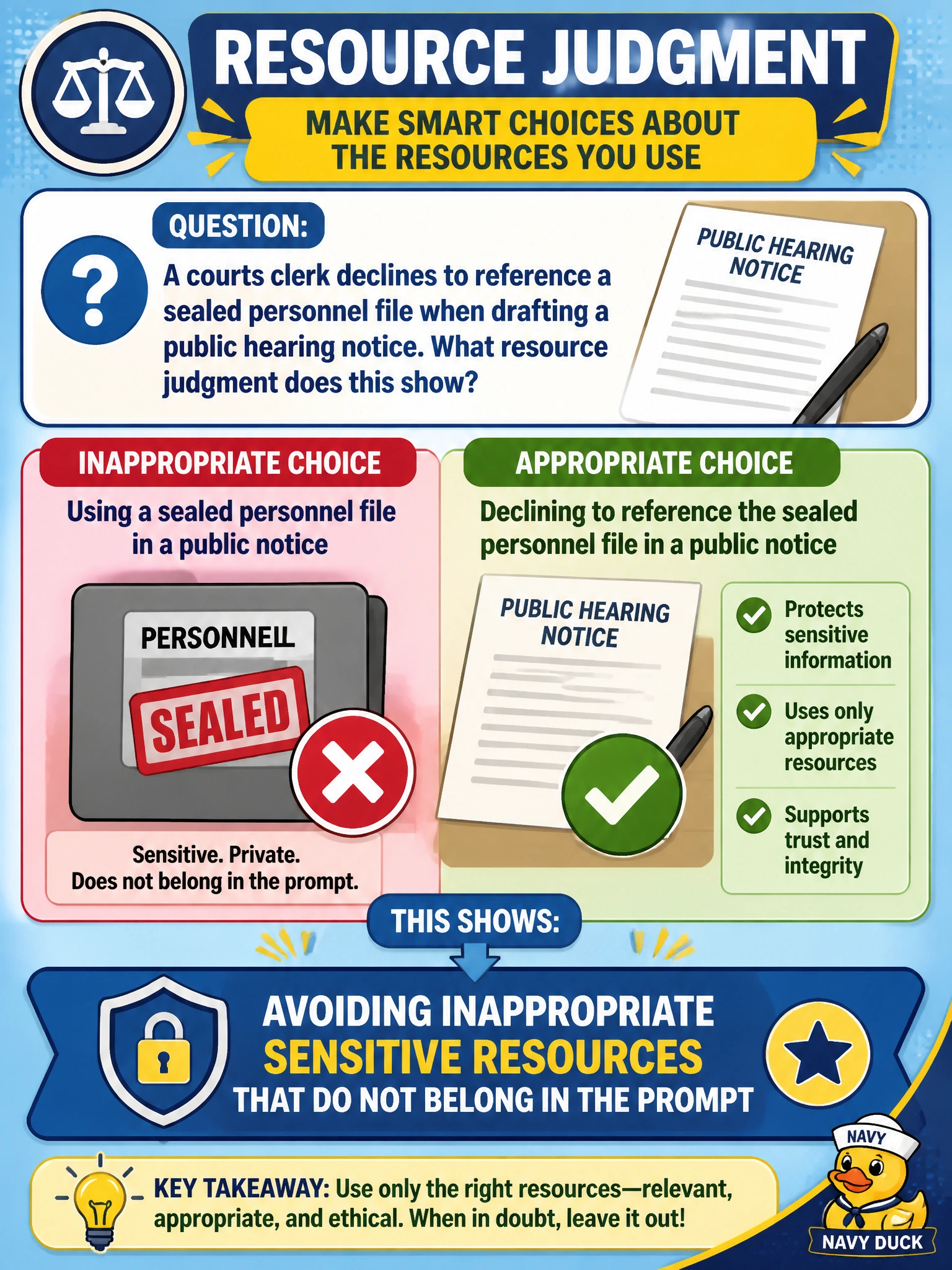
You’re right to keep a sealed personnel file out of a public hearing notice. Match the source to the audience and leave sensitive, irrelevant resources out of the prompt—that’s good judgment.
Full Explanation
Avoiding inappropriate sensitive resources that do not belong in the prompt is the resource judgment shown when a courts clerk declines to reference a sealed personnel file while drafting a public hearing notice. Public notices need hearing logistics and public agenda facts, not sealed HR content. This judgment matches a resource’s sensitivity and relevance to its audience: grounding should not bring confidential personnel material into a public-facing draft pathway. Treating sealed personnel files as suitable source material for all public notices fails because sealed HR content is neither necessary nor appropriate for a hearing notice and creates spill risk. Saying public hearing notices require DLP to be disabled citywide fails because drafting notices does not depend on disabling data protection; doing so would weaken municipal safeguards. Saying agent templates must embed sealed HR memos for legal completeness fails because a public notice’s completeness comes from public agenda materials, not sealed personnel files. Exam caveat: declining to use sealed HR files does not mean you should ground a notice on rumors; use the posted agenda, hearing schedule, and approved notice template instead. Practical check: list intended references before prompting, remove any sealed personnel paths, attach only the public hearing packet or notice template, and scan the Copilot draft for personnel identifiers that do not belong in a public notice.