
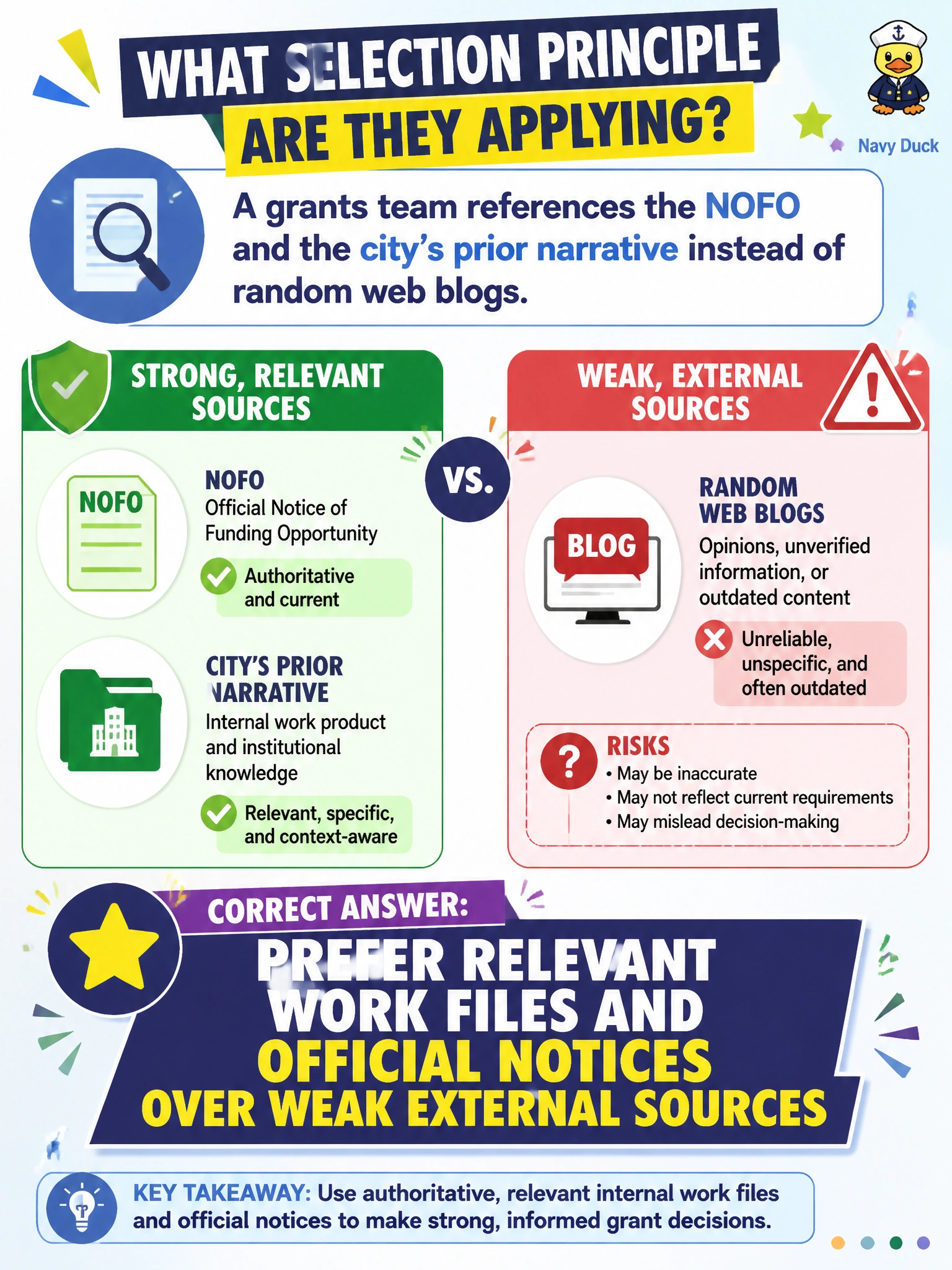
A grants team references the NOFO and the city’s prior narrative instead of random web blogs. What selection principle are they applying?
Select an answer to reveal the explanation.
Short Explanation
NOFO plus your last narrative beats a random blog every time. Point Copilot at the real work files. Relevant sources in, stronger grant drafts out.
Full Explanation
Preferring relevant work files and official notices over weak external sources is the selection principle when a grants team references the NOFO and the city’s prior narrative instead of random web blogs. Grant drafts must track the funder’s notice and the city’s evidence base; blogs rarely carry binding instructions or accurate local outcomes. The correct principle works by maximizing grounding relevance: Copilot drafts improve when inputs are the same artifacts humans would use at the grants desk.
Treating external blogs as required grounding for every municipal grant prompt fails because blogs are optional at best and often introduce inaccurate requirements or unrelated examples. Claiming NOFO files must never be attached because Copilot cannot read PDFs fails conceptually: attaching official notices is a standard resource-selection practice, and PDF unreadability is not the teaching point. Deleting prior narratives so Copilot invents outcomes freely fails because invented outcomes are fabrications that can contaminate competitive proposals.
Exam caveat: prior narratives are useful templates for structure and evidence style, but they must be tailored to the new NOFO—blind reuse of old claims can violate current scoring criteria. Operational check: attach the current NOFO and the prior city narrative, instruct Copilot to map sections to NOFO criteria and flag gaps, then have a grants lead verify every performance claim against program records before submission.