
A transit planner points Copilot at the approved ridership workbook instead of a personal scratch sheet. Why is that the better reference?
Select an answer to reveal the explanation.
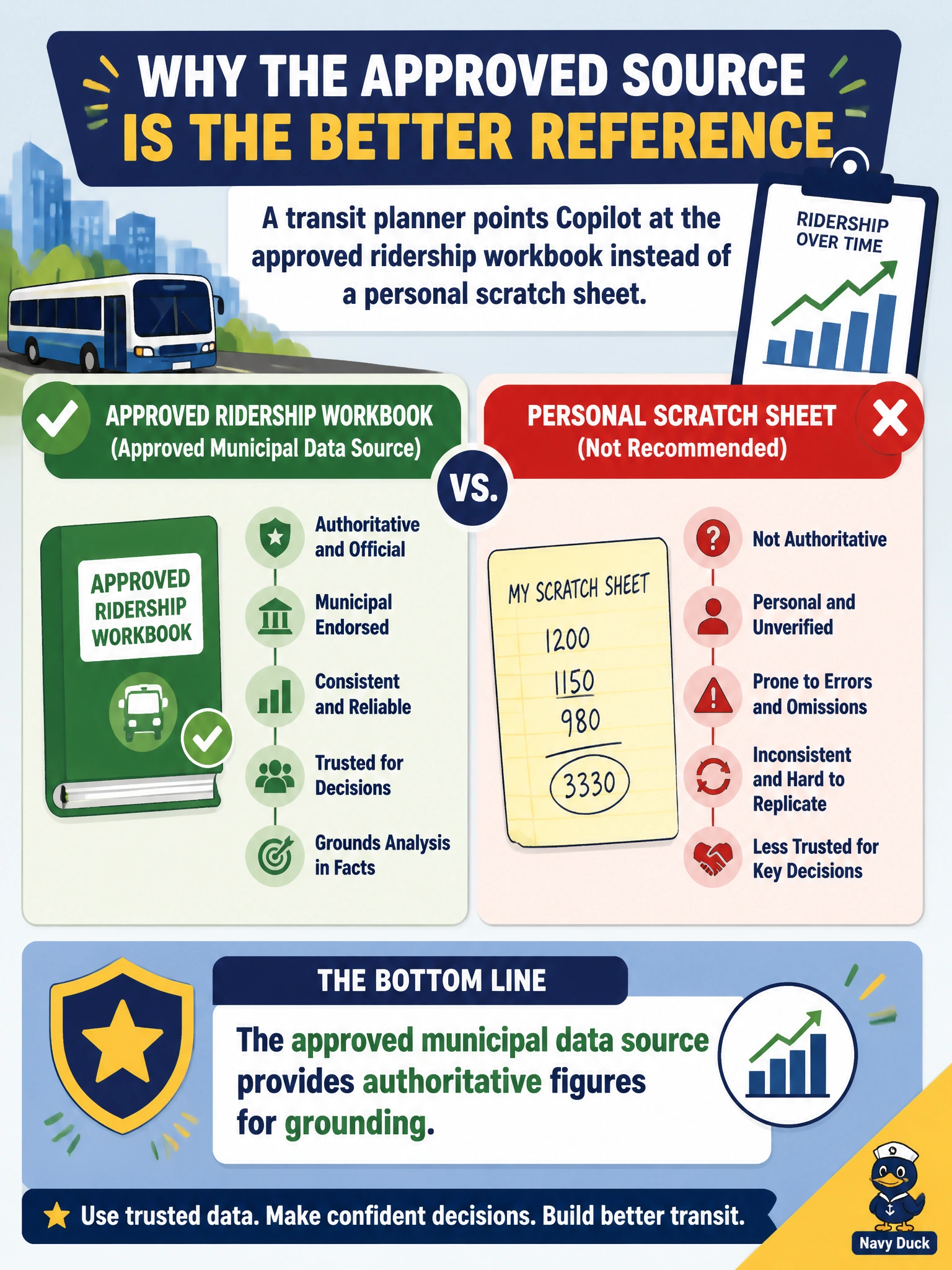
Short Explanation
The approved ridership workbook is the scoreboard; the scratch sheet is napkin math. Point Copilot at the official source so numbers match what transit already stands behind.
Full Explanation
The approved municipal data source provides authoritative figures for grounding, which is why a transit planner should point Copilot at the approved ridership workbook instead of a personal scratch sheet. Approved workbooks are the figures transit leadership already stands behind; scratch sheets may contain experimental formulas, incomplete days, or unverified adjustments. The correct reference works because generative summaries and charts inherit errors from weak sources just as readily as they inherit truth from strong ones.
Claiming personal scratch sheets always override approved municipal datasets fails because informal personal files should not outrank endorsed operational data in Copilot grounding. Saying approved workbooks cannot be referenced until posted to social media fails conceptually: internal approval—not social publication—is what makes a municipal dataset authoritative for staff analysis. Asserting scratch sheets grant Agent Store publishers automatic edit rights fails because attaching a scratch file has nothing to do with Agent Store publishing permissions.
Exam caveat: “approved” can still be stale if a newer certified extract exists—confirm the workbook’s effective period before briefing executives. Operational check: locate the transit-approved ridership workbook with its approval stamp or owner, attach that file rather than Downloads scratch copies, ask Copilot for a summary with citations to sheet names, and reconcile two headline totals back to the workbook cells before publishing the brief.