
A housing caseworker prompts for bullet options first, then asks for a full letter. What prompting approach is this?
Select an answer to reveal the explanation.
Short Explanation
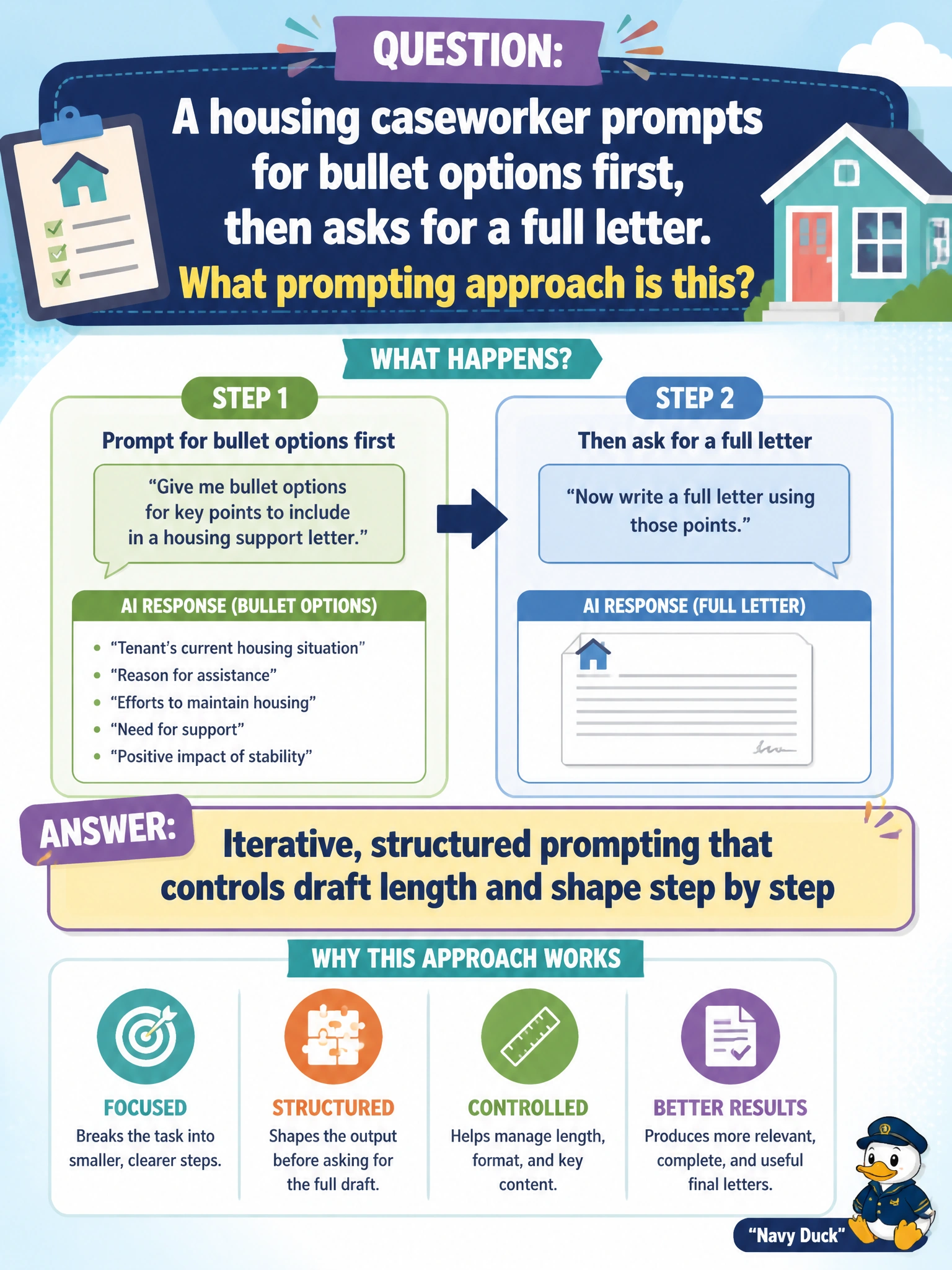
Bullets first, full letter second—like outlining before you paint the wall. Structured, iterative prompting keeps length and shape under control instead of hoping one megaprompt lands perfectly.
Full Explanation
Iterative, structured prompting that controls draft length and shape step by step is the approach when a housing caseworker asks for bullet options first, then a full letter. Sequencing lets the caseworker approve substance and tone in a compact form before expanding into resident-facing prose. The correct approach works because one megaprompt often produces overlong, uneven letters, while staged prompts keep municipal housing language under tighter human control at each step.
Insisting on one giant prompt that must include every resident SSN before any bullets fails because SSNs are unnecessary for structuring options and add sensitive-data risk. Framing the sequence as prompt injection that forces Copilot to skip human review fails conceptually: iterative prompting is a quality technique, not an injection attack, and it should increase—not skip—review opportunities. Claiming Agent Store browsing replaces the need to write any prompt fails because Store agents still need clear instructions and do not eliminate structured prompting skill.
Exam caveat: iteration improves shape control but each stage can still fabricate program rules—verify bullets against housing policy before expanding them into the letter. Operational check: prompt for three bullet options with length limits, select or edit the accurate bullets, then prompt “expand only these approved bullets into a full letter,” and compare the final letter to the policy checklist before sending.