
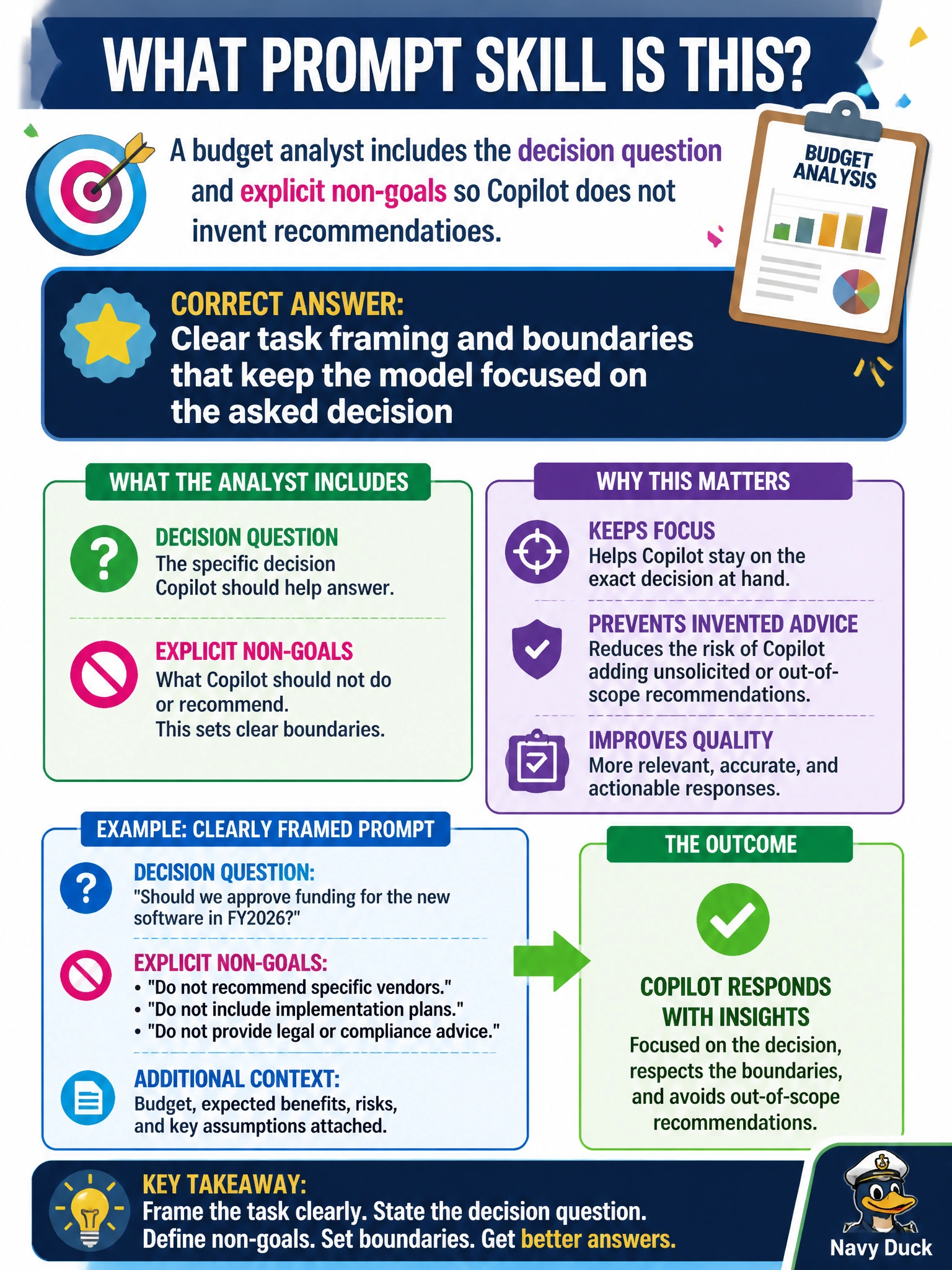
A budget analyst includes the decision question and explicit non-goals so Copilot does not invent recommendations. What prompt skill is this?
Select an answer to reveal the explanation.
Short Explanation
Say what you want decided—and what you don’t want invented. Boundaries are guardrails on a winding CIP road. Clear framing keeps Copilot from volunteering half-baked recommendations.
Full Explanation
Clear task framing and boundaries that keep the model focused on the asked decision is the prompt skill shown when a budget analyst includes the decision question and explicit non-goals. Stating what must be decided—and what Copilot must not invent—reduces unsolicited recommendations, speculative cuts, or policy advocacy the analyst did not request. The correct skill works because generative models readily volunteer advice; municipal budget work needs controlled analytical help aligned to the CIP or decision memo at hand.
Removing all decision questions so Copilot can propose citywide budget cuts freely fails because unbounded prompting invites overreach and fabrications about programs and impacts. Scheduling the prompt hourly until recommendations appear without sources fails conceptually: repetition without grounding or boundaries does not create trustworthy fiscal advice. Sharing sealed CIP workbooks publicly to widen Copilot’s non-goals fails because public sharing of sealed capital materials is a confidentiality breach, not a prompting technique.
Exam caveat: non-goals constrain invention; they do not replace attaching the authoritative workbook or requiring citations for any figure Copilot mentions. Operational check: write the decision question in one sentence, list two or three non-goals (for example, “do not invent cuts” and “do not recommend layoffs”), attach the approved CIP extract, and reject any draft that introduces unsourced recommendations outside the framed task.